How Do You Get a Salvage Title for a Car?
A vehicle may receive a salvage brand after an insurer or state brands it a total loss. Depending on your state, you then submit the required ownership documents to the DMV with the existing title, proof of ownership, and required damage records; a rebuilt title is typically issued after repairs and inspection. Ignore the rules and you can lose resale value, fail registration, or run into title fraud issues. This guide explains each paperwork step, when the title changes status, and which inspections and forms your state may require.
What a salvage title means
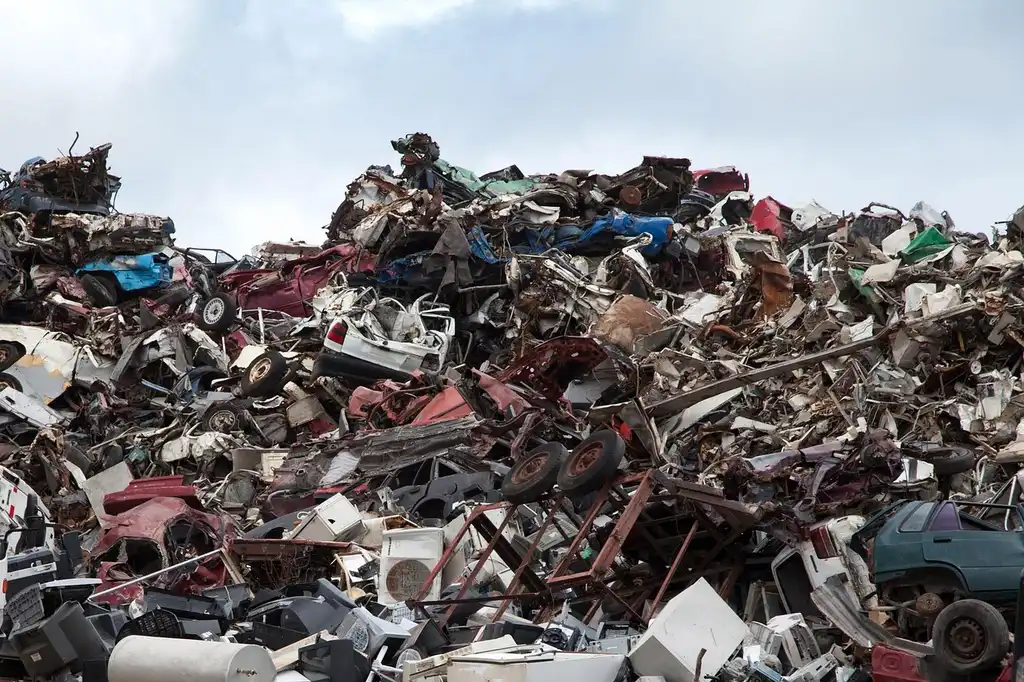
A salvage title is a state-branded title for a vehicle that has suffered significant damage and may no longer be roadworthy. In many cases, the brand follows an insurance total loss, but state rules set the exact trigger and paperwork. A salvage certificate of title is usually the same thing as a salvage title, though some states use different document names.
Keep the salvage step separate from the rebuilt step. Salvage means the vehicle is branded and usually off the road. Rebuilt means the vehicle has passed the repair and inspection process your state requires, and the title stays branded after that.
Salvage title versus rebuilt title
A salvage title marks the vehicle’s status after major damage. A rebuilt title is issued after repairs and a state inspection, and it may be called rebuilt salvage, rebuilt, restored, reconstructed, or prior salvage depending on the state. It is still a branded title. It does not erase the vehicle’s history.
Salvage title versus non-repairable or parts-only status
A salvage-branded vehicle can often be repaired and retitled if your state allows it. A non-repairable certificate is different. Vehicles with a non-repairable certificate cannot be legally restored and operated. If your title or certificate says non-repairable, stop before spending money on repairs.
When does a car become salvage?
A car becomes salvage when a state or insurer treats it as a total loss, when the owner keeps the damaged vehicle after a payout, or when you buy an already-branded vehicle from an auction or private seller. The branding can happen before or after the insurer settlement, depending on state procedure.
Insurance total loss
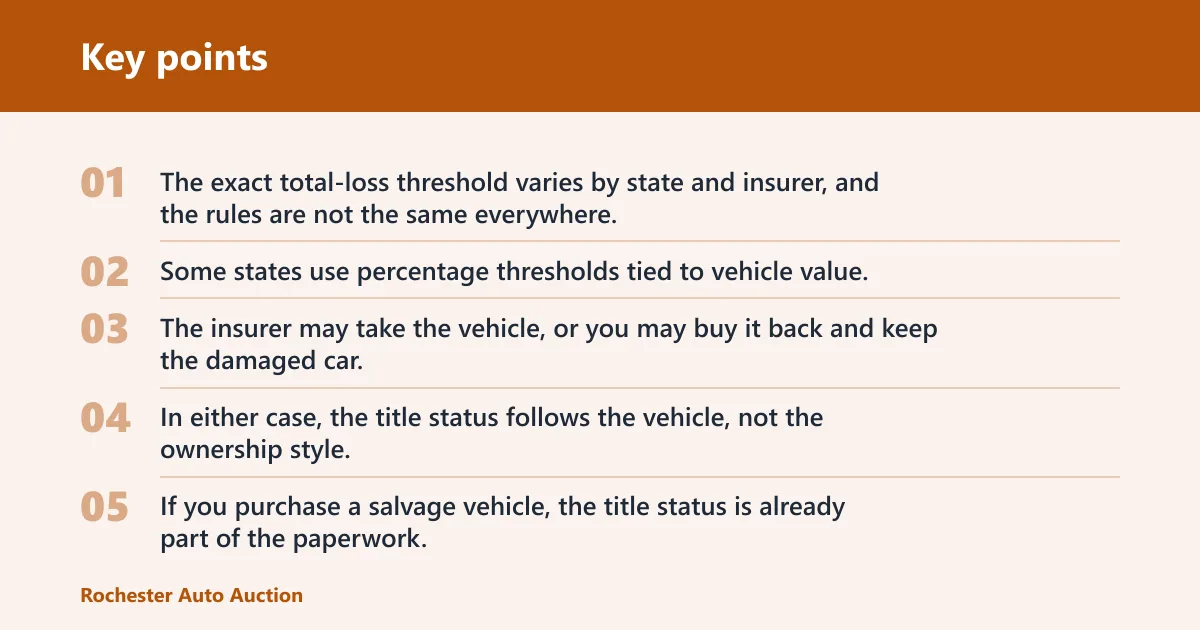
If your car is deemed a total loss by an insurance company, state rules may require the vehicle to be branded as salvage, and in some cases the insurer or state handles the branding process. The exact total-loss threshold varies by state and insurer, and the rules are not the same everywhere. Some states use percentage thresholds tied to vehicle value. Others use damage or repair rules instead.
Owner-retained totals and insurer buybacks
If the insurer pays a total-loss claim and you keep the car, the title usually becomes salvage-branded before you can drive it again. The insurer may take the vehicle, or you may buy it back and keep the damaged car. In either case, the title status follows the vehicle, not the ownership style.
Buying a car that is already branded salvage
If you purchase a salvage vehicle, the title status is already part of the paperwork. Do not assume the seller can hand over a clean title after repairs. Check the current title brand, the VIN, and whether your state allows that vehicle to move from salvage to rebuilt.
What you’ll need for the DMV file
- Current title or ownership document in the seller’s or owner’s name.
- Insurance settlement letter, total-loss notice, or comparable damage paperwork.
- Repair receipts for parts and labor, plus invoices with the vehicle’s VIN where possible.
- Before, during, and after photos if your state asks for them.
- VIN verification records, chassis or body component records, and the vehicle identification number itself.
- Government ID, completed state forms, and payment for title, inspection, or filing fees.
The DMV or state title authority can reject the file if the title chain is incomplete, the VIN does not match, or the vehicle status on record does not match the form you submit. Keep every repair paper until the title is issued.
How do you get a salvage title for a car?
You usually do not create the salvage brand yourself. The insurer, seller, or state process often starts it after a total loss or similar damage finding, then you submit the required ownership documents to the DMV or title authority. If your state requires a separate salvage application, file the state form and attach the ownership record and damage papers.
Follow the branding trigger
Check whether the vehicle has already been branded by the insurer or title office. In some states, surrendering the title after a total loss is enough for the state to issue the branded document. In others, you submit an application at the DMV with the existing title and claim paperwork.
Keep the vehicle status straight
A salvage-branded car usually is not road-legal for normal use until it has been rebuilt and approved under state rules. Some states allow limited movement, such as travel for inspection or repair, while others set different permit rules. Do not register it for road use as if it were clean. If the state uses a salvage certificate rather than a salvage title, the same warning still applies: branding is not the same as road legality.
Picture a sedan with airbag deployment, frame damage, and a payout from the insurer. The title moves into salvage status first. Only after the repair paper, inspection, and VIN checks does the rebuilt path begin.
How do you get it retitled after repairs?
To retitle a repaired salvage vehicle, finish the repairs, collect proof of those repairs, schedule the required inspection, and submit the rebuilt-title application your state uses. That is the legal path back to driving. The inspection type, fee, and appointment process vary by state, and some states require more than one form of VIN verification.
-
Finish documented repairs.
Use parts that match the vehicle’s identity and keep receipts for every major component, especially body, airbag, frame, and glass work. If your state checks the source of replacement parts, missing paperwork can stop the rebuilt application. -
Assemble the repair file.
Put together the salvage title or salvage certificate, settlement paperwork, repair invoices, photos, and VIN records. Add the state application form and ID if your DMV requires them at filing. -
Schedule the inspection.
Book the state safety inspection or salvage inspection that your DMV requires before retitling. Hawaii requires a salvage vehicle inspection as part of the rebuild process, while other states use different inspection formats and appointment systems. -
Submit for rebuilt branding.
File the rebuilt-title package with the state title authority after the vehicle passes inspection. In Minnesota, the vehicle is reclassified as “Prior Salvage” after inspection. Texas requires rebuilt titles to retain branding permanently. -
Register only after approval.
Do not drive on public roads until the rebuilt title, registration, and any required plates or stickers are issued. California does not allow a vehicle branded as salvage to return to a clean title.
Salvage title checklist
| Stage | Required documents | Common rejection reasons |
|---|---|---|
| Total loss | Current title, insurer total-loss letter, ownership proof, state salvage form if required | Missing title, open lien, claim paperwork that does not match the VIN, wrong owner on record |
| Repairs | Parts and labor receipts, photos, VIN records, repaired component list | No receipts, undocumented major parts, swapped or mismatched VIN components, incomplete photos where required |
| Inspection | Inspection appointment, title or salvage certificate, repair file, ID, fee payment | Failed safety check, VIN mismatch, incomplete lighting or brake repairs, missing appointment paperwork |
| Retitle | Passed inspection report, rebuilt-title application, prior title branding, fee payment | Wrong application type, unpaid fees, missing inspection result, state rule that bars retitling |
| State variation | DMV-specific forms, fee schedules, and inspection rules differ by state. Some states require one inspection; others require a separate VIN verification, a salvage inspection, or a safety check before rebuilt branding. | |
Common mistakes that stop approval
Missing receipts are one of the fastest ways to get denied. If the DMV cannot tie the major repairs to the VIN, the rebuilt file may stall. Keep invoices for the engine, airbag system, frame work, and any part that could affect the car’s identity or safety.
VIN mismatches cause another common failure. Check the dash VIN, door label, engine records, and title documents before inspection. If a replacement part or body panel creates a record conflict, the state may require a correction before retitling.
Using the wrong form causes avoidable delays. A salvage-branding file is not the same as a rebuilt-title file. Start with the title status you already have, then match the application to that stage.
A common first-timer mistake is repairing the vehicle before checking state rules. Suppose a truck is rebuilt with no record of a salvage inspection in a state that requires one. The owner may have to repeat paperwork or replace parts documentation before approval.
Do salvage title rules vary by state?
Yes. State rules, forms, fees, and inspection steps vary, and some states treat branding differently. Hawaii’s DOT does not issue a salvage title for motor vehicles statewide, but the state still requires an inspection process before a vehicle can be rebuilt and titled under its rules. Minnesota, Texas, and California each use different branding outcomes after repairs.
Some insurers also limit who can buy a salvage vehicle. Progressive notes that sale restrictions can apply in some states, including limits on who may buy a salvage vehicle. That matters before you buy, because the state may not let a private buyer complete the same transfer path.
Can you title a salvage vehicle?
Yes, in many states you can title a salvage vehicle again, but usually only after repairs and the required inspection. The vehicle stays branded. That means the title may become rebuilt, prior salvage, reconstructed, or a similar state label rather than returning to clean status.
If your state uses a non-repairable or parts-only certificate, stop there. Vehicles with a non-repairable certificate cannot be legally restored and operated. That path is different from salvage branding and does not lead to road use.
How much does it cost to get a salvage title?
Costs vary by state and by how the vehicle moved into salvage status. Expect title fees, inspection fees, and possible registration charges if the car is later approved. Repair costs often dwarf the state fees, and a repair path that needs major structural or safety work may not be worth it.
Use a simple decision point: if repair receipts, inspection fees, towing, and title charges approach the vehicle’s likely rebuilt value, stop and compare that total with the cost of replacing the car. A branded title can reduce resale value and narrow insurance options, so the numbers matter before you start repairs.
Can I buy a salvage title car and drive it?
No, not on public roads until the vehicle is repaired, inspected, and issued the proper road-legal title or registration in your state. A salvage-branded vehicle is not roadworthy by title status alone. After repairs, the rebuilt process determines whether it can be registered and insured for use.
If the seller says the car “just needs a quick inspection,” verify that your state actually allows rebuilt retitling for that brand. Non-repairable vehicles and some branded vehicles cannot legally return to road use.
Frequently asked questions
How do you get a salvage title?
Submit the ownership document, damage or total-loss paperwork, and any required state application to the DMV or title authority. If the state brands automatically after an insurer action, the salvage document may be issued without a separate owner application. The exact step depends on local procedure.
How does a car become salvage title?
A car becomes salvage when damage or repair cost triggers a total-loss decision, or when state law brands it after insurer action or title surrender. The brand attaches to the vehicle record, not just the owner. Buying a branded car keeps that status with the car.
How do I get a rebuilt title after salvage?
Complete repairs, save receipts, schedule the state inspection, and file the rebuilt-title application with the inspection result. Bring the vehicle identification number and all ownership papers. If your state requires a separate salvage inspection or VIN verification, complete that first before asking for registration.
What paperwork do I need for a salvage title?
Use the title or ownership record, insurer total-loss paperwork, repair invoices, photos where required, and VIN verification documents. Add the state’s application form and fee. Missing ownership or mismatched VIN documents are common reasons the DMV sends the file back.