Salvage Title: What It Means and Whether to Buy
A salvage title means an insurer declared the car a total loss; buy only if the post-repair price is roughly 25% to 40% below a comparable clean-title vehicle and the repairs can be verified. Get it wrong, and the savings can disappear into hidden damage, limited insurance, higher financing costs, and weak resale. This guide lays out what salvage and rebuilt titles mean, when the car can be driven, insured, financed, or sold, and how to judge whether the discount really covers the risk.
What a salvage title actually means
The total-loss brand and why it appears on a title
A salvage title is a title brand added after a vehicle is treated as a total loss under state rules. ClarityCheck says a salvage title is a brand a state adds after an insurer declares a total loss, and that often happens when repair costs exceed what the car was worth.
That does not mean every salvage vehicle was wrecked beyond use. It means the claim math crossed a state or insurer threshold, or the owner and insurer handled the claim in a way that triggered the brand. States can base the total-loss decision on fair market value, replacement cost, or actual cash value, so the same damage can lead to different title outcomes in different places.
Why salvage history stays with the vehicle
Salvage history is permanent title history. Even after repair, inspection, and retitling, the vehicle does not become clean-title again. The next brand is usually rebuilt or a similar state term that still signals past total-loss status.
This is why price alone can mislead. A low asking price may reflect real damage history, weaker lender appetite, and a smaller future buyer pool, not a hidden bargain.
Why salvage usually means the car is not road-legal yet
In many states, a salvage vehicle cannot be registered for normal road use until repairs are completed and the state title authority approves the next step, often a rebuilt title. Until then, it is commonly a storage, transport, auction, or repair-shop asset rather than a ready-to-drive car.
How does a car get a salvage title?
A car gets a salvage title after a total-loss decision, usually by an insurer but sometimes through owner retention or state procedures after major damage. The trigger is financial, based on repair cost versus vehicle value under state rules, insurer formulas, or both.
Insurance total-loss decisions and owner-retention cases
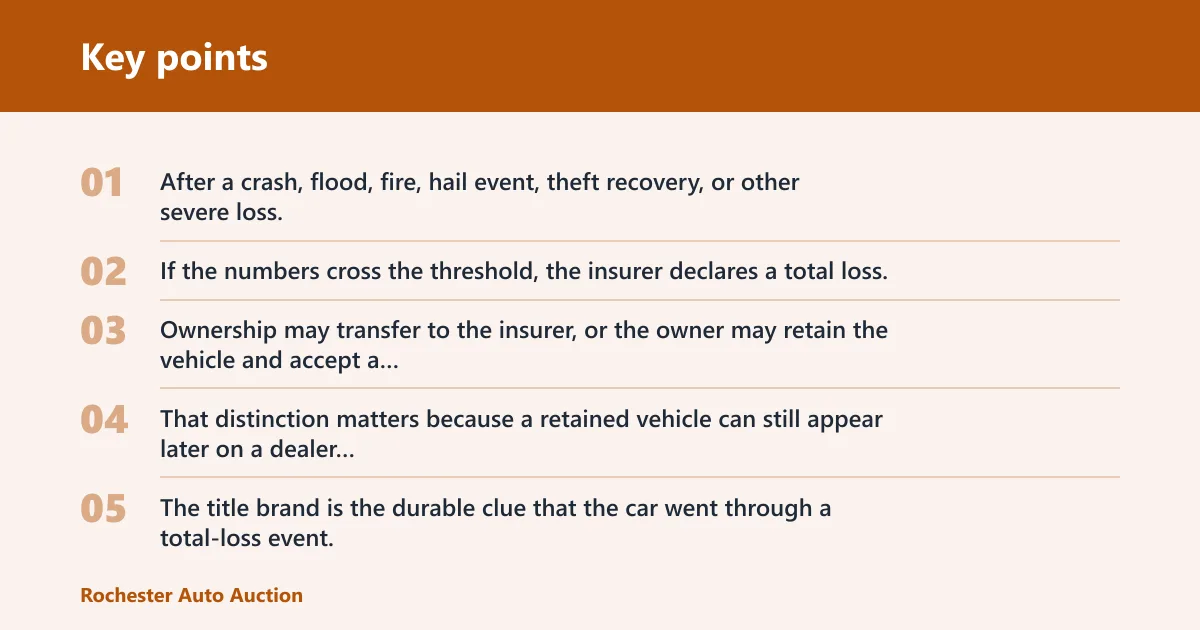
After a crash, flood, fire, hail event, theft recovery, or other severe loss, the insurer estimates repair cost and compares it with the valuation method allowed in that state. If the numbers cross the threshold, the insurer declares a total loss. Ownership may transfer to the insurer, or the owner may retain the vehicle and accept a branded title process.
That distinction matters because a retained vehicle can still appear later on a dealer lot or online marketplace with fresh paint and incomplete paperwork. The title brand is the durable clue that the car went through a total-loss event.
Total-loss thresholds vary by state
There is no national threshold. The same source states there is no national threshold, and it gives Oklahoma as a 60% example, Nevada as a 65% example, and Iowa as a 70% example. Other states use different methods, and some examples cited by title services and DMVs include 80% thresholds.
The threshold is only part of the story. A state may compare damage with actual cash value, fair market value, or replacement cost, and that choice changes the result. Two cars with the same bent quarter panel and airbag deployment can end up with different title outcomes because the valuation method differs.
From insurer to salvage auction to rebuilder or parts buyer
Once totaled, many vehicles move into salvage-auction channels. That is where rebuilders, exporters, dismantlers, and parts buyers shop. Heavy Salvage focuses on heavy salvage semi-trucks, trailers, equipment, and commercial vehicles, says it is a trusted insurance auction site, and shows recent listings with DMV Title Status marked Salvage.
Retail shoppers also encounter these vehicles after repair. OnlySalvage lists salvage and rebuilt vehicles from private sellers and dealers, emphasizes title status disclosure up front, and says its buying process has three steps. The listing venue does not change the main issue: you still need to confirm what caused the brand and whether the repairs were done well.
Can you legally drive a salvage-title car?
Usually no, not in normal everyday use. A salvage title commonly blocks standard registration until the car is repaired, inspected where required, and retitled under state procedures, often as rebuilt. The exact rule depends on the DMV or title authority, but salvage status usually means the car is not yet road-ready.
Why salvage status usually blocks normal registration
Many states treat salvage as an intermediate status. The vehicle can be transported, sold, repaired, or dismantled, but not registered like a clean-title or rebuilt-title vehicle. Temporary permits may exist for inspection or repair travel in some states, but that is not the same as ordinary legal driving.
What changes after repair, inspection, and rebuilt-title approval
After repairs, the owner typically submits receipts, title documents, and the vehicle itself for inspection. The inspection can focus on VIN integrity, stolen-parts prevention, and sometimes roadworthiness or major systems. If the vehicle passes, the state may issue a rebuilt title or similarly named brand.
A rebuilt title can make registration and driving possible. It does not erase the total-loss history, and it does not make the vehicle equivalent to a clean-title car in market value or insurability.
How state rules differ
State DMV and title-authority rules vary on inspection steps, receipts, forms, and whether a prior salvage certificate can become rebuilt at all. Some vehicles move forward, others remain non-repairable or parts-only. Verify the exact paperwork before money changes hands, not after.
Salvage, rebuilt, or parts-only?
A simple decision tree
The easiest way to judge a branded vehicle is to sort it into three buckets. Salvage means major damage history and a possible repair candidate. Rebuilt means the state has allowed it back into road use after repairs and inspection. Non-repairable or parts-only generally means road use is not an option.
- Salvage title: major-loss history; often not road-legal yet; may be repairable.
- Rebuilt title: repaired and inspected under state process; may be registrable and drivable; still permanently branded.
- Non-repairable or parts-only certificate: cannot be restored for road use; suitable only for dismantling, scrap, or component harvesting.
Why the difference changes the buying decision
A salvage-title car can be a candidate for careful purchase if the damage was limited, the repair file is strong, and the discount is deep enough. A rebuilt-title car can work if it passes independent inspection and the pricing reflects both history and future resale difficulty.
A non-repairable vehicle is a different product. If a seller talks about “just getting it inspected later” while the title says non-repairable or parts-only, walk away from any road-use plan.
What kind of damage matters most?
Structural damage, flood history, and fire damage are often the biggest concerns because they can leave hard-to-see safety and reliability problems long after the car looks repaired. Hail and some theft-recovery cases can be more manageable, but the title brand alone does not tell the whole story or guarantee limited damage.
Collision, hail, theft recovery, flood, fire, and abandonment
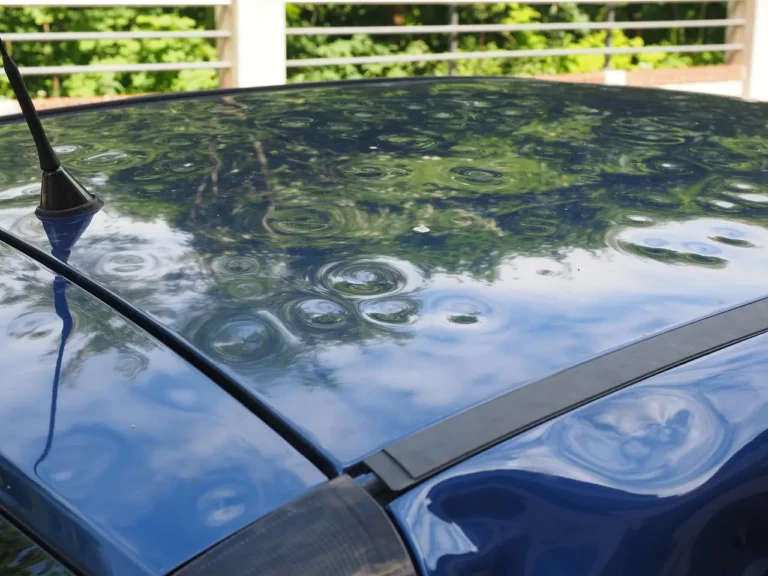
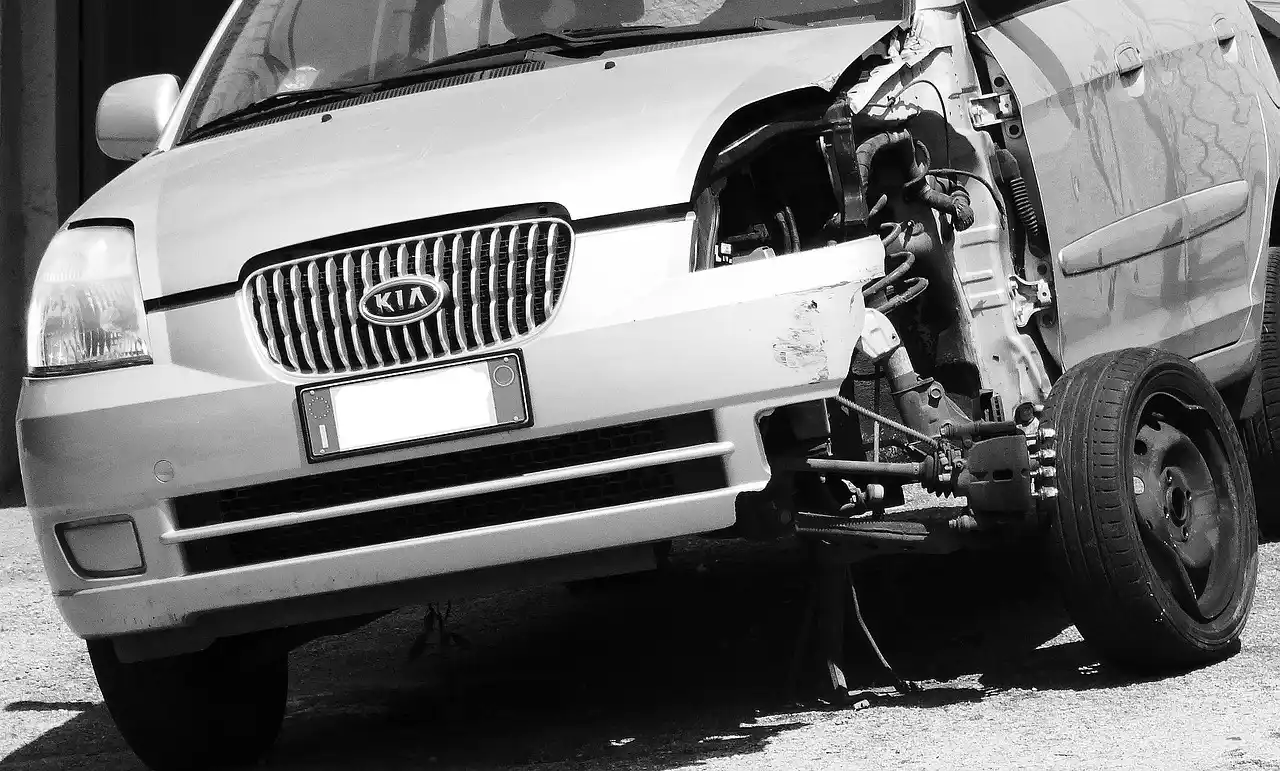
Common salvage causes include collision, flood, fire, hail, theft recovery, vandalism, and, in some states, abandonment. The brand may mention a damage type, or it may only show salvage status without enough detail to explain the actual failure points.
NMVTIS branding helps, but it is not a complete biography of the vehicle. A theft-recovery vehicle might have minor cosmetic loss, or it might have been stripped, rewired, and driven hard. A collision vehicle might need only bolt-on panels, or it might have hidden floor-pan and rail damage.
Why structural, flood, and fire history deserve more skepticism
Structural damage can hide behind straight-looking body gaps. Poor pulls, weak welds, and bent mounting points may not show up until alignment will not hold, tires wear oddly, or a second impact loads the structure the wrong way.
Flood damage ages badly. Corrosion creeps into connectors, seat tracks, sensors, modules, and grounds. Mold, water lines under trim, damp insulation, and silt in hidden cavities point to problems that often reappear as electrical faults months later.
Fire damage is more than burned plastic. Heat can affect wiring insulation, connectors, seals, paint adhesion, and structural temper in nearby metal. Soot and extinguishing chemicals can keep causing trouble after the visible repair is done.
What title records can and cannot tell you
Title brands and NMVTIS records can confirm that something serious happened and may flag the general category. They cannot replace before-and-after photos, repair invoices, frame reports, airbag records, and a hands-on inspection by a qualified mechanic.
Picture a midsize sedan with fresh paint, a straight steering wheel, and a rebuilt title from another state. If the under-seat wiring shows green corrosion and the seat-belt pretensioner connectors look newer than the surrounding harness, treat that as a flood or prior restraint-system clue until records prove otherwise.
When is the discount real value?
The discount is real value only when it still looks attractive after repair risk, insurance limits, financing terms, downtime, and future resale loss are priced in. A low sticker price by itself proves very little. Compare the car with a true clean-title equivalent, then subtract for every branded-title cost you will carry later.
Start with the right clean-title comparison
Use a comparable clean-title vehicle with the same trim, drivetrain, approximate mileage, condition class, and local market. Then compare the salvage or rebuilt asking price against that number, not against a higher-loaded trim or dealer retail outlier.
Salvage vehicles are usually 20% to 30% cheaper than their book value. That is a useful starting point, not an automatic buy signal. Some deserve a bigger discount because the branded-title stigma will follow the vehicle for the rest of its life.
Add the deferred costs
Build the real number from the ground up:
- Clean-title market comp.
- Asking price of the branded vehicle.
- Known repair or finish work still needed.
- Independent inspection cost.
- Likely insurance limits or premium difference.
- Financing penalty, if any.
- Expected resale haircut when you sell or trade.
- Downtime and registration delays.
If those added costs wipe out the discount, the deal was never cheap. It only pushed costs into later ownership.
How resale haircut changes by buyer type
Private-party buyers may accept a rebuilt car if records are excellent and the price is low enough. Franchise dealers are often the least interested in taking a branded-title vehicle on trade, especially if damage type or repair quality is unclear. Independent dealers may buy selectively, but usually at a strong discount. Car-buying services can be inconsistent and may bid conservatively once the title history is confirmed.
For example, if the clean-title comp is about $20,000 and the rebuilt car is offered at about $15,500, the price difference can help frame the comparison. That looks appealing until a mechanic finds airbag-module faults, one insurer will write liability only, and likely resale later looks closer to wholesale than retail. The headline savings vanish fast.
What should you check before buying?
Check paperwork, repair quality, safety systems, corrosion signs, insurance access, financing options, and title-transfer readiness before agreeing on price. A salvage-title purchase stands or falls on verification. If a seller cannot support the repair history with documents and inspection access, the right answer is usually to pass.
Documents to demand
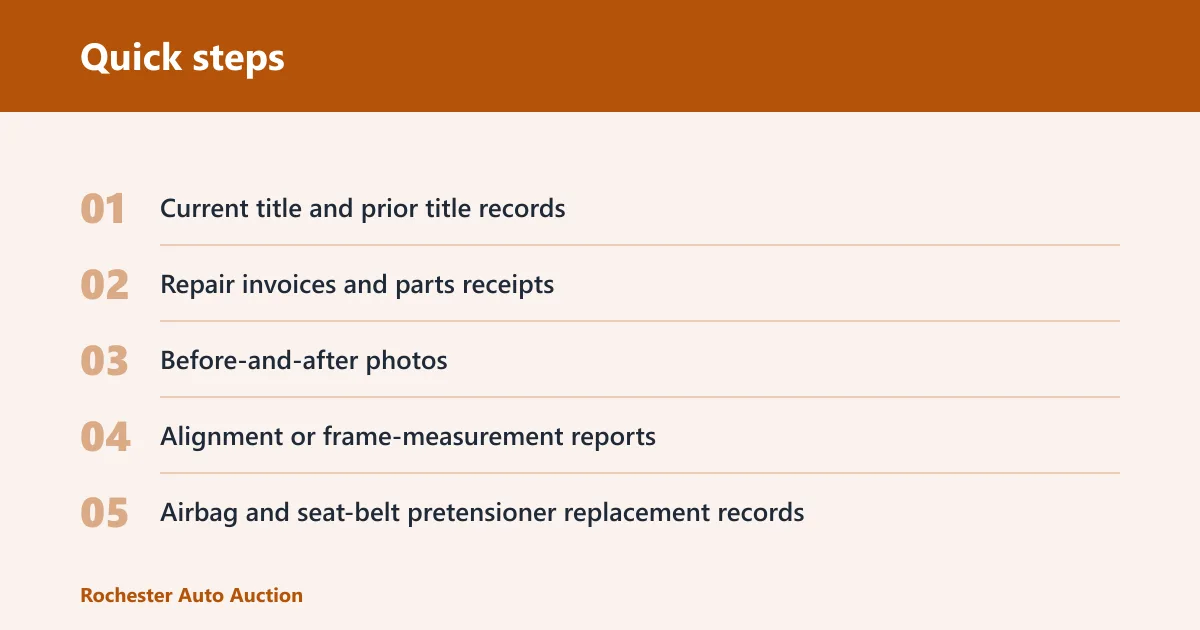
Ask for every record the seller has, then judge both what is present and what is missing.
- Current title and prior title records
- Repair invoices and parts receipts
- Before-and-after photos
- Alignment or frame-measurement reports
- Airbag and seat-belt pretensioner replacement records
- State inspection certificates
- Insurer paperwork or loss description if available
- VIN inspection forms and rebuilt-title paperwork where applicable
The same source recommends inspecting the vehicle in person or arranging a professional inspection. That is sound advice for any branded-title vehicle.
Mechanical and safety checks that matter most
The pre-purchase inspection should be done by a qualified mechanic, with extra attention to structural and safety issues. Ask for frame measurements where relevant, a scan for diagnostic trouble codes, confirmation that airbags are present and communicating correctly, and a check for water intrusion or hidden corrosion.
Look closely at:
- Frame rails, aprons, floor pans, radiator support, and weld quality
- Panel gaps and paint overspray around seals and fasteners
- Airbag warning light behavior and restraint-system codes
- Seat belts that do not retract normally after pretensioner deployment
- Rust in seat mounts, spare-tire well, and under-carpet areas
- Moisture odor, silt, stained insulation, and fogged lighting
- Electrical accessories that work intermittently
- Tire wear that suggests unresolved alignment issues
Insurance, financing, and registration readiness
Before purchase, call insurers with the VIN and title status. Liability coverage may be easier to obtain than collision or comprehensive. Insurers may ask for photos, repair receipts, a VIN inspection, or rebuilt-title documentation before offering full coverage.
Do the same with financing if you will borrow. Many lenders avoid branded titles or tighten terms with larger down payments and shorter loan lengths. If the lender, insurer, and DMV answer three different questions three different ways, the cheapest price on the lot is irrelevant.
A common first-timer mistake is approving the deal after a good test drive, then learning the insurer will cover liability only and the lender wants different title paperwork than the seller has. The car may be drivable, but the transaction still fails because the paper trail does not line up.
Branded title matrix
Buyer decision table
Use this text-only matrix to score the vehicle as a risk-priced asset. Give each line the score that best matches the car. Add the points, then use the recommendation band below the table.
| Check | 0 points | 1 point | 2 points |
|---|---|---|---|
| Title brand | Non-repairable, parts-only, or inconsistent paperwork | Salvage, not yet rebuilt | Rebuilt with complete state paperwork |
| Damage type | Flood, fire, or major structural collision | Theft recovery with missing parts, or mixed damage history | Cosmetic hail or light non-structural damage with proof |
| Repair evidence | No invoices, no photos, vague seller story | Partial receipts or limited photos | Before-and-after photos, invoices, parts receipts, shop details |
| Frame, airbag, flood indicators | Any unresolved red flag | One concern explained but not fully documented | No active red flags and records support the repair |
| Inspection readiness | Seller refuses independent inspection | Inspection allowed but issues remain unknown | Qualified mechanic inspection completed with acceptable results |
| Insurance availability | Liability unavailable or title blocks coverage | Liability only, or full coverage uncertain | Insurer confirms acceptable coverage terms |
| Financing likelihood | No realistic lender path | Possible only with stricter terms | Cash purchase or lender already confirms terms |
| Resale haircut | Future buyer pool likely tiny | Private sale possible but trade-in weak | Discount already deep enough to offset likely resale drag |
| Parts availability | Hard-to-source components or discontinued safety parts | Some delays or high used-part dependence | Common parts and service support are readily available |
| Total all-in cost | Ends near clean-title ownership cost | Savings exist but are narrow | After all costs, still materially below clean-title alternative |
Score bands:
- 0-8: Skip as a road car. Buy only if the goal is parts and the title allows it.
- 9-14: Conditional buy. Proceed only with strong inspection results and confirmed insurance, DMV, and financing answers.
- 15-20: Buy candidate. The discount appears to cover the risk, but only if documents and inspection stay clean.
Who should buy one, and who should walk away?
A salvage-title vehicle suits a buyer who can verify repairs, tolerate lower resale, and keep enough cash reserve for surprises. It is a poor fit for anyone needing easy financing, broad insurer choice, predictable trade-in value, or maximum reliability with minimal downtime.
Buyers who may make the math work
The strongest candidates are disciplined shoppers comparing real clean-title comps, insisting on records, and using a mechanic who knows structural and restraint-system checks. Cosmetic hail, light theft-recovery, or well-documented non-structural damage can sometimes pencil out.
Buyers who should avoid branded titles
If the vehicle will be the family daily driver, the only transportation, or an asset that needs easy future trade-in, branded titles usually create too much friction. The same goes for buyers uncomfortable with title paperwork, inspection follow-up, or resale negotiation later.
When the right answer is parts, not transportation
Some salvage vehicles make far more sense as donors. If the title is non-repairable, the frame is compromised, the airbags are missing with poor documentation, or flood corrosion is visible in multiple systems, the value may be in drivetrain, interior, glass, wheels, or body panels rather than road use.
Suppose a pickup has a sound engine, straight bed, and good doors, but the firewall shows heat exposure and the title is parts-only. Trying to “save” that truck for normal driving is the wrong project. Treat it as inventory, not transportation.
Frequently asked questions
What does a salvage title mean on a car?
It means the vehicle was declared a total loss under state rules or insurer procedures and carries a permanent title brand reflecting that event. Even after repair, the history remains. The car may later receive a rebuilt title, but it does not become a clean-title vehicle again.
What’s the difference between salvage title and rebuilt title?
A salvage title usually means the car is a damaged repair candidate that is not yet ready for normal registration. A rebuilt title means it was repaired and passed the required state process for road use. Rebuilt can be drivable and registrable, but it is still permanently branded.
How much cheaper is a salvage title car than a clean title car?
Salvage vehicles are usually 20% to 30% cheaper than their book value, but that range is only a starting point. The right discount depends on damage type, repair quality, insurance options, financing limits, and how hard the branded title will hit resale or trade-in later.
Can you insure a salvage title car?
Often yes, but coverage can be limited. Liability is commonly easier to obtain than collision or comprehensive, and insurers may ask for photos, repair receipts, VIN inspection results, or rebuilt-title documentation. Approval varies by company, by state, and by whether the title is still salvage or already rebuilt.
Can a car get a salvage title from flood, fire, hail, or theft?
Yes. Collision is common, but salvage branding can also follow flood, fire, hail, theft recovery, vandalism, and other severe-loss events. The title brand may name a category, yet it still may not reveal the full damage history, repair quality, or missing parts situation.
Can a salvage title be removed?
No, the total-loss history is generally permanent. After repair and inspection, many states can issue a rebuilt title or similar brand that allows registration, but that does not erase the salvage event or convert the vehicle into a clean-title car. Any seller claiming otherwise deserves extra scrutiny.