Can a Car Get a Rebuilt Title for Hail Damage?
Yes. Hail damage can lead to a salvage title if an insurer declares the car a total loss, but it does not create a rebuilt title until repairs are finished and the vehicle passes the required inspection. Skip that chain, and you can overpay for a branded car with weak resale value. This guide explains the title path, how total-loss thresholds work, and what to check before you buy.
Can hail damage total a car?
Yes. Hail can total a car even when it still drives normally, because the title decision turns on cost, not drivability. If the repair estimate, salvage value, and state title rule cross the total-loss line against the car’s actual cash value, the insurer may declare it totaled.
Why a drivable car can still be a total loss
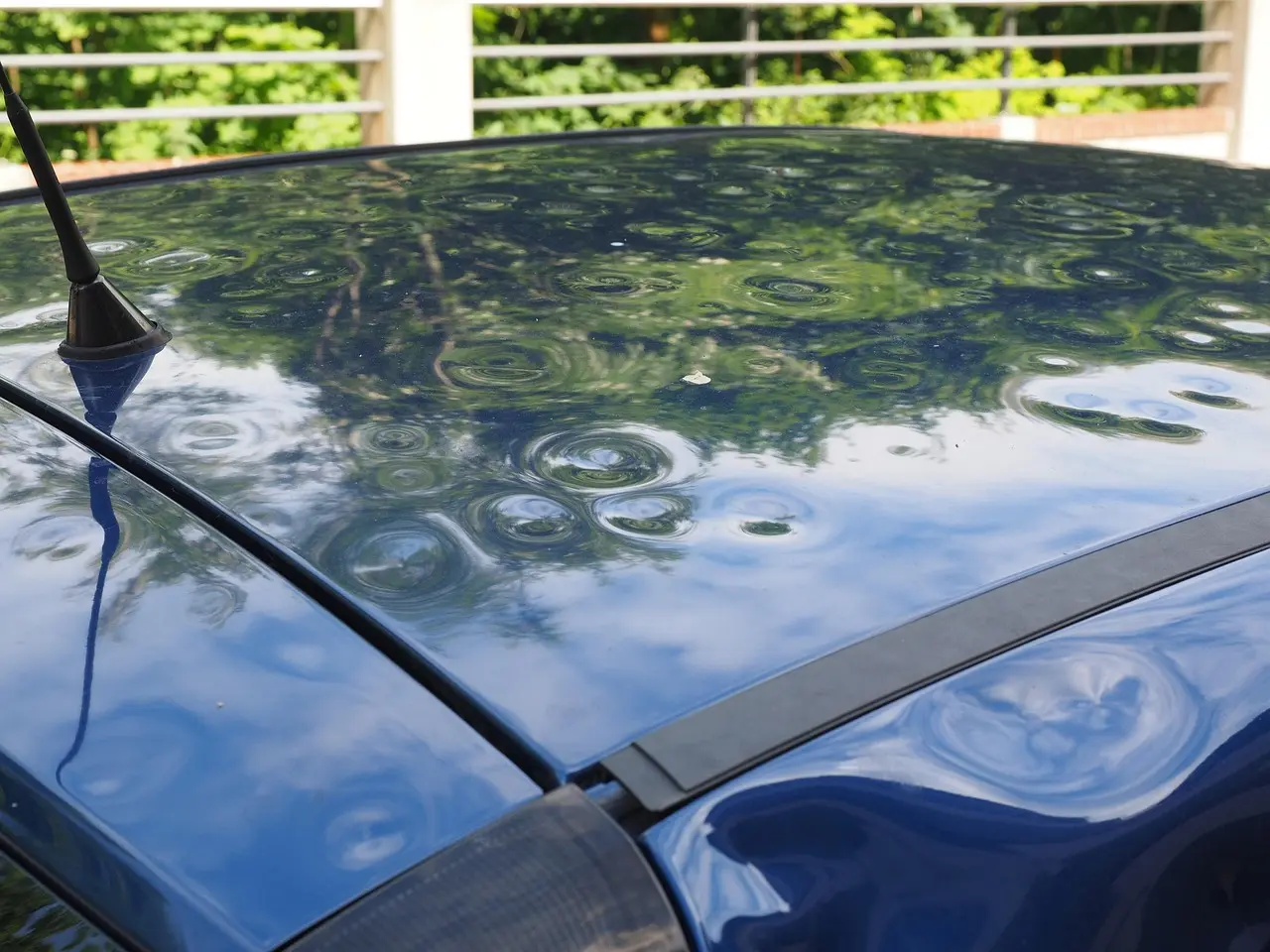
Drivability does not protect the title. A car with dents across the hood, roof, and trunk may still start, steer, and brake normally while the estimate climbs past the insurer’s limit. That happens often with hail because the damage spreads across wide panels and trim.
Suppose a sedan with a lower pre-loss value takes baseball-size hail across the roof, hood, and deck lid. Add cracked glass, scan work, and paintless dent repair, and the bill can outrun the car’s value. The car may still move under its own power. The title can still be totaled.
What repair items matter most
The biggest hail cost drivers are not the dents alone. Glass, roof damage, sensor calibration, and paint work can change the math fast. On some vehicles, roof skin repair, windshield replacement, sunroof parts, and camera or driver-assist calibration push the estimate high enough to trigger a total loss.
Insurers compare repair costs, salvage value, and state title rules against the car’s actual cash value. That comparison drives the decision. A low-value model can be totaled sooner because its value is lower.
How salvage title follows hail damage
Hail does not automatically create a salvage title. The salvage title comes after the insurer declares the vehicle a total loss. In other words, hail may be the damage source, but the branding step starts with the total-loss decision, not with the storm itself.
Where the insurer’s total-loss decision starts
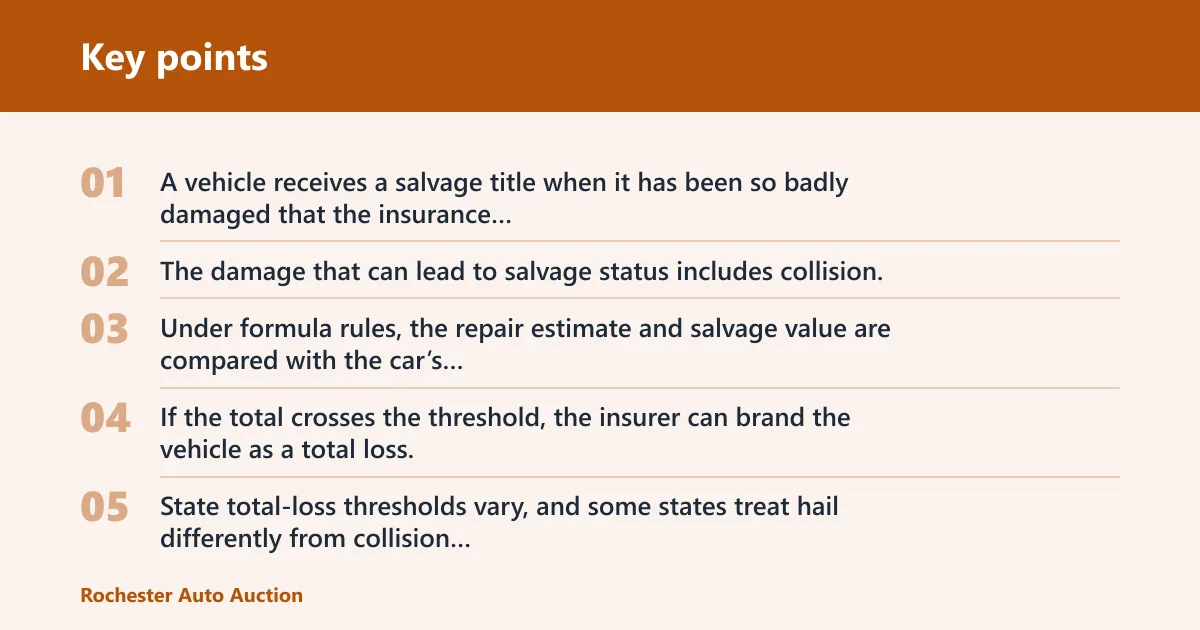
A vehicle receives a salvage title when it has been so badly damaged that the insurance company declares the car totaled. The damage that can lead to salvage status includes collision, flood or serious crash damage, and in some states weather-related losses can also qualify under local rules.
Some states use a percentage threshold. Others use a total loss formula. Under formula rules, the repair estimate and salvage value are compared with the car’s actual cash value. If the total crosses the threshold, the insurer can brand the vehicle as a total loss.
How state threshold rules affect branding
State total-loss thresholds vary, and some states treat hail differently from collision damage. That is why two nearly identical cars can end up with different outcomes depending on where they are titled. Some states exclude hail from statutory damage rules, so a Texas hail car may keep a clean title.
Colorado guidance on a competing page says a weather-only loss can avoid salvage branding. Florida can issue a salvage/loss vehicle or Certificate of Destruction under its statute. These differences matter because the same storm can lead to a clean title in one state and a branded title in another.
What happens when hail damage reaches the total-loss line
Once the repair estimate and state rule cross the line, the insurer pays out as a total loss. At that point, the title status changes according to state law and the vehicle’s damage level. Some totaled vehicles remain eligible for later repair and inspection. Some do not.
Not all totaled vehicles are eligible for a rebuilt title. Some cars are so badly damaged that the state will declare them non-repairable. That result is more common when structural damage is severe or when the state’s rules block future road use.
Can a car get a rebuilt title from hail?
Yes, but only after the car first becomes a salvage vehicle. Hail damage by itself does not typically create a rebuilt title. Rebuilt status comes later, after repairs are completed, the car passes the required inspection, and the state allows the title to move from salvage to rebuilt branding.
Why rebuilt status only comes after salvage
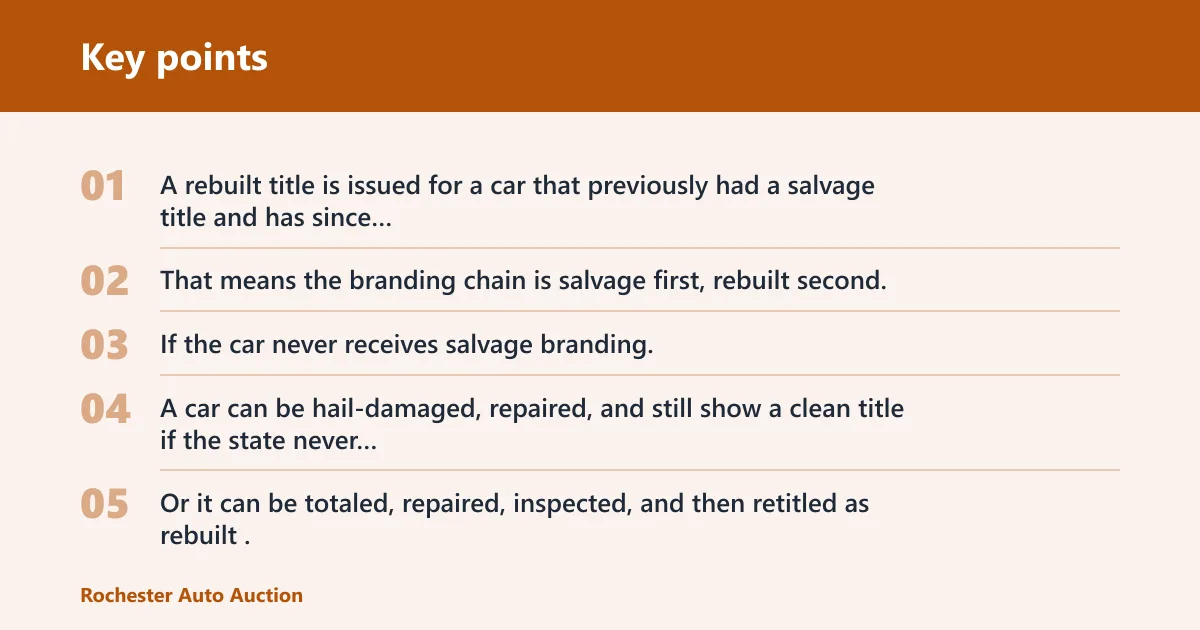
A rebuilt title is issued for a car that previously had a salvage title and has since been repaired or restored. That means the branding chain is salvage first, rebuilt second. If the car never receives salvage branding, there is nothing to rebuild into a rebuilt title.
That sequence matters for buyers. A car can be hail-damaged, repaired, and still show a clean title if the state never branded it salvage. Or it can be totaled, repaired, inspected, and then retitled as rebuilt. The title path depends on the loss decision and state law.
What the rebuilt inspection checks
A restored car must pass a safety inspection before the state may issue a rebuilt title. That inspection usually checks the VIN, safety systems, and parts verification. The point is to confirm that the car is the same vehicle that was declared salvage and that the repairs meet state standards.
How much damage for a rebuilt title? The answer is not a single dollar figure. The key issue is whether the vehicle was branded salvage first, then repaired, then cleared by inspection. A minor hail repair does not create rebuilt status on its own.
Why branding can stay on the title
Rebuilt title cars can still carry permanent branding. That mark can remain in the title record after repair and inspection. Buyers should treat that brand as a lasting history flag, not a temporary note that disappears once the bodywork is done.
Rebuilt cars are often harder to insure, finance, and resell. That does not mean impossible. It does mean you should ask the insurer and lender about branded-title rules before making an offer.
Hail damage title matrix
This checker helps you sort the likely title outcome before you buy. Use the car’s value, the repair estimate, and the state rule together. The same hail damage can lead to a clean title, salvage branding, or rebuilt status, depending on where the car sits in the title chain.
| Vehicle value | Repair estimate | Glass, roof, calibration damage | State threshold type | Likely title outcome | Buyer risk notes |
|---|---|---|---|---|---|
| $8,000 | $2,500 | Panels dented, no glass breakage, no calibration | Percentage threshold or formula not crossed | Clean title likely | Check for hidden repairs and repainting, but branding is less likely. |
| $10,000 | $6,200 | Cracked windshield, roof dents, camera calibration | Formula state | Salvage title likely if total-loss line is crossed | Budget for branding, slower resale, and tougher insurance questions. |
| $14,000 | $5,500 | Dents on hood and roof, no glass or calibration | Higher percentage threshold state | Clean title or non-total loss likely | Ask for the estimate and confirm whether the insurer closed the claim as a total loss. |
| $6,500 | $4,800 | Glass, roof work, scans, calibration, paint repair | Low-value vehicle in threshold state | Salvage title possible, then rebuilt after repair and inspection | Higher chance of title branding because the vehicle value is low. |
| Any value | Severe structural or safety damage | Roof structure, airbags, safety systems, missing parts | Nonrepairable rule in some states | Nonrepairable title possible | Do not assume road return is possible; some states block rebuilt status. |
How insurers price a hail loss
Insurers price hail loss using actual cash value, repair estimate, salvage value, and state title rules. That comparison decides whether the car is repaired as a normal claim or declared a total loss. The estimate can change quickly if hidden damage appears during teardown.
Actual cash value in total-loss decisions
Actual cash value, or ACV, is the pre-loss vehicle value used in total-loss decisions. It is the number the insurer compares against the estimate and salvage value. A high-mileage car with a lower ACV can total sooner than a newer car with the same hail damage.
Repair estimate plus salvage value under formula states
In states without a fixed threshold, the total loss formula is used. The insurer adds the repair estimate and salvage value, then compares that total with the ACV. If the combined figure reaches the state limit, the car may be declared a total loss.
That formula makes supplements important. If the estimate includes glass, roof work, scans, and calibration, that can push a car toward total loss. The first estimate may look manageable. The final estimate may not.
Why supplements can change the result
A hail claim can start as body damage only, then grow after inspection. Hidden roof dents, cracked trim, or broken sensors can add labor and parts cost. Once those items are added, the vehicle may cross the total-loss threshold even if the first quote seemed below it.
What happens after a hail-damaged total loss?
After a hail-damaged car is declared a total loss, the title path depends on state law and the extent of damage. The car may keep a clean title in some states, receive a salvage title in others, or be marked nonrepairable if the damage is too severe for future road use.
Clean title, salvage title, or nonrepairable title
Some states do not brand every weather loss. Others do. If the loss qualifies under the state’s total-loss rule, the title may become salvage. If the damage is extreme enough, the state may issue a nonrepairable title instead of allowing future repair and inspection.
Repair, inspection, and a rebuilt title application
If the car is eligible for road return, the next steps are repair, inspection, and title application. The rebuilt path is not automatic. The owner must document the repairs, prove parts are correct, and clear the state inspection before the rebuilt title can be issued.
Picture a compact SUV with hail dents, a broken windshield, and a camera that needs calibration. If the insurer declares it totaled, the next buyer should expect salvage branding first. Only after repair and inspection can the title move to rebuilt, if the state allows it.
How a repaired car returns to the market
Once repaired and inspected, the car can return to the market with rebuilt branding. That car may look fine on the surface, but the branding stays attached to the history. Buyers should review the claim file, repair invoices, and inspection record before committing.
What to check before you buy
Before you buy a hail-damaged car, check the VIN, history report, and title record across more than one source. That is the best way to spot salvage branding, rebuilt status, or title washing across state lines. Do not rely on a single seller statement.
VIN check and vehicle history report
A vehicle history report and VIN check help verify prior events, title changes, and branding. They can also help reveal hidden hail damage or a branded title that was not obvious in the ad. Use more than one database if the car has moved between states.
Signs of title washing across state lines
Title washing happens when a branded vehicle is retitled in another state and the brand becomes harder to spot. Look for mismatched title dates, gaps in ownership records, inconsistent mileage entries, or a fresh registration in a state with different branding rules. Those are warning signs, not proof by themselves.
Insurance and financing questions for branded titles
Will car insurance cover a rebuilt title? Often yes, but coverage can be harder to place and terms may be tighter. Financing can also be more difficult. Ask the insurer whether comprehensive and collision are available, and ask the lender whether it will finance a branded title before you buy.
- Run the VIN through at least two history sources.
- Ask whether the car was declared a total loss, salvage, or nonrepairable.
- Review the estimate for glass, roof, scan, calibration, and paint items.
- Request repair invoices and the state inspection record if the title is rebuilt.
- Check whether the car was retitled in another state after the loss.
- Confirm insurance and financing terms before making an offer.
Frequently asked questions
Can a car get a rebuilt title from hail damage?
Yes, but only if hail damage first led to a salvage title and the car was then repaired and inspected. Hail alone does not create rebuilt status. The rebuilt title follows salvage, not the storm. If the state never branded the car salvage, there is no rebuilt title step.
Can a car be totaled for hail damage?
Yes. A car can be totaled for hail damage even if it still drives normally. The insurer looks at ACV, repair estimate, salvage value, and state rules. If those numbers cross the total-loss line, the vehicle may be declared a total loss and branded accordingly.
Does hail damage make a salvage title?
Not by itself. Hail damage can lead to a salvage title if the insurer declares the vehicle a total loss and the state’s rules support branding. In some states, weather-only losses may avoid salvage branding, so the same hail claim can end differently depending on where the car is titled.
Can a car have a salvage title due to hail damage?
Yes. If hail damage is severe enough to trigger a total loss under the state’s rule, the car can receive a salvage title. That is more likely when the vehicle has a lower value, broken glass, roof damage, or sensor calibration costs that push the repair estimate higher.
How much damage for a rebuilt title?
There is no single damage amount that creates a rebuilt title. The car must first receive salvage branding, then be repaired, then pass the required state inspection. The rebuilt title depends on the title path and inspection results, not on a universal dollar threshold.
What happens after a hail-damaged car is declared a total loss?
The insurer closes the claim as a total loss, and the state applies its title rule. The car may become salvage, nonrepairable, or, in some states, remain clean if hail is excluded from branding rules. If repairs are allowed, the car must pass inspection before rebuilt status can be issued.