How to Participate in Dealer Auctions as a First-Time Buyer
You can buy legally as a first-time bidder by using a dealer, taking a public-access or broker path, or qualifying through a business license. Bid only after you know every fee and set a hard ceiling at your total landed cost. Skip that, and you can overpay, miss required charges, or end up with a vehicle you cannot title or resell. This guide covers the legal access paths, the full cost stack, and a safe bid-ceiling method for beginners.
Dealer auction basics
Dealer auctions are bidding events. The high bid wins, but that number is only the first step in the math. You still need registration, approval, inspection time, and a plan for fees, title timing, and pickup. Bidding may happen in a live lane, online, or through manual bidding systems; some listings also offer a buy-now or blitz-price option.
First-time buyers usually run into three problems: access, condition, and total cost. Access decides whether you can bid at all. Condition decides whether the car is worth the risk. Total cost decides whether the unit still fits your resale target after buyer premium, title fee, gate fee, sales tax, transport, and any arbitration exposure.
How bidding works at a high level
At many auctions, bids must stay above the current price, and bidding starts from the initial price announced in advance. Some platforms show the remaining time on the lot page, while others move vehicle by vehicle on the lane. Winning lots may be added to your cart automatically on certain platforms, but that does not mean the sale is fully settled.
What you’ll need
- An email address you can access immediately for account verification
- Government-issued ID for identity verification
- Business documents if you are registering through a company
- Payment method on file, such as a bank account or card accepted by the auction
- VIN check results and a history report before bidding
- A way to inspect photos, condition reports, and announcement labels
- A written max-bid number based on landed cost, not just hammer price
- Transport contact details if you cannot pick up the vehicle yourself
Can you bid without a dealer license?
Sometimes, yes. A first-time buyer can enter through a public auction, a broker, a licensed dealer partner, or a business that qualifies for trade access. Many dealer-only auctions still require a dealer license or approved access, so the right path depends on the auction’s rules, not on the vehicle itself.
Public auctions are the clearest exception. Redline notes that some public auctions do not require a license and individuals are eligible to bid, and it also points buyers toward public car auctions near them and police impound car auctions as alternatives. That route is different from dealer-only access, where approval is often limited to licensed buyers.
Legal access options to compare
| Access path | Who it fits | What to verify before bidding |
|---|---|---|
| Dealer license | Licensed businesses and dealers | Registration rules, bidder approval, payment terms |
| Broker or licensed partner | Individuals working through an approved intermediary | Authority to bid, fees, title handling, pickup timing |
| Public auction | Individuals in auctions open to the public | License requirement, ID rules, payment method, title transfer timing |
| Business account | LLCs or other qualified entities | Business verification, tax documents, approved payment method |
How do you register and get approved?
Start by creating the account, confirming your email, and submitting the identity or business documents the auction asks for. Then finish bidder approval and save a payment method on file before you try to bid. If the auction uses manual bidding, make sure you understand how the lane or online interface confirms a bid.
Alex MP says users should register online and confirm their account via email, and that bids must be above the current price. Alex MP also says bidding starts from the initial price announced in advance, uses a manual bidding system, and allows an unlimited number of bid increases during the auction. Those details matter because timing and bid entry rules vary by platform.
Registration checklist
- Create your account with a working email address.
- Verify the email before the lot closes.
- Upload ID or business verification documents.
- Wait for bidder approval before placing live bids.
- Add a payment method that can cover fees, not only the hammer price.
- Read the platform rules for invoice deadlines and pickup windows.
How do you inspect and set a bid ceiling?
Read the condition report first, then inspect the vehicle during the pre-bid window if one is offered. Look for mechanical notes, body and interior notes, odometer disclosure, announcement labels, and as-is status. If the auction gives you only limited lane time, use online photo review or a third-party inspection option.
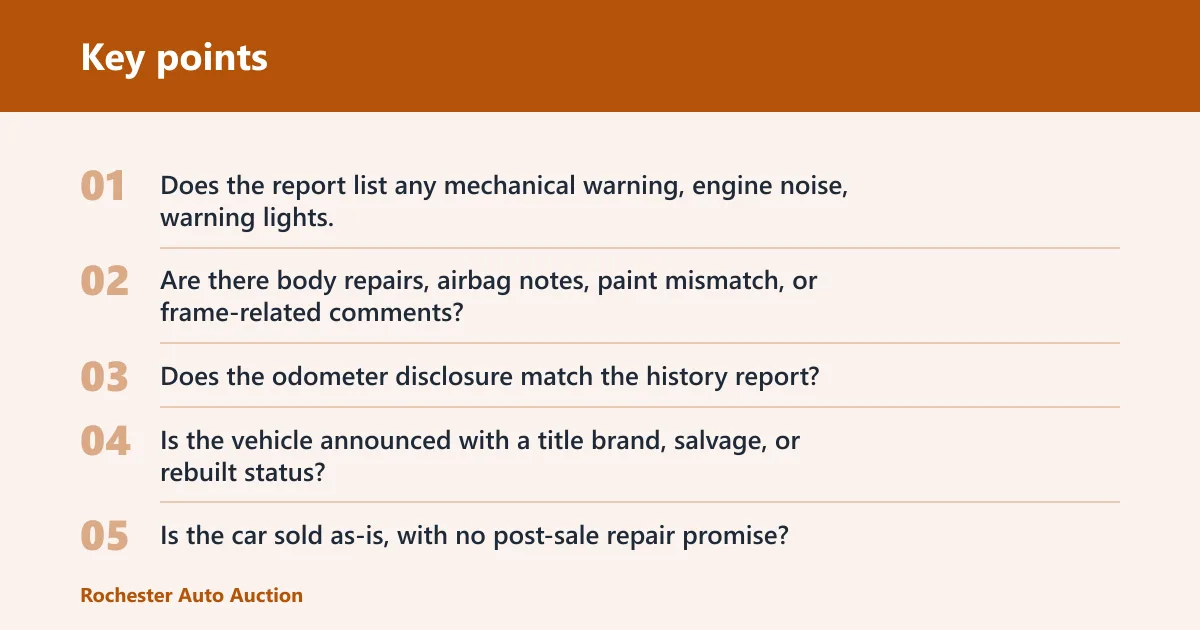
Do not treat the report as a guarantee. Odometer discrepancies, title brand, salvage or rebuilt status, and accident history can change the resale path entirely. The safest ceiling is not what you think the car is “worth”; it is your all-in cost ceiling after reconditioning, fees, transport, and your target profit are removed from expected resale value.
Inspection questions to ask
- Does the report list any mechanical warning, engine noise, warning lights, or drivability issue?
- Are there body repairs, airbag notes, paint mismatch, or frame-related comments?
- Does the odometer disclosure match the history report?
- Is the vehicle announced with a title brand, salvage, or rebuilt status?
- Is the car sold as-is, with no post-sale repair promise?
Say your target resale price is about $14,500 on a midsize sedan. If estimated reconditioning is about $1,200, buyer fee and title paperwork total about $850, transport is about $300, sales tax is about $680, and your minimum profit target is about $1,500, your top bid should stay around $9,970. That keeps the margin intact instead of hoping the numbers work later.
Dealer auction checklist
This checklist gives you a first-time buyer path you can actually use. Fill it in before you bid, and keep the final number lower than your ceiling if the condition report leaves any doubt.
| Section | Checklist item | Example / target |
|---|---|---|
| Eligibility and access path | Confirm whether you need a dealer license, broker, or public-auction entry | Public auction, dealer partner, or approved business account |
| Eligibility and access path | Complete account creation, email verification, identity or business verification, bidder approval, and payment method on file | Approved before the first bid |
| Pre-bid inspection questions | Check mechanical notes, body/interior notes, odometer disclosure, announcement labels, and as-is status | No unresolved red flags |
| Pre-bid inspection questions | Run a VIN check for title brand, salvage or rebuilt status, accident history, and odometer discrepancies | History matches the report |
| All-in cost worksheet | List buyer premium, title fee, gate fee, arbitration fee, sales tax, and transport cost | Use actual posted fees, not guesses |
| Bid-ceiling calculator example | Hammer price + fees + recon + tax + transport vs. resale target and margin | Do not exceed the ceiling |
In dealer auctions as worksheet
- Hammer price: your winning bid
- Buyer premium: auction-added percentage or flat fee
- Title fee: paperwork and transfer charge
- Gate fee: lot release or processing charge
- Arbitration fee: possible dispute cost if the auction allows claims
- Sales tax: based on your local rules
- Transport cost: towing or delivery from the yard
Bid-ceiling calculator example
Retail resale target: $14,500
Less reconditioning allowance: $1,200
Less buyer fee and title fee: $850
Less gate fee: $75
Less sales tax: $680
Less transport: $300
Less target profit margin: $1,500
Maximum bid: $9,895
Suppose the auction adds about $150 of arbitration exposure on a car sold as-is. That does not mean you will pay it, but it should still sit in your risk buffer if the condition report is thin or the title status is unclear. A first-timer who skips that buffer often bids too high on the lane and too low on reality.
What happens after you win?
Winning is not the finish line. After the sale, watch the invoice deadline, pay within the required turnaround, and arrange pickup before the yard window closes. Title transfer timing can vary, so check when the paperwork will be released and whether the vehicle is move-ready before you send transport.
The same source says winning lots are automatically added to your cart, but the rest of settlement still matters. If payment misses the deadline, the auction may cancel the sale or add penalties. If the title has a brand or a paperwork issue, that can slow resale even when the car itself is already off the lot.
Post-sale checks
- Open the invoice as soon as it posts.
- Verify the hammer price, fees, and tax line by line.
- Confirm the payment turnaround and accepted methods.
- Schedule pickup before storage or gate deadlines apply.
- Check title transfer timing before you advertise the vehicle.
Common mistakes
The most expensive mistake is overbidding past resale math. If your ceiling is based on a hoped-for sale price instead of a documented one, the margin disappears fast. Dealers often estimate value from current retail listings, condition, and sell-through speed, then factor in reconditioning and risk before bidding, which is the discipline beginners need from day one.
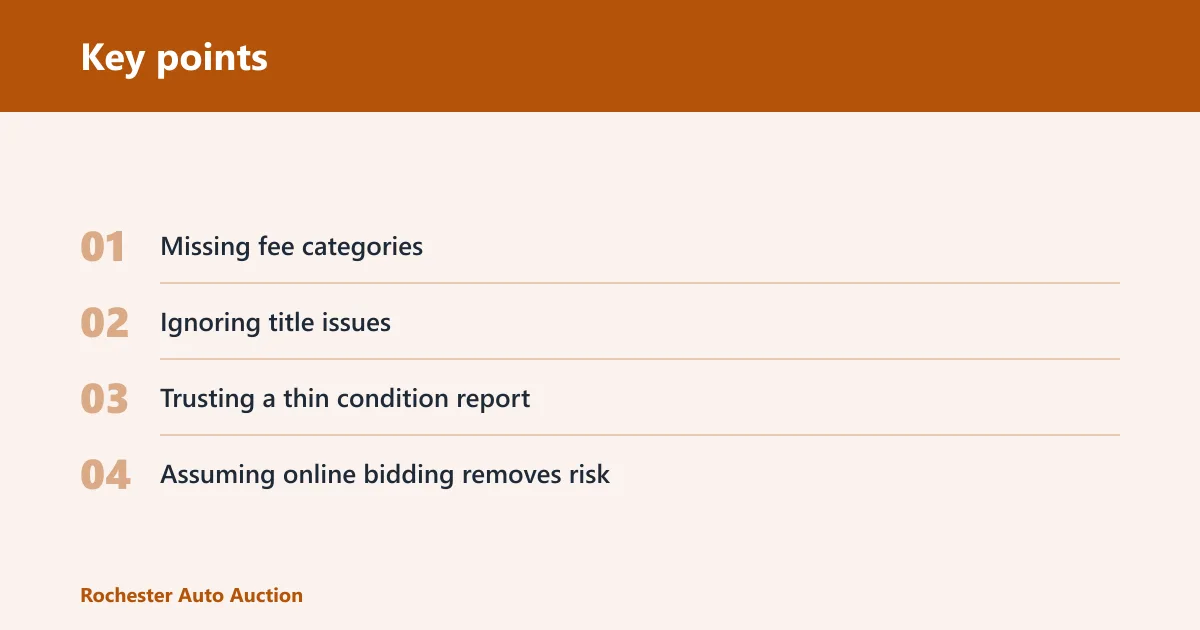
- Missing fee categories: buyer premium, title fee, gate fee, arbitration fee, sales tax, and transport all belong in the total.
- Ignoring title issues: salvage, rebuilt, brand, and odometer discrepancies can block or delay resale.
- Trusting a thin condition report: if the notes are vague, treat the car as higher risk.
- Assuming online bidding removes risk: it changes the lane, not the paperwork or the math.
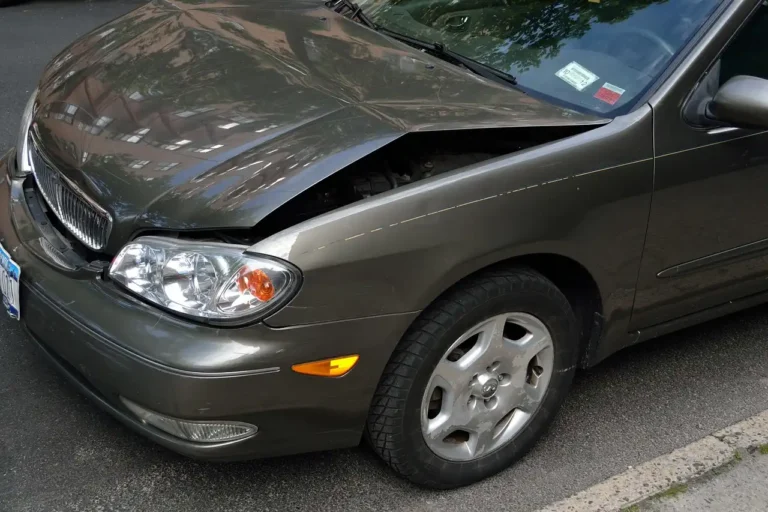
A common first-timer mistake is chasing a clean-looking crossover because the photos look simple and the opening bid seems low. The car still needs a $1,000 front-end repair and $250 transport, so the “cheap” win becomes a weak deal before the title even clears.
Prevention: write your ceiling on paper before the auction opens, and do not raise it after the first bid unless a verified lower reconditioning estimate changes the math.
Frequently asked questions
How do I participate in a dealer auction for the first time?
Pick a legal access path first, then register, verify your email, complete any identity or business checks, and add a payment method. Review the condition report, run a VIN check, and set a hard ceiling from your landed cost before you place a bid.
Can a first-time buyer bid at a dealer auction without a dealer license?
Yes, if the auction offers public access, a broker route, or another approved exception. Some public auctions do not require a license and allow individuals to bid, but dealer-only auctions often require licensing or approved access, so the entry rule must be confirmed in advance.
What documents do I need to register for an auto auction?
Expect a valid email, government ID, and sometimes business documents if you are registering under a company. Many auctions also want a payment method on file before approval. If the platform asks for tax or resale paperwork, upload it before you plan to bid.
What fees should I expect at a dealer auction beyond the winning bid?
Build the total around buyer premium, title fee, gate fee, arbitration fee if applicable, sales tax, and transport cost. These can turn a good hammer price into a poor purchase if you skip them. The invoice should show each line before payment is due.
How do I inspect a car before bidding at an auction?
Use the pre-bid inspection window, review photos carefully, and read the condition report for mechanical notes, body and interior notes, odometer disclosure, announcement labels, and as-is status. If you cannot inspect in person, use a third-party inspection service before the lot closes.
What happens if I win a car at a dealer auction?
You must pay by the invoice deadline, arrange pickup within the required window, and confirm when title transfer paperwork will be released. Winning does not end the process; it starts settlement, transport, and title handling. Check every line on the invoice before you send money.
Are online dealer auctions easier for first-time buyers?
Online bidding is easier to access, but it is not easier to underwrite. The same source notes that online auction buyers may face huge competition, and the same fee stack, title checks, and settlement deadlines still apply. The screen changes, the risk math does not.
How do I avoid overbidding at a dealer auction?
Set a maximum bid from retail resale target minus reconditioning allowance, fees, transport, and your target margin. Stop at that number even if the lane gets active. If the condition report is weak or the title status is unclear, lower the ceiling instead of raising it.
What’s the difference between public auctions and dealer-only auctions?
Public auctions may allow individuals without a dealer license, while dealer-only auctions usually restrict entry to licensed dealers or approved partners. The bidding process can look similar, but access rules, documentation, and fees can differ. Always confirm the auction type before you register.