Online Auto Auctions Near Me: How to Find Local Pickup Cars
Find online auto auctions near you by sorting listings by yard ZIP code, then check release timing, title status, and pickup hours before you bid. If pickup takes more than one trip, or the yard is far outside your travel radius, shipping may cost less. Skipping this step can add tow fees, storage charges, and a missed release window. This guide shows how to check location, documents, and total collection cost before you bid.
How to find nearby auction cars
Start with the vehicle’s storage site, not the seller’s office or the auction platform’s main office. A listing is only practical for local pickup if the yard ZIP code, region, and release policy can be verified before bidding.
Filter by yard location first
Use search tools that let you narrow by country, state or region, and yard ZIP code. Some listings show only the seller’s market area at the top, so open the full lot details and look for the collection address or storage yard. If the listing does not name the actual yard, treat it as unknown until support confirms it.
A pickup plan should start with distance. A car stored 25 miles away may be worth collecting yourself; a car 180 miles away may need a truck, trailer, or platform delivery once fuel, tolls, and time are counted.
Read the collection address before bidding
The collection address tells you whether the car is in a city yard, a regional compound, or a border-area storage site. That matters because a short drive on paper can become a long pickup day if the site has limited hours, badge entry, or release-only appointments.
Look for the country or region as well. A vehicle stored across a border can add customs steps, extra document checks, or a longer handoff window, even when the bid itself looks attractive.
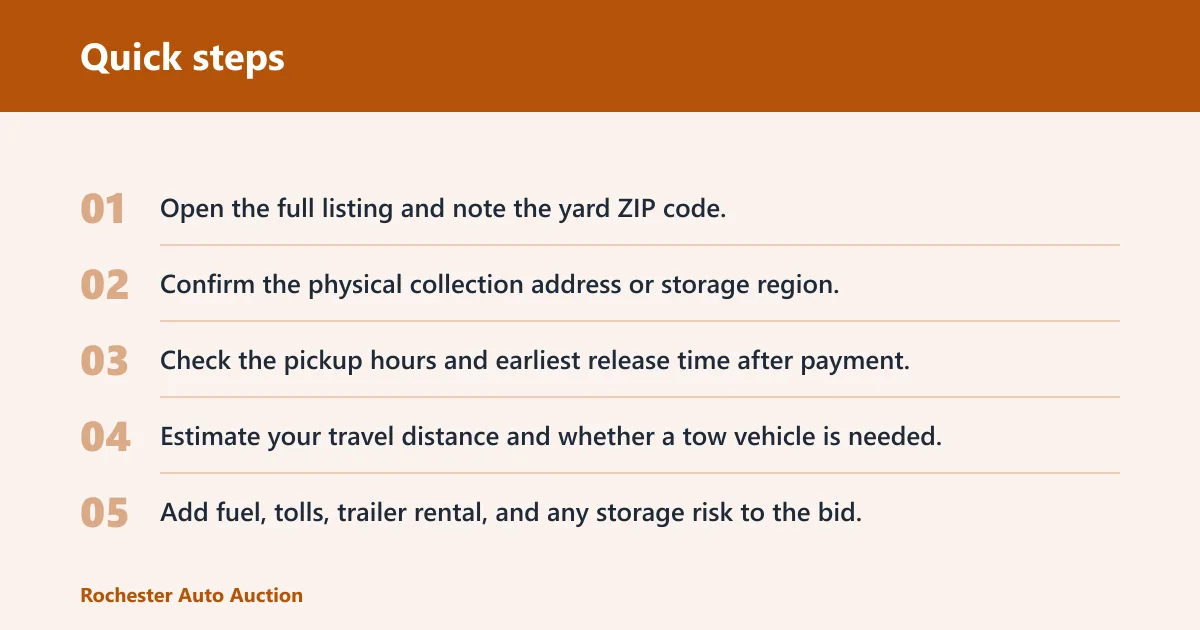
- Open the full listing and note the yard ZIP code.
- Confirm the physical collection address or storage region.
- Check the pickup hours and earliest release time after payment.
- Estimate your travel distance and whether a tow vehicle is needed.
- Add fuel, tolls, trailer rental, and any storage risk to the bid.
Signs that a listing is practical for local pickup are simple: the yard is within your travel radius, the platform names the release rule, payment can clear in time, and the required documents are already available. If any one of those is missing, the listing is not “nearby” in a useful sense.
What local pickup means

Local pickup means you collect the vehicle from the storage yard yourself or through a transport company you arrange. It does not mean the car is sitting at the nearest branch, and it does not guarantee that a buyer can drive it away without extra paperwork or a tow.
Self-collection versus yard release
Some auctions allow direct pickup once payment clears and release documents are ready. Others require a third-party transporter, an appointment, or a signed release before the yard will hand over the keys or paperwork. You should verify the yard rule before bidding, not after winning.
Suppose a shopper wins a midsize SUV listed at a nearby auction yard across town. If the platform allows self-collection after payment and the car is drivable, pickup may be cheaper than shipping. If the yard requires a carrier number and a release appointment three days later, the same car may no longer be a local pickup bargain.
When delivery is offered instead
Many platforms offer delivery or can quote a truck move to your address. That can help when the yard is far away, the car is not roadworthy, or the release process is strict. Delivery is not always the cheaper option, though, so compare it with towing or self-collection before you bid.
When you compare options, include time as a cost. A low bid can turn expensive if local pickup requires two trips, a hired trailer, and a full day waiting on release paperwork.
Check listing details first
Before you bid, read the listing for photos, damage notes, mileage, service history, and the estimated price or minimum bid. These are not side details. They tell you whether the pickup is worth the travel, the tow fee, and the storage risk.
What to inspect in the listing
Photos should show the front, rear, sides, interior, tires, dashboard, and visible damage. Damage notes should name the problem, such as collision damage, flood signs, missing parts, or non-start status. Mileage should be present and plausible for the vehicle age and condition.
Service history matters because it can show whether the car had routine maintenance, major repairs, or long gaps in care. If the listing includes an inspection sheet or appraisal note, read that too. It may mention warning lights, airbag deployment, or body damage that photos do not make clear.
When missing details should make you pause
A listing with sparse photos, no mileage, no service history, and vague damage text is harder to price and harder to collect. That does not always mean the vehicle is bad, but it does mean you should bid more cautiously or skip it entirely.
A common first-timer mistake is bidding on a truck because the opening price looks low, then discovering after payment that the vehicle sits in a yard two states away and needs a flatbed. The bid was cheap. The collection was not.
Verify registration and payment rules
You usually need an account before bidding, and many platforms require identity verification or business verification before release. Public buyers should confirm whether the auction is open, tender-based, fix-or-bid, or B2B-only, because access rules can change what you can buy and how you collect it.
Account creation and document upload
Most platforms require registration, identity checks, and document upload before you place a bid. If the platform asks for business details, enter them exactly as shown on your company records. For B2B sites that require VAT validation, a VIES-valid VAT number may be part of the approval process.
Do not wait until after winning to upload documents. If your account is not verified, the platform may hold the release or delay payment processing, which can shorten the pickup window.
Payment terms to confirm
Check whether the platform sends a proforma invoice, which bank account receives payment, and how long you have to pay. Some sites require payment from a company bank account only. Others accept personal transfer for private buyers. The rules should be clear before bidding.
Look for fees that can raise the total cost: buyer fee, yard fee, release fee, document handling fee, storage fee, and late-payment penalty. If the payment page does not list them clearly, ask for the full cost breakdown before you bid.
Understand pickup windows and release timing
Pickup windows tell you how long the yard will hold the car after payment, when release starts, and whether storage charges begin on a fixed day. A listing is only practical if you can collect within that window or pay the added cost without breaking your budget.
Days allowed after payment
Some yards release the vehicle the same day payment clears. Others allow several business days before collection starts. The key details are the release timing after payment and the last day you can collect before storage fees begin.
If a site gives you three business days after payment, the weekend may not count. That matters when you are arranging a trailer, taking time off work, or waiting for documents to arrive by post.
Storage rules and failed-collection risk
If the deadline is missed, the yard may charge storage fees, cancel the release, or require a new appointment. In some cases, failure to collect on time can also trigger relisting or administrative fees. Those charges can erase the value of a cheap bid very quickly.
Documents needed before release
Before the yard hands over the vehicle, it may require payment confirmation, a release note, identity documents, and pickup authorization. If the title or other vehicle documents are mailed later, ask whether the car can still leave the yard first or whether the paperwork must arrive before release.
Picture a buyer who pays on Monday but ignores the release email. The yard allows four pickup days. By Friday afternoon, storage fees start and the preferred tow company is booked. The car is still there, but the cheap deal has already changed shape.
Local pickup readiness checklist
Use this table before bidding. If a row raises doubt, get the answer in writing or skip the car. The goal is to compare listings by pickup practicality, not just bid price.
| Listing location | Distance from buyer | Pickup deadline | Release requirements | Document status | Tow/trailer need | Estimated total collection cost |
|---|---|---|---|---|---|---|
| Berlin yard, DE | 48 km | 3 business days after payment | Payment confirmation, ID, pickup appointment | Service history on file; vehicle documents by post | No, if roadworthy | €85 fuel and parking; storage risk low |
| Warsaw storage site, PL | 210 km | 2 business days after payment | Release note, ID, transporter booking number | Title status pending; certificate of conformity available | Yes, flatbed needed | €310 tow; extra storage risk if delayed |
| Valencia yard, ES | 96 km | 5 calendar days after payment | Proforma paid, buyer ID, yard release form | Photos and damage notes posted; service history missing | Maybe, depending on condition | €140 fuel, tolls, and possible trailer hire |
| Brussels region compound, BE | 24 km | Same day after payment clears | Verified account, payment receipt, collection slot | Documents by post; no title released at pickup | No | €35 local travel; low collection cost |
Pickup versus delivery cost comparison
Compare pickup, towing, and platform delivery side by side before you bid. The lowest hammer price can still be the most expensive choice if the car needs a tow truck, the yard is far away, or release timing forces extra days of storage.
Tow truck or trailer costs
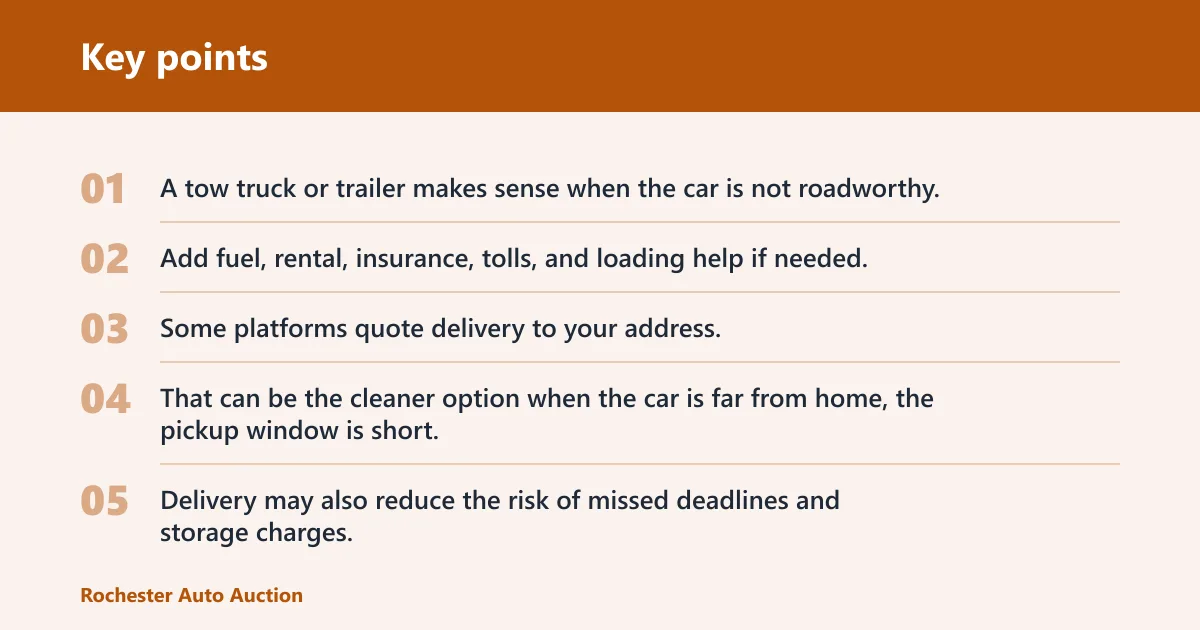
A tow truck or trailer makes sense when the car is not roadworthy, the yard forbids self-collection, or the paperwork is not enough to drive it legally. Add fuel, rental, insurance, tolls, and loading help if needed. Those costs belong in your bid ceiling.
Platform delivery options
Some platforms quote delivery to your address. That can be the cleaner option when the car is far from home, the pickup window is short, or you cannot visit the yard during business hours. Delivery may also reduce the risk of missed deadlines and storage charges.
How can you avoid paying shipping when buying from an online auction? Bid only on cars with a nearby yard, a clear self-collection rule, and enough time to collect after payment. If those conditions are missing, shipping may still be the cheaper choice once the full cost is counted.
How to estimate total collection cost
Start with the bid, then add the buyer fee, payment fee, travel cost, towing or trailer cost, and any storage risk. If the car is 120 km away and needs a flatbed, the collection cost may be higher than a closer car with a slightly stronger bid. That is the number that matters.
Ask three questions before bidding: Can the yard release the car to me or my transporter? How many days do I have after payment? What will collection cost if I miss the first pickup slot? If any answer is unclear, treat the listing as risky.
What documents to confirm before collection
Vehicle documents can control whether the yard releases the car, when you can register it, and whether you can drive it home. Check service history, vehicle documents by post, and any certificate of conformity before you bid if paperwork is part of your plan.
Vehicle documents by post
Some auctions mail the vehicle documents after payment rather than handing them over at the yard. That can still work for pickup, but only if the release note is separate from the title or registration papers. Confirm the timing so you do not arrive expecting documents that are still in transit.
Certificate of conformity and release papers
A certificate of conformity can matter for registration in some markets. If the car crosses a country border or you plan to register it quickly, ask whether the certificate is available and whether it is included with the sale. Release papers should also be listed clearly.
Service history and what it tells you
Service history is not a substitute for condition checks, but it helps you judge maintenance regularity. Look for oil service records, inspection stamps, timing belt notes, or repair invoices if the listing includes them. Missing service history is not a deal-breaker by itself, but it raises the risk score.
Frequently asked questions
How do I find online auto auctions near me with local pickup?
Filter listings by yard ZIP code, state or region, and collection address, then check the pickup window before bidding. A car is only “near” you if the physical storage site is within your travel radius and the platform allows release in time for pickup or transport.
Can I pick up a car myself after winning an online auction?
Sometimes, yes. But self-collection depends on the yard’s release rules, the payment status, and whether the vehicle can be handed over without a carrier. Some platforms require a transporter, an appointment, or extra release paperwork, so confirm the rule before you bid.
How do I know where an auction car is located before bidding?
Open the full listing and look for the physical yard, collection address, ZIP code, or country or region. Do not rely on a seller office or auction branch name alone. If the actual storage site is not shown, ask support to confirm it in writing.
What documents do I need to arrange pickup after winning an auction?
Most yards want payment confirmation, identity documents, and the release note or pickup authorization. If the platform requires business verification, bring those records too. Some vehicles also need title or registration papers, but those may be mailed separately rather than handed over at release.
How long does it take to collect a car after payment?
It depends on the platform and yard. Some release vehicles the same day payment clears, while others allow only a few business days. Check the exact deadline, because weekends, bank transfer delays, and document handling can shorten the real collection window.
How can I avoid paying shipping when buying from an online auction?
Choose listings with a nearby yard, clear self-collection rights, and a pickup window you can meet. Then compare your travel, towing, and storage costs against delivery before bidding. If local collection costs more than delivery, the cheapest bid is not the cheapest deal.