Can Anyone Buy From Online Auto Auctions Open to the Public?
Yes, many public online auto auctions accept everyday buyers, but you usually need a verified account, government ID, and sometimes a refundable deposit before you can bid. Miss the rules, and you can lose the car, the deposit, or pay storage fees if pickup runs late. This guide explains who may bid, which documents auctions ask for, and how payment and delivery work.
Public access and when you can actually bid
Often, yes, but “public” does not mean “bid right now.” Some sites allow open registration, while others require account review, deposit confirmation, or location-based approval before bidding opens. A platform can be public and still block you until those checks finish.
Public access usually means the auction does not require a dealer license for every listing. It does not mean that every vehicle, state, or sale is open to every buyer. Auction house policy, title type, and state transfer rules still control what you can win and keep.
What open registration usually means
Open registration usually lets you create an account without a dealer credential. You may still need to confirm your email, upload an ID, accept the auction terms, and place a deposit hold before bid approval. Some platforms grant browse access first and bidding access later.
When a public site still limits bidding
Some public auctions restrict bidding on salvage units, export-only vehicles, specialty inventory, or cars tied to local licensing rules. Others limit bids until the buyer profile is complete and payment method validation passes. Public access is a starting gate, not a promise of instant participation.
Do I need a dealer license to bid in a public online auto auction?
No, not for a true public auction that accepts retail buyers. You do need a dealer license for dealer-only platforms and for inventory marked dealer-only by the seller or auction house. The key is the listing rule, not the broad label on the website.
State law can matter too. Some auctions allow any adult buyer from any state, while others limit participation by residency, local registration law, or title transfer rules. If the platform says “public,” read whether that applies to bidding, to title transfer, or to both.
State restrictions that change the answer
One state may allow a public buyer to bid but require extra paperwork before a rebuilt or salvage title can be registered. Another may allow the sale but restrict how the vehicle leaves the lot. That is why a platform’s access rule and a state’s title rule should be checked separately.
What do you need to register for an online auto auction?

Most public auctions ask for an email address, identity verification, agreement to the terms, and a complete buyer profile before they approve bidding. Many also require a payment method on file or a refundable deposit. Without those steps, registration may exist but bid access may not.
Buyer account steps
Expect some version of the following before approval:
- Create an account with a valid email address.
- Verify the email link or one-time code.
- Enter your legal name and contact details exactly as they appear on ID.
- Upload government identification if requested.
- Accept the auction terms, buyer agreement, and fee schedule.
- Add a payment method or deposit hold if the platform requires one.
Suppose the account name says “Mike T.” but the driver’s license says “Michael T. Rivera.” That mismatch can trigger manual review or rejection, especially if the auction uses identity checks before bid approval.
Deposit and payment method checks
Some auctions want a card on file only for verification. Others require a refundable deposit to open bid access or raise your bidding limit. A few accept only wire transfer or cashier’s check for final payment, which matters if you planned to pay like a normal retail purchase.
Does your state change eligibility?
Yes. State rules can affect who may bid, how a title transfers, whether a salvage or rebuilt vehicle can be registered, and what paperwork the buyer must file after purchase. A public auction can still be unusable if the buyer’s state will not accept the title status or sale paperwork.
Residency and licensing limits
Some auctions set residency limits for certain inventory, while others use the buyer’s shipping destination or registration state to decide access. A dealer-only state rule may also affect whether a non-dealer can buy a branded-title unit at all. Check both the listing and your home state’s transfer rules.
When local law affects pickup or transfer
Local law can also affect the transport step. Some lots require a tow truck for non-running vehicles, while others allow the buyer or carrier to move the car only after the title and release paperwork clear. If your state requires inspections for rebuilt titles, budget time for that before registration.
Auction eligibility checklist
This checklist helps you move from signup to bid approval without missing the usual gates. Use it before you place a bid, not after you win.
| Step | What the auction may ask for | Yes/no |
|---|---|---|
| 1. Account created | Email address and legal buyer name | Yes / No |
| 2. Identity verified | Government ID, address match, phone or email confirmation | Yes / No |
| 3. Terms accepted | Buyer agreement, fee rules, payment deadline, pickup rules | Yes / No |
| 4. Payment method approved | Card on file, deposit hold, wire instructions, or cashier’s check approval | Yes / No |
| 5. Bid access granted | Platform approval, deposit cleared, bidding limit set | Yes / No |
| 6. Title reviewed | Clean, salvage, rebuilt, or bill of sale only | Yes / No |
| 7. Inspection checked | Preview slot, virtual walk-through, photos, condition report limits | Yes / No |
| 8. Pickup plan set | Tow or transport booked, storage deadline noted, delivery option confirmed | Yes / No |
If any “No” remains on this checklist, pause before bidding. A public listing only helps when the account, title, payment, and pickup rules all fit your state and your budget.
What should you review before bidding?
Review the vehicle condition report, title type, and inspection access before you bid. Public auction photos and descriptions can help, but they do not replace a physical inspection or a title check. The report tells you what the seller disclosed, not everything hidden in the vehicle.
Vehicle condition report details
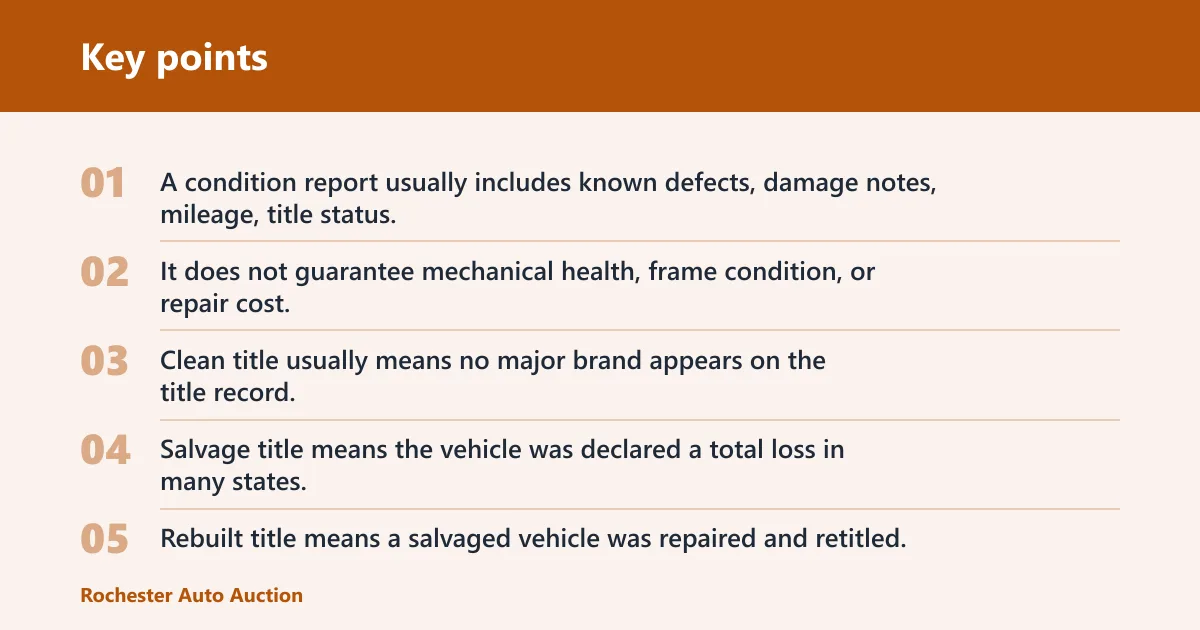
A condition report usually includes known defects, damage notes, mileage, title status, run-and-drive or no-start information, and sometimes warning lights or interior damage. It does not guarantee mechanical health, frame condition, or repair cost. Treat it as disclosure, not a warranty.
Title types to read carefully
Clean title usually means no major brand appears on the title record, but it still needs a title check. Salvage title means the vehicle was declared a total loss in many states. Rebuilt title means a salvaged vehicle was repaired and retitled. Bill of sale only may leave you unable to register the vehicle in some states.
A common first-timer mistake is treating “run and drive” as a full mechanical inspection. It usually means the vehicle started, moved, and shifted at the time of listing, nothing more. A car can run and drive with worn brakes, warning lights, or hidden body damage.
Inspection limits and photo gaps
Some auctions allow in-person preview hours, others offer a virtual walk-through, and some provide only photos plus a written report. Limited-start or no-start notes matter, but they do not tell you why a car will not start. Photos can hide panel gaps, fluid leaks, or interior wear.
What fees and deadlines apply after you win?
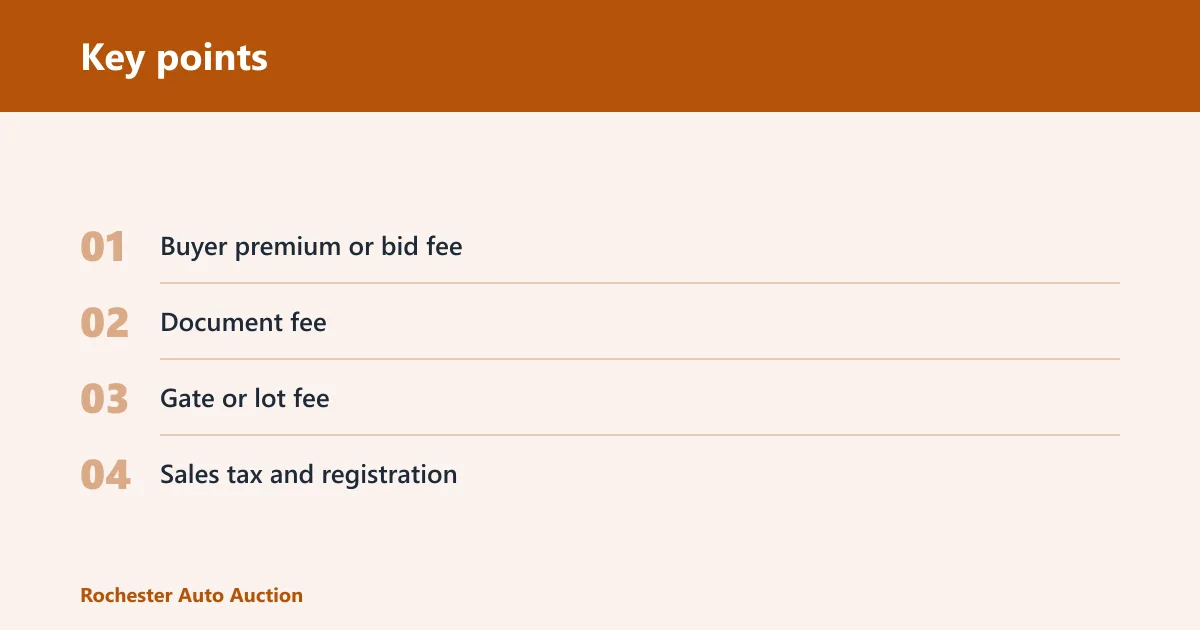
After you win, the final price usually includes more than the hammer bid. Expect buyer premium, document or processing fees, possible gate or lot fees, and taxes or registration charges where they apply. Payment and pickup deadlines can add storage costs if you miss them.
Common buyer fees
- Buyer premium or bid fee: a percentage or flat charge added to the winning bid.
- Document fee: paperwork and title-processing charge.
- Gate or lot fee: release or lot-handling charge at pickup.
- Sales tax and registration: depends on your state and title path.
Payment timeline
Some auctions require a deposit by a short deadline and full payment within a second deadline, often within about 24 to 72 hours, though rules vary by platform. Accepted methods may include wire transfer, cashier’s check, debit card, or approved financing funds. Late payment can cancel the sale, forfeit the deposit, or suspend the account.
Pickup, shipping, and storage
Most auctions set a pickup window. If the vehicle is not removed within the pickup window, storage fees can start. Some vehicles require tow-only transport, especially if they do not run or have release restrictions. Remote delivery may be available through a transport company, but the buyer usually arranges it.
Picture a salvage sedan won on Friday with a 48-hour pickup window. If the carrier is not scheduled until the following week, storage charges can begin before the truck arrives. That cost belongs in your total landed price, not as an afterthought.
Can first-time buyers use these auctions safely?
Yes, but only if you verify the title, payment rules, transport plan, and final cost before bidding. Public auctions can work for first-time buyers, yet the risks rise when the buyer assumes the report is complete or the pickup deadline is flexible. Careful review matters more than speed.
Red flags to check before bidding
Watch for incomplete title data, missing condition details, no preview access, unclear payment methods, and short pickup windows. If a listing says “bill of sale only,” confirm whether your state will register it. If the auction will not explain fees in writing, keep moving.
Can you finance a car bought at auction?
Sometimes, but not always. Some auctions require cash-equivalent payment such as wire transfer or a cashier’s check, and they do not wait for retail-style loan approval. If you plan to finance, confirm that the lender will fund auction purchases, branded titles, and the payment deadline.
Financing also has to fit the pickup schedule. A lender that needs several business days may miss a 48-hour payment deadline, which can cancel the sale. If the title is salvage or rebuilt, some lenders will not fund it at all.
Frequently asked questions
Can anyone buy from online auto auctions open to the public?
Often yes, but only after registration, identity checks, and sometimes a deposit or payment method review. “Public” means non-dealer buyers may participate; it does not mean every listing is open or every bid is approved instantly. Title rules and state limits can still block a purchase.
Are online public auto auctions safe for first-time buyers?
They can be, if you verify the title type, review the condition report carefully, confirm the payment deadline, and arrange transport before you bid. The main mistake is treating auction photos like a full inspection. First-time buyers should also confirm state registration rules.
What fees should I expect at an online car auction?
Plan for the winning bid plus buyer premium, document fees, possible gate or lot fees, and taxes or registration charges. Storage fees can appear if pickup misses the deadline. The total cost often matters more than the hammer price when you compare listings.
What happens after I win an online auto auction?
You usually receive an invoice, a payment deadline, and pickup instructions. You must pay by the stated method, complete any required paperwork, and remove the vehicle within the release window. If you miss the deadline, the auction may charge storage or cancel the sale.