How Do Online Car Auctions Work From Signup to Pickup?
Online car auctions follow a fixed order: open an account, verify identity, review the listing, place bids, pay by the deadline, arrange pickup or shipping, then complete title transfer. Miss one rule or cutoff, and you can lose the vehicle, forfeit fees, or face storage charges. This guide walks through each step from signup to pickup, with the deadlines and paperwork that matter most, but the exact rules vary by auction and by location.
What you need before you bid
Before you bid, have your account details, ID, payment plan, and transport plan ready. Online auctions usually move fast after the sale ends, and the winning buyer must follow the auction’s timeline, not a later one that feels easier.
How do I register and qualify?
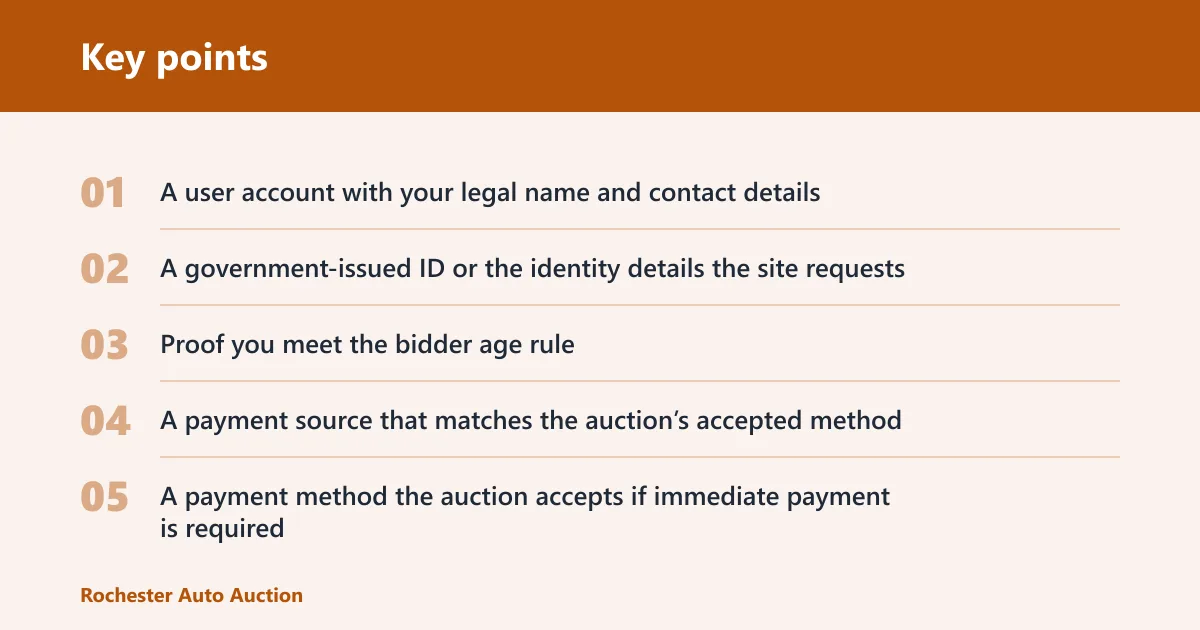
Register by opening a user account, entering the identity details the site asks for, and accepting the auction terms before you bid. Bidders and purchasers must be at least 18 years old, and some auctions restrict access or require seller approval before a bid is valid.
Create the account
Use your legal name, current contact information, and any identity fields the site requires. If the account information does not match the buyer who will pay or pick up the vehicle, the auction can block the sale or delay release.
Accept the auction terms
Terms usually control payment timing, pickup timing, refund or void rules, and when a bid can be canceled. Read those rules before your first bid. Online auction buyers should check website terms before bidding.
Confirm access limits
Some auctions are public. Others are restricted. Seller approval rights can also matter, so a bid may not become a completed sale until the seller accepts it under the site’s rules.
How do you find the right vehicle?
Use the lot number or vehicle listing ID to identify the exact unit. That number is required during bidding and helps prevent bidding on the wrong vehicle when multiple similar listings are active at once. Read the condition report, disclosure notes, and seller rules before you enter a bid.
Check the listing details
Look for the year, make, model, VIN if shown, odometer note if shown, damage notes, and title or branding status. If a listing is unclear, do not assume the missing detail works in your favor.
Read the disclosure and status notes
Many vehicles are sold as is, and warranty or dispute protections vary by auction and by sale terms. That means condition disclosures matter before bidding, not after. Recall or status checks are still your job before you commit.
Say your listing shows two similar sedans on the same day. One is lot 214 and the other is lot 241. If you save the wrong listing ID, you can bid on the wrong car, win it, and still owe the payment and pickup deadlines for the unit you did not want.
How do you bid and win?
Place bids during the open bidding period, then watch for the auction’s closing rules. Vehicles are sold to the highest bidder. Winning can still depend on seller approval or other terms, so a high bid is not the only rule that matters.
Bid during the open period
Enter the correct listing ID, set your ceiling in advance, and bid only if you can cover payment and pickup on time. Winning is not guaranteed, and bidding can get expensive quickly.
Know when the win becomes binding
A winning bid may trigger immediate payment obligations and pickup deadlines right away. Some sites allow bid cancellation only under specific terms, and refund or void rules are usually narrow. Read those rules before you click.
Use a pre-bid limit
If you plan to raise your bid, decide your maximum before the auction closes. A common first-timer mistake is chasing a car one increment at a time and discovering too late that the final price leaves no room for fees, towing, or tax handling.
Payment and pickup steps
If you win, be ready to pay by the deadline. Payment methods can include cash, wire transfer, ACH, card deposit, or certified funds, depending on the auction terms. Payment timing, partial payment rules, and sales tax handling come from the auction terms, not from a general industry rule.
Pay by the deadline
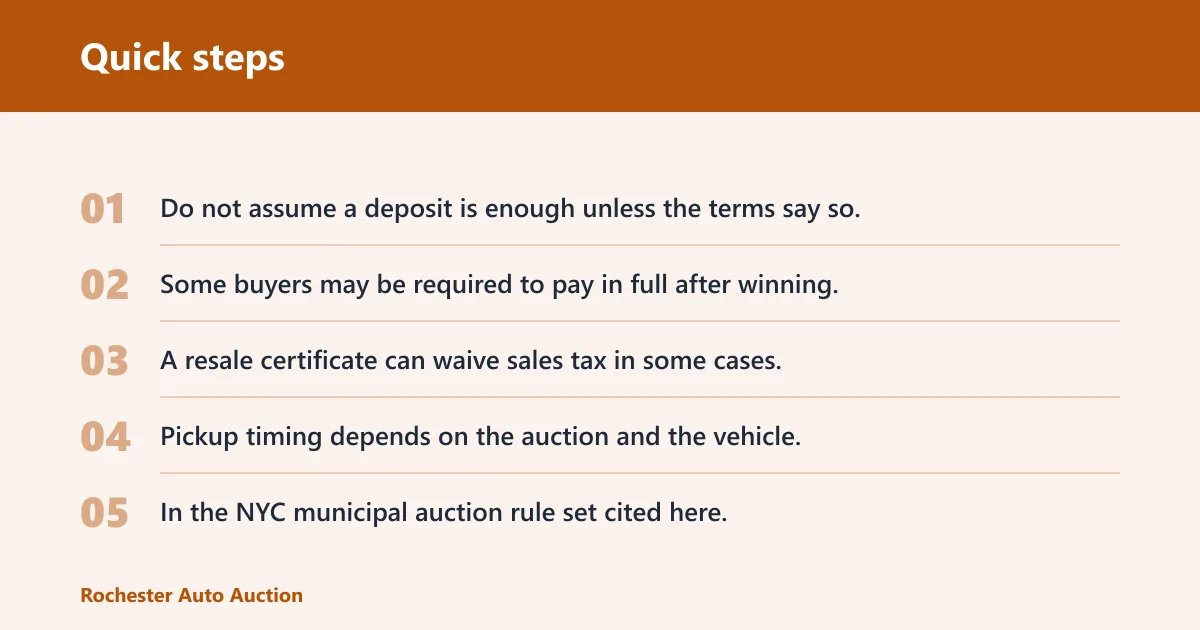
Do not assume a deposit is enough unless the terms say so. Some buyers may be required to pay in full after winning, while others may be allowed to make a partial payment first. A resale certificate can waive sales tax in some cases, but only if the auction accepts it and the paperwork is correct.
Arrange pickup
Pickup timing depends on the auction and the vehicle. In the NYC municipal auction rule set cited here, buyers must remove the vehicle by 5:00 p.m. the day of auction, storage fees are $20 per day after the deadline, and the vehicle is considered abandoned if not taken within 96 hours. (NYC)
Plan towing before you bid
Vehicles may need tow-yard removal or pickup from the auction lot. Keys may be available when listed or provided by the auction, but you should not assume they are included. Plan for a tow truck or trailer unless the listing and site rules say otherwise. Tow fees can add to the total cost fast.
Suppose you win a car at 2:30 p.m. the same day. If your transport arrives the next morning, the vehicle can move into storage-fee territory immediately, and the balance may keep growing until you remove it.
How online car auctions table
This timeline shows the full path from signup to title transfer. Use it as a checklist before bidding so one missed deadline does not turn a win into a loss.
| Step | What the buyer does | What the auction requires | What to bring or prepare | What can go wrong if delayed |
|---|---|---|---|---|
| Pre-bid signup | Create the account and enter identity details | Accept terms and confirm eligibility | ID, legal name, contact details, age verification | Account blocks, bid rejection, or seller approval delay |
| Pre-bid review | Check the lot number and listing ID | Use the correct unit for bidding | Listing printout or saved record, seller notes | Bidding on the wrong vehicle |
| Winning | Place the final bid and wait for result | Highest bidder wins, subject to auction rules | Bid limit, payment plan | Unexpected final price or seller rejection under the terms |
| Payment | Pay immediately after winning | Cash payment, with any certified-funds rules in the terms | Cash or certified funds, tax paperwork if allowed | Sale can be voided, fees can apply, release can be blocked |
| Pickup | Remove the vehicle from the lot or tow yard | Pickup by 5:00 p.m. the day of auction | Tow truck, trailer, release paperwork | Storage fees of $20 per day after the deadline |
| Towing | Move the vehicle without expecting keys | No keys are available after purchase | Winch, dolly, or transport plan | Pickup failure or extra towing expense |
| Title transfer | Take the Certificate of Sale to the DMV | DMV title issuance may require extra review | Certificate of Sale, ID, any inspection documents | Title delay, salvage inspection possibility, or rejected paperwork |
Common mistakes
Missing the payment deadline is the fastest way to lose a win. Another frequent problem is arriving without the right funds, title documents, or transport. The auction rules do not pause because a buyer was late or unprepared.
- Do not bid without reading payment timing, pickup timing, and cancellation rules.
- Do not assume you can pay later unless the terms say so.
- Do not ignore storage fees if pickup slips past the deadline.
- Do not skip title paperwork after pickup.
One practical prevention step helps most buyers: set a reminder for the payment and pickup deadlines the moment the auction closes. If the auction allows a same-day pickup window, schedule transport before bidding, not after winning.
Do online auction vehicles come with keys or warranties?
Online auction vehicles may come with keys when available, but buyers should not assume keys are included after purchase. Warranty coverage also varies by auction and sale terms, so many vehicles are sold as is. That means the buyer should plan for towing or transport without expecting a drive-away pickup, and should verify condition, recalls, and status before bidding.
What that means in practice
Keys may be available, but if they are not listed or provided, the lot may require a tow truck, trailer, or winch. Warranty or dispute protections depend on the auction terms. If the vehicle has a disclosure issue, the buyer still has to follow the auction terms and title process.
Can I inspect the car before I bid?
Some auctions allow preview or inspection periods, but you cannot assume one exists. Read the listing, seller rules, and auction terms before bidding. If inspection is allowed, use it to confirm the condition report, lot number, and any status or recall notes.
What to check if inspection is allowed
Confirm the VIN if shown, body damage, tire condition, warning lights, fluid leaks, and title or branding notes. If the auction does not permit inspection, treat the listing information as your main source and bid accordingly.
How do I get the title after pickup?
Title paperwork and issuance vary by auction, state, and vehicle type. After pickup, keep the release documents or Certificate of Sale, and follow the instructions the auction gives for title transfer or DMV processing. The DMV may consider the vehicle salvage, and some cases may require a salvage inspection before the title is issued. One Certificate of Sale is issued per owner.
Paperwork to keep
Hold onto the Certificate of Sale, payment receipt, and any release or pickup documents. If the sale used a resale certificate, keep that record too. Missing paperwork can slow title processing or force a return trip to the DMV.
What should I check in the auction terms before registering?
Check payment timing, pickup timing, refund or void rules, bid cancellation rights, access limits, and seller approval rights before you register. Also confirm whether the auction accepts cash only, whether certified funds are allowed, and how sales tax is handled.
Terms that affect cost and timing
Look for storage fees, tow fees, and what happens if pickup is late. The most important numbers are the ones tied to release and abandonment, because they can change the total cost of a “winning” bid very quickly.
Frequently asked questions
How do I register for an online car auction?
Create a user account, enter your identity details exactly as requested, and accept the auction terms before bidding. Then confirm whether the site is public or restricted and whether seller approval is required. If the account is incomplete, the auction can block bidding or release.
What documents do I need before I can bid?
Have a government-issued ID, your legal name and contact information, and any age-verification details the site requires. Save the lot number or vehicle listing ID for the exact vehicle. If payment or tax handling needs extra forms, prepare those before the auction closes.
Do I have to pay a deposit or full payment after I win?
Expect immediate payment unless the auction terms say otherwise. Check the listing and terms before bidding so you know whether the sale is due in full or by another approved method.
How quickly do I need to pick up a won vehicle?
Pickup timing depends on the auction and the vehicle. In the NYC municipal auction rule set cited here, buyers must remove the vehicle by 5:00 p.m. the day of auction, and storage fees start at $20 per day after the deadline. Arrange towing or transport before bidding if you cannot meet that schedule.
What happens if I miss the pickup deadline?
The auction can charge storage fees, and if the vehicle is not taken within 96 hours, it is considered abandoned. That can turn a sale into a costly problem fast. Read the pickup rule before bidding and line up transport early.