Can You Get a Dealer License Without a Lot?
Yes, sometimes, but only if your state allows a dealer license for a home office, office-only, or wholesale-only setup and you meet zoning, storage, and posting rules. Skip those rules, and your application can be denied, your fees lost, or your license suspended after inspection. This guide explains when a lot is optional, when it is required, and which license type fits each dealer model.
Where location requirements kick in before license issuance
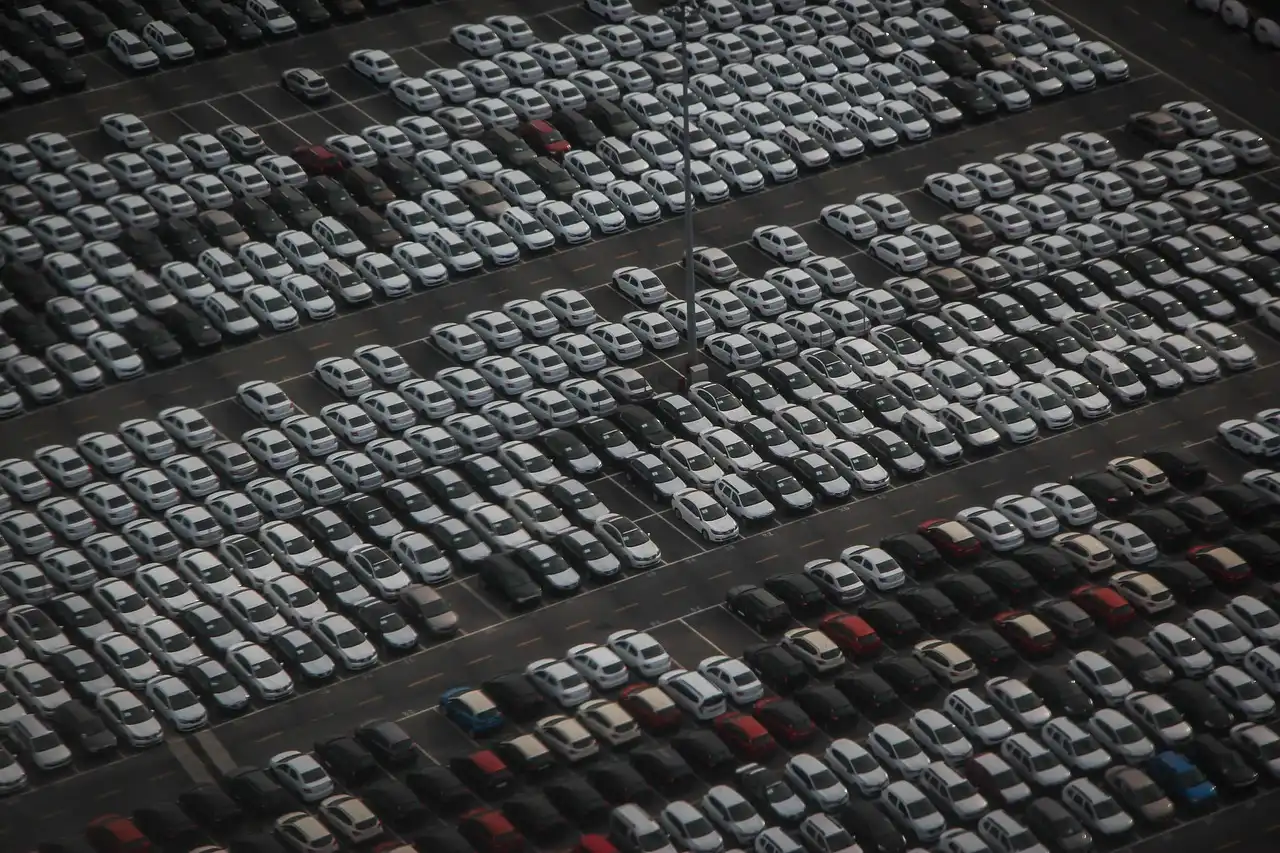
Sometimes yes, but not for every license class. The key question is whether your state allows a business location that is not a traditional retail lot, such as a wholesale office, broker office, or another approved site. Retail sales to the public usually trigger stricter site rules, signage, and zoning review.
Most states use the same order: set up the entity, secure bond and insurance, file the application, pass inspection, then receive the license. That order matters because location problems usually surface before the license is issued, not after you start operating. If your site fails zoning or inspection, the agency can stop the file even when the rest of the application is complete.
When a lot is still required
A retail dealer license often requires a permanent office and a display area or lot. Many states also ask for signage, records storage, and proof that the site is approved for motor vehicle sales. If you plan to sell vehicles to the public from that address, a lot requirement is common.
Wholesale dealer licensing is different. It is designed for dealer-to-dealer buying and selling, so the facility burden is often lighter. That does not remove the need for a bond, insurance, application materials, and state approval. It only changes the kind of location the state may accept.
Why state rules control the answer
States do not treat all dealer paths the same. One state may allow an office-only wholesale setup, while another may require a dedicated office, local zoning sign-off, and an on-site inspection before approval. The license class, the local land-use rules, and your business model all matter.
| Business model | Retail dealer | Wholesale-only dealer | Broker / endorsement | Auction-only buyer goals | Red flags that often fail review |
|---|---|---|---|---|---|
| Buy and resell to the public from your own lot | Likely requires a permanent office, display area, signage, and local approval | Usually not the right class | Usually not enough for public retail sales | May work for inventory sourcing, not retail sales | Home address, storage yard only, noncompliant zoning |
| Buy from auctions and resell to other dealers | Possible, but often more facility burden than needed | Often the better fit | May be available in some states | Common goal; dealer-only auction access is the draw | Virtual office, mailbox service, no approved business site |
| Arrange deals for buyers without holding inventory | Usually more than needed | Sometimes not the right path | Often the closest fit where state law allows it | May be unnecessary unless buying authority is needed | Using a broker title where the state does not recognize it |
| Buy at dealer auctions only | May be approved, but not always efficient | Often sufficient if the state and auction accept it | May not be enough for every auction | Direct goal | No active license, no tax registration, weak account history |
Use the table before you file. If your business model is dealer-to-dealer buying, a wholesale path may fit better than a retail lot license. If your plan is public retail sales, expect a much stricter site review. The wrong class can waste weeks and trigger avoidable rejections.
Which dealer license has the fewest facility requirements?
Wholesale dealer licenses and some broker or endorsement paths usually carry the lightest facility burden. A retail dealer license is the most likely to require a traditional lot, display area, signage, and local zoning approval. The exact answer still depends on state law, because some states narrow or expand each path in different ways.
Wholesale dealer license
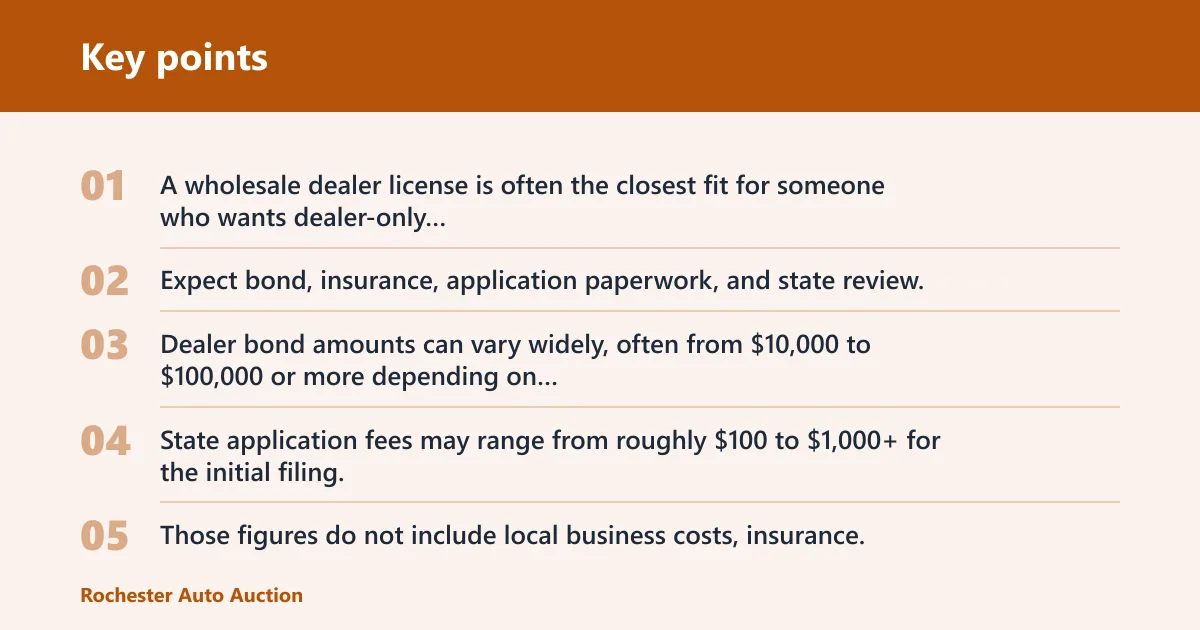
A wholesale dealer license is often the closest fit for someone who wants dealer-only buying access without a traditional retail lot. It is still a regulated license. Expect bond, insurance, application paperwork, and state review, even if the office and display requirements are lighter than retail.
Dealer bond amounts can vary widely, often from $10,000 to $100,000 or more depending on state and license type. State application fees may range from roughly $100 to $1,000+ for the initial filing. Those figures do not include local business costs, insurance, or any facility upgrades required to pass review.
Auto broker license or endorsement
In some states, a broker license or endorsement may offer a lower-facility path than a full dealer license. It is not the same thing as a full dealer license, and it is not available everywhere. Treat it as a state-specific option, not a universal workaround.
That difference matters because a broker setup may be allowed to arrange sales rather than hold inventory. If your goal is to move cars from auctions to retail customers under your own lot, a broker path may not fit. If your state recognizes broker licensing, it may still require a compliant office and records.
Retail dealer license
A retail dealer license is the least forgiving path on location. If you want to sell to the public, many states expect a permanent office, a display area or lot, and zoning approval for motor vehicle sales. Signage and an inspection are common, and a home address usually does not pass review.
Suppose you lease a small office in a strip center and plan to sell about five used cars a month online. That office may still fail if the zoning does not allow auto sales or if there is no approved display or storage arrangement. The building alone is not the whole answer.
Do you still need zoning approval?
Yes, in many states you do. Zoning approval is one of the most common gates in dealer licensing, and it can stop a file even when the license class itself does not require a traditional retail lot. Local land-use compliance often comes before state approval, not after it.
Home address limits
A home address often fails because residential zoning does not allow commercial vehicle sales or dealer operations. Even if a state allows a wholesale or office-only class, the local city or county may still reject the location. That is why a home-based application can fail before the state reviews the rest of the file.
Storage yard problems
A storage yard is not the same thing as an approved dealer location. If the yard is not zoned for dealer use, it may not satisfy licensing rules. Inspectors often look for a proper office, records access, and the ability to verify the business location, not just a place to park vehicles.
What inspectors check
On-site inspection is commonly part of dealer licensing requirements. Inspectors may verify the office, sign, records, and facility before final approval. If the business address is a mailbox, a virtual office, or an unapproved storage site, the inspection can delay or derail the license.
A common first-timer mistake is signing a lease before checking zoning. Picture a buyer who rents a 10-by-12 office and expects the rest to follow. If the zoning office says auto sales are not allowed at that parcel, the lease is not the fix. The license file still stalls.
What paperwork still applies?
Even when a lot is avoidable, the rest of the licensing package usually is not. Bond, insurance, application materials, and sometimes pre-licensing education still apply. State approval is not based on location alone, and a lighter facility setup does not remove core compliance steps.
Dealer bond
A dealer bond is a standard financial guarantee in many states. The amount changes by state and license class, but it often falls within a broad range from $10,000 to $100,000 or more. Premiums depend on credit, and the bond usually must be active before issuance.
Garage liability or dealer insurance
Garage liability or dealer insurance is often required before the license is issued. The proof needed can differ for retail and wholesale operations. Some states want the policy listed in the exact business name and location that appears on the application, so the insurance must match the file.
Pre-licensing education and inspection
Some states require pre-licensing education before filing or before testing. That class usually covers applications, compliance, and inspections. A straightforward used dealer application can complete in four to eight weeks in some states, but education, inspection scheduling, and local approval can stretch that timeline.
- Confirm the license class your business model needs.
- Check local zoning before you sign a lease or submit an application.
- Line up bond and insurance in the legal business name.
- Complete any required pre-licensing education.
- Prepare for inspection with office, records, and signage in place.
State examples you should verify
These states do not all answer the question the same way. The safe approach is to check the exact agency, the license class, and the local land-use rule before you file. That is especially important if you want a no-lot setup, because the license path and the facility rules may not line up the way you expect.
Florida licensing agency and common dealer classes
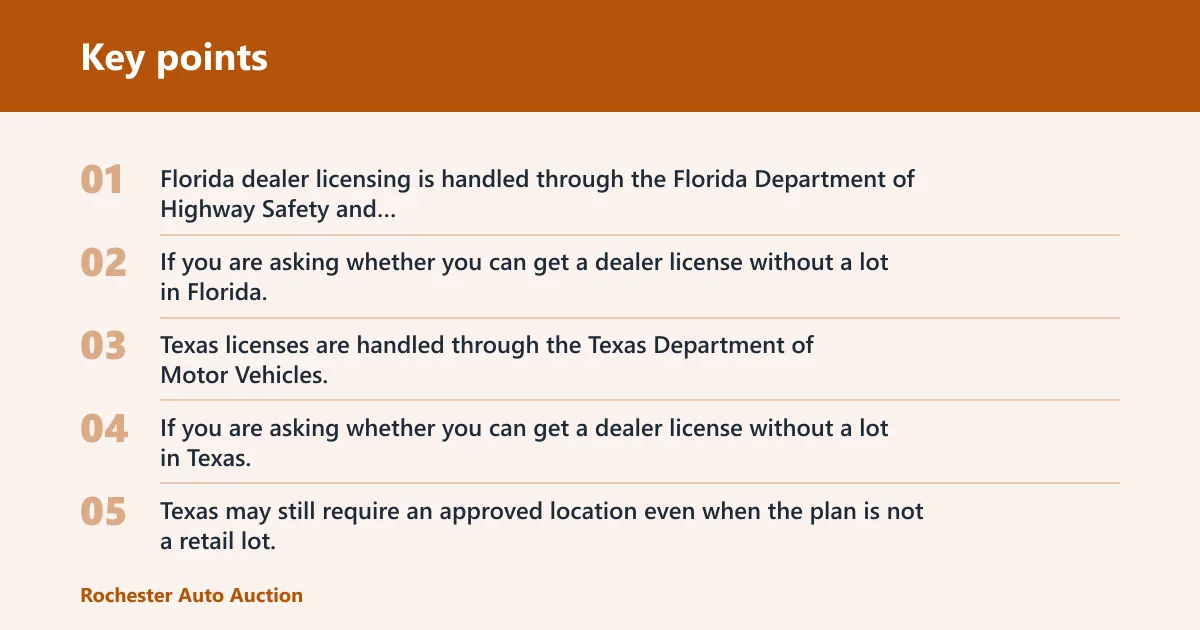
Florida dealer licensing is handled through the Florida Department of Highway Safety and Motor Vehicles and its dealer program. If you are asking whether you can get a dealer license without a lot in Florida, you need to confirm whether your intended class is retail, wholesale, or another state-recognized category, then verify the site and zoning requirements for that class.
Texas licensing agency and common dealer classes
Texas licenses are handled through the Texas Department of Motor Vehicles. If you are asking whether you can get a dealer license without a lot in Texas, start with the exact license category and the local zoning rules for the proposed business address. Texas may still require an approved location even when the plan is not a retail lot.
California licensing agency and common dealer classes
California applicants work through the Department of Motor Vehicles occupational licensing unit. California dealer licensing can involve pre-licensing education, office requirements, and site review, so a no-lot concept still needs careful confirmation. State rules and local zoning both matter, and the office address must match the approved use.
Georgia and Ohio verification points
For Georgia, check the Department of Revenue’s Motor Vehicle Division and the local zoning office before filing. For Ohio, verify requirements with the Bureau of Motor Vehicles and the local land-use authority. In both states, the real issue is not only whether the license exists, but whether your chosen site fits the class.
Auction access without a retail lot
Many applicants want a dealer license mainly for dealer-only auctions, not for public retail sales. That is where a wholesale path may make sense. USDL says dealers can access dealer-only auctions across the country with a license in hand, but auction access can also depend on dealer type, registration, and account review.
Who can buy at dealer-only auctions?
Dealer-only auctions often require an active dealer license, and some also check the dealer class, state registration, and account history. The same source says the two largest national auction networks are Manheim and ADESA. Some auctions also require a bank letter or floor plan credit line for large purchases.
Other account checks beyond license status
A license alone is not always enough. Auctions may ask for business documents, sales-tax registration, floor plan information, or a purchasing history before they allow full access. The same source says auction fees are typically $150–$400 per car, so the business model should fit the buying volume, too.
Say your goal is to buy three units a month at auction and resell them to dealers. A wholesale license may make more sense than chasing a retail lot just to gain access. If the auction wants a bank letter before large purchases, that requirement still applies even after the license is issued.
Frequently asked questions
Can you get a dealer license without a lot?
Sometimes, yes. The answer depends on license class, state rules, and local zoning. Wholesale-only and some broker or endorsement paths may have lighter facility requirements than retail dealer licenses, but most states still require bond, insurance, application materials, and an approved business location.
Can you get a dealer license without a lot in Florida?
Possibly, but you need to verify the exact Florida license class and location rules with the Florida Department of Highway Safety and Motor Vehicles. A no-lot setup is not automatic, and zoning, office requirements, and inspection standards can still block a home-based or storage-only address.
Can you get a dealer license without a lot in Texas?
Possibly, depending on the license type and the proposed location. Texas licenses are handled through the Texas Department of Motor Vehicles, and local zoning still matters. A wholesale or office-based path may be more workable than a retail lot license, but it still needs state approval.
Can you get a dealer license without a lot in California?
Possibly, but California applicants should confirm the class and site rules through the DMV occupational licensing unit. California is strict about office setup, local land-use compliance, and inspection. A no-lot idea can fail if the address is residential, virtual, or not approved for dealer use.
Do I still need zoning approval if I don’t have a lot?
Usually yes. Zoning approval is often the part that decides whether a home office, office-only suite, or storage address can be used at all. Even if the state allows a wholesale or broker path, local land-use rules can still reject the site before the license is issued.
What type of dealer license has the fewest facility requirements?
Wholesale dealer licenses usually have the lightest facility burden, and some broker or endorsement paths may be lighter still where state law allows them. Retail dealer licenses are usually the most demanding because they often require a permanent office, display area or lot, signage, and zoning approval.