Seller Fees vs Instant Cash Offer Deductions
Auction selling often costs less than an instant cash offer when your car has a clean title, average or better condition, and time to wait. Instant offers can beat it only when speed offsets fee deductions and condition-based cuts. Miss the full cost stack, and you can lose hundreds or thousands to transport, inspection, reconditioning, arbitration, and title penalties. This guide compares each fee layer, then shows which option nets more by condition, title status, reserve risk, and urgency.
| Decision factor | Seller fees | instant cash offer deductions | Winner |
|---|---|---|---|
| Typical cost structure | Gross auction result minus listing, consignment, admin, document, title, and conditional post-sale charges. | Headline offer minus condition adjustments, pickup or transport charges, paperwork deductions, and reconditioning allowance. | Seller fees |
| Price upside | Higher when bidding is active and the reserve is met; a missed reserve can leave the car unsold and add costs. | Usually lower than a strong auction result because the buyer prices in inspection risk and resale margin. | Seller fees |
| Payment speed | Payment often follows sale, title review, and any holdback period. | Often faster, with payment tied to pickup and document completion. | instant cash offer deductions |
| Risk of zero sale | Yes. Reserve not met, buyer fallout, or re-listing can leave fees or storage charges on the account. | No sale is less common after a firm offer, though deductions can still cut the final payout. | instant cash offer deductions |
| Best fit | Clean-title vehicles with market demand and enough time to wait for bidding. | Vehicles needing speed, simple paperwork, or a quick exit despite inspection-based reductions. | tie |
Cost layers, payment speed, and final payout
The cost split is straightforward: auction proceeds may run higher, but seller fees and a failed sale can reduce that total; instant cash offers move faster, yet deductions can wipe out the speed advantage. Net payout is what matters, not the headline figure. The better option changes with condition, title status, reserve risk, and how fast you need payment.
Cost structure
Seller fees usually appear as several line items. A listing or consignment charge may be flat or percentage-based, then admin, doc, title, or gate fees are deducted after the sale. Instant cash offer deductions work differently: the buyer starts with a headline price and subtracts for condition, transport, paperwork, and any repair findings. That is the core difference when comparing auction proceeds to a resale offer.
Payment timing
Auctions can pay after sale, but the seller may wait through title verification, buyer payment processing, or a holdback window. Instant cash offers usually pay sooner once the vehicle is picked up and the title is signed, which is why the headline number can feel stronger even when the final amount is lower. Faster does not always mean cheaper. It often means fewer steps and a shorter review cycle.
Net proceeds matter most
Net payout is gross sale price minus every fee layer. That includes obvious charges and the ones sellers miss: transport, storage, missing-document penalties, and payoff handling if a lien exists. Compare the final dollars in hand, not the advertised auction estimate or the first instant offer.
Comparison table
A side-by-side model helps more than a headline comparison. Read each row as a simple formula: gross amount, then the deduction layer, then the net. The same method works for both options. Start with the gross number, subtract each fee where it hits, and then compare the final payout instead of the starting figure.
| Scenario | Gross auction sale estimate | Seller fees | Transport / title / admin deductions | Instant cash offer starting price | Expected deductions | Final net payout | Better option |
|---|---|---|---|---|---|---|---|
| Clean-title high-demand car | $15,000 | $1,050 | $150 | $13,900 | $300 | Auction: $13,800; instant offer: $13,600 | Seller fees |
| Average-condition car | $9,000 | $900 | $250 | $8,200 | $700 | Auction: $7,850; instant offer: $7,500 | Seller fees |
| Older/noisy-condition car | $4,200 | $700 | $300 | $3,900 | $900 | Auction: $3,200; instant offer: $3,000 | Seller fees |
Clean-title high-demand car
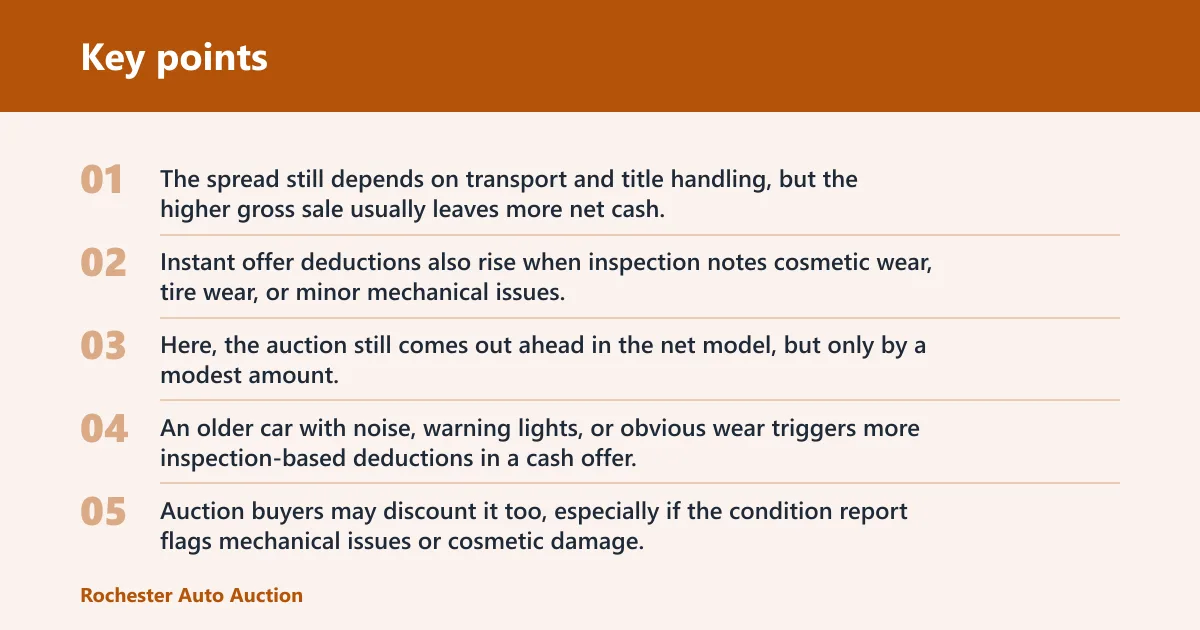
When the car has a clean title and clear buyer appeal, auction bidding can outrun the instant offer even after listing and admin charges. The spread still depends on transport and title handling, but the higher gross sale usually leaves more net cash. That is why the auction wins this scenario.
Average-condition car
An average-condition car still has room for bidding, but auction fees start to matter more because the margin is thinner. Instant offer deductions also rise when inspection notes cosmetic wear, tire wear, or minor mechanical issues. Here, the auction still comes out ahead in the net model, but only by a modest amount.
Older or noisy-condition car
An older car with noise, warning lights, or obvious wear triggers more inspection-based deductions in a cash offer. Auction buyers may discount it too, especially if the condition report flags mechanical issues or cosmetic damage. Even so, the seller fee stack is still smaller than the typical deduction stack in this scenario, so the auction edges ahead.
What seller fees can include
What fees do car auctions charge sellers? Common charges can include a listing fee, a consignment fee, an admin fee, document handling, title work, and other post-sale charges tied to the sale outcome. Some auctions also deduct storage if the unit stays on-site too long, or extra handling if paperwork is incomplete. Those charges can apply whether the car sells or sits through another cycle.
-
Check the fee sheet. Ask for the auction’s seller schedule before you list the vehicle. Look for flat charges, percentage fees, and any fee that applies only if the car sells.
-
Mark the conditional items. Confirm whether title correction, duplicate title requests, or lien release handling costs extra. These items often sit outside the base consignment rate and reduce the final check.
-
Ask about no-sale costs. If reserve is not met, find out whether there is a re-listing fee, storage charge, or removal charge. A no-sale outcome can still leave the seller with expenses.
Seller fees come out before the seller sees net proceeds, and some charges only appear after the unit moves through the sale process. A reserve protects the minimum price, but it does not always protect against added admin or storage costs. If reserve is set too high, the seller can pay to list a car that never clears the floor.
What hidden costs can lower my auction payout?
Hidden costs usually sit in the paperwork, not the hammer price. Title transfer delays, duplicate title fees, lien payoff handling, storage after a failed sale, and transportation to the auction yard can all cut the final amount. Condition issues can also lead to a lower bid, which acts like a hidden cost because the market discounts the car before fees are even added.
How does an auction reserve change the net outcome?
A reserve can protect the minimum acceptable price, but it also creates a no-sale path. If bidding stops below the reserve, the seller may leave with only exposure to listing, storage, or re-listing charges. A reserve that is too high can reduce bid interest and make the net outcome worse than a lower reserve with a stronger sale.
How does the vehicle condition report affect bidding?
The vehicle condition report shapes the auction pool before bids start. If the report shows cosmetic damage, mechanical concerns, or missing items, bidders price that risk into the hammer price. Even when the car sells, the report can reduce competition and lower the gross amount before fees are deducted.
What gets deducted from an instant cash offer?
An instant cash offer is rarely the final payout at first glance. The buyer may deduct for inspection findings, cosmetic wear, mechanical problems, towing or pickup, title transfers, missing documents, and payoff handling. A strong headline number can shrink quickly if the car needs reconditioning or extra paperwork.
Condition and inspection adjustments
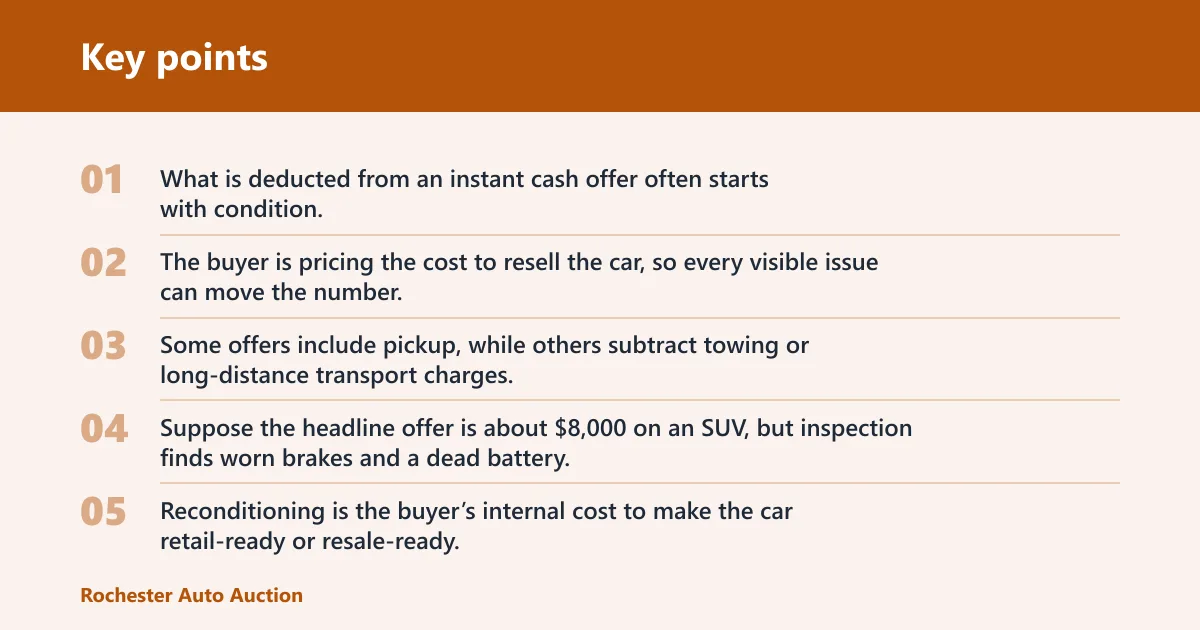
What is deducted from an instant cash offer often starts with condition. Mileage, tire wear, warning lights, paint damage, broken trim, and engine or transmission noise can trigger a lower final amount after inspection. The buyer is pricing the cost to resell the car, so every visible issue can move the number.
Pickup, transport, and paperwork deductions
Transportation can also reduce the payout. Some offers include pickup, while others subtract towing or long-distance transport charges. If the title is missing, the name is wrong, or the paperwork needs state-specific correction, document fees can come out of the offer before payment is issued.
How the final offer can move after review
Suppose the headline offer is about $8,000 on an SUV, but inspection finds worn brakes and a dead battery. A buyer might remove about $450 for repairs, about $100 for pickup, and about $50 for title processing, leaving about $7,400 before any lien payoff. That gap is why sellers should ask for the full deduction list before accepting.
How does reconditioning affect the final offer?
Reconditioning is the buyer’s internal cost to make the car retail-ready or resale-ready. When the inspection finds tires, brakes, battery issues, or cosmetic repairs, the buyer may reduce the offer by a reconditioning allowance rather than pay the full headline price. The more the vehicle needs, the more that allowance can move the final payout.
How vehicle condition changes net payout
Vehicle condition affects both options, but in different ways. Auction buyers bid against one another after seeing the report, while instant buyers usually reduce their offer after inspection. The cleaner the vehicle, the less room there is for either side to chip away at the payout.
Clean-title high-demand car: a clean-title car
A clean-title car with strong demand usually holds value better at auction because the buyer pool is broad. The condition report may only note minor cosmetic wear, so the price drop stays limited. Instant cash offers still deduct for risk and resale margin, which is why the auction net often wins here.
Say your sedan has 62,000 miles, no warning lights, and only light bumper scuffs. The auction may attract stronger bidding than a cash buyer willing to sit on inventory, so the net gap can favor the auction even after fees.
Average-condition car: an average-condition car often lands
An average-condition car often lands in the middle. Small cosmetic issues, moderate mileage, and routine wear do not always scare off auction buyers, but they do trim the bidding ceiling. Instant offers also fall, because the buyer assumes some reconditioning cost after pickup.
Older or noisy-condition car: older cars
Older cars with engine noise, suspension clunks, or visible leaks tend to suffer more at both exit points. At auction, those issues lower bid confidence. In an instant offer, they usually trigger inspection deductions and possible reconditioning allowances, which can shrink the final amount more than expected.
How do title and paperwork costs affect the total?
Title and paperwork problems can erase the advantage of either option. A clean title moves faster and usually costs less to transfer. A lien payoff, duplicate title request, or name mismatch can add fees and delay payment, especially if the buyer or auction needs extra verification before releasing funds.
Clean title versus lien payoff
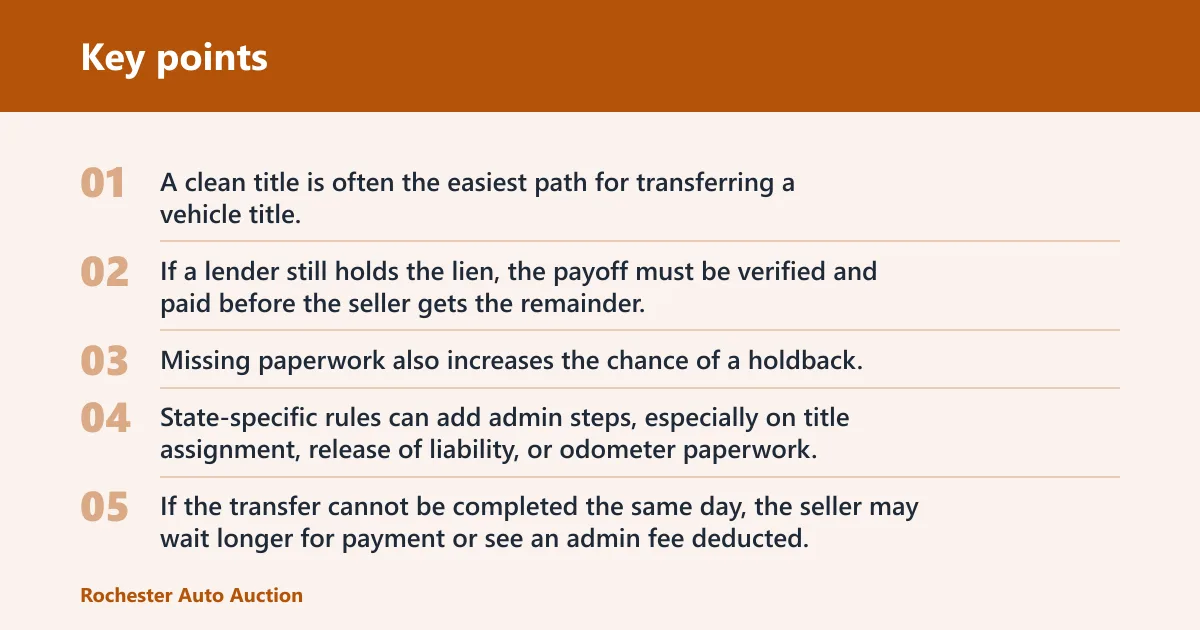
A clean title is often the easiest path for transferring a vehicle title. If a lender still holds the lien, the payoff must be verified and paid before the seller gets the remainder. That can reduce the net amount temporarily and delay settlement even when the sale price is strong.
Missing documents and duplicate title fees
Missing registration, a lost title, or a wrong name on the paperwork can trigger duplicate title fees or correction charges. Those costs appear in both selling paths, but they often hit harder with instant offers because the buyer wants a fast, complete transfer. Missing paperwork also increases the chance of a holdback.
State admin requirements and transfer timing
State-specific rules can add admin steps, especially on title assignment, release of liability, or odometer paperwork. If the transfer cannot be completed the same day, the seller may wait longer for payment or see an admin fee deducted. That matters when the offer looks close and the margin is small.
What title or paperwork failures can change the payout?
Lost titles, name mismatches, incomplete signatures, and unresolved liens can stop payment from being final. In those cases, the buyer may hold funds, deduct extra processing costs, or require the seller to fix the issue before release. The car may still sell, but the net payout can fall once the paperwork gap is priced in.
Choose Seller fees if… / Choose instant cash offer deductions if…
Choose Seller fees if the car has a clean title, decent condition, and enough demand to attract bidding above the reserve floor. This path also fits sellers who can wait for settlement and want the best chance at a higher gross sale price. It is strongest when the title is clean and the seller can control reserve risk.
Choose instant cash offer deductions if speed matters more than squeezing out the last few hundred dollars, or if paperwork and pickup need to be simple. It also fits sellers with limited time, a damaged car that would struggle in open bidding, or a title situation that is easier to resolve through one buyer than through auction processing. If the offer is close and the transport or title costs are low, the speed advantage can justify the smaller net.
Frequently asked questions
Are seller fees cheaper than instant cash offer deductions?
Often yes, but not always. Seller fees at auction are usually smaller than the total deductions that can come off an instant cash offer, especially when inspection finds mechanical or cosmetic issues. The deciding factor is the net check after transport, paperwork, and any post-sale charges.
What fees do car auctions charge sellers?
Common auction charges include listing or consignment fees, admin fees, document handling, title work, and conditional post-sale fees. Some auctions also charge storage, relisting, or removal fees if the car does not sell or stays on site too long. Always ask for the seller schedule in writing.
What is deducted from an instant cash offer?
Typical deductions include condition-adjustment cuts, reconditioning estimates, pickup or transport charges, title transfer costs, and paperwork corrections. A buyer may also reduce the offer after inspection if the car has tire wear, warning lights, leaks, or other problems that affect resale value.
Which option gives a higher net payout after fees?
Seller fees usually leave a higher net payout for clean-title cars in average or better condition. Instant cash offers can be competitive when the car needs quick removal, but the final offer is often reduced by inspection and transport charges. Compare the full net, not the starting number.
Do seller fees come out before or after my car sells?
Most seller fees are deducted after the car sells, but some charges can apply before or even if the vehicle sells, such as listing or storage fees. If the reserve is not met, the seller may still owe certain charges. That is why no-sale terms matter as much as the sale price.
What happens if my car doesn’t sell at auction?
If the reserve is not met, the car can be passed, re-listed, or removed, depending on the auction rules. The seller may still owe listing, storage, or admin charges even without a sale. Ask whether no-sale fees apply before you list the vehicle.