How to Estimate Shipping Before You Bid on Copart
Estimate shipping first, then subtract transport, storage, and any release fees from your target margin to set a maximum all-in bid. Miss that math and a low hammer price can turn into a loss once the truck, yard, and paperwork bills hit. This guide shows how to estimate transport, storage, and release costs before you bid, then turn them into a safe maximum.
What shipping can change before you bid?
Shipping changes the number you can safely bid because the vehicle’s landed cost is not the hammer price alone. Yard location, vehicle condition, pickup timing, and release paperwork all affect the final total. If any one of those slips, storage and dispatch delays can add enough cost to wipe out a thin flip margin.
Copart advertises pickup speed as 1–3 days, but storage fees are described as starting within days of sale. That means your quote is not just a delivery number; it is part of your bid ceiling. The question is whether the car still fits your target after transport, yard charges, and any delay buffer.
How pickup delay raises the total
Payment clearance controls release, and Copart release only happens after payment has cleared. If payment, gate-pass details, or carrier paperwork are off, the car can sit longer than planned. More days on the yard can mean more storage fees, and those charges are where small deals turn sour.
Use a landed-cost ceiling before the auction closes. That ceiling should include the truck quote, an expected storage window, and a delay cushion for the days between winning the lot and actual pickup.
What does a shipper need for a Copart quote?
A carrier needs the Copart lot number, buyer number, and yard location to price pickup correctly. Those details tie the vehicle to the exact yard and auction account, so the shipper can plan dispatch and confirm the right release details. Without them, any quote is guesswork.
The vehicle’s running status also matters. Running units usually move on open transport, while non-running cars often need a winch-equipped carrier. If the lot has no keys, damage, or wheel issues, say so up front. That changes the equipment and sometimes the price.
-
Collect the lot details. Write down the lot number, buyer number, and yard location before you request a quote. Those are the three core inputs the shipper needs for an accurate rate and dispatch plan.
-
Confirm vehicle condition. Tell the carrier whether the car runs, rolls, and steers, and note whether keys are present. A non-running lot can require a winch-equipped carrier, which changes pickup planning and may change cost.
-
Check release timing. Ask when payment will clear and whether a gate pass or release document is needed for pickup. If release is delayed, storage days can stack up even when the truck is ready.
Say your bid target is about a $2,000 gross margin on a mid-size sedan. If transport lands at about $350 and the yard holds the car for about two extra days at about $25 to $75 per day, the margin can drop fast. That is why the quote belongs in the bidding math, not after the win.
Shipping cost estimate by transport type
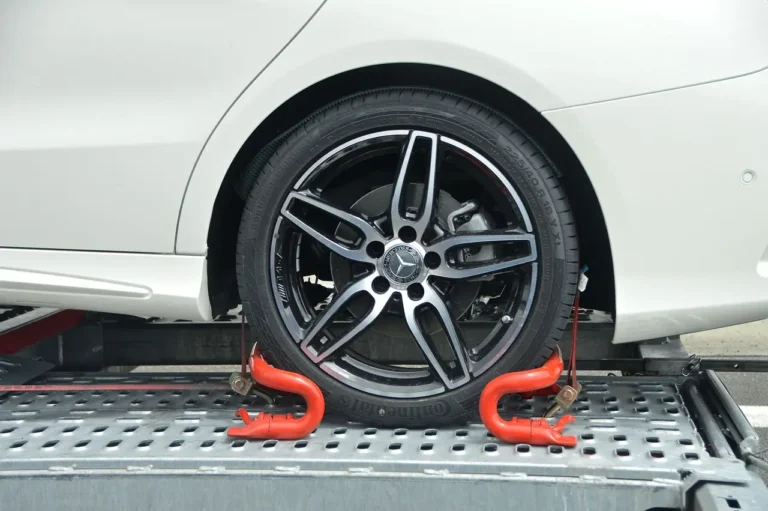
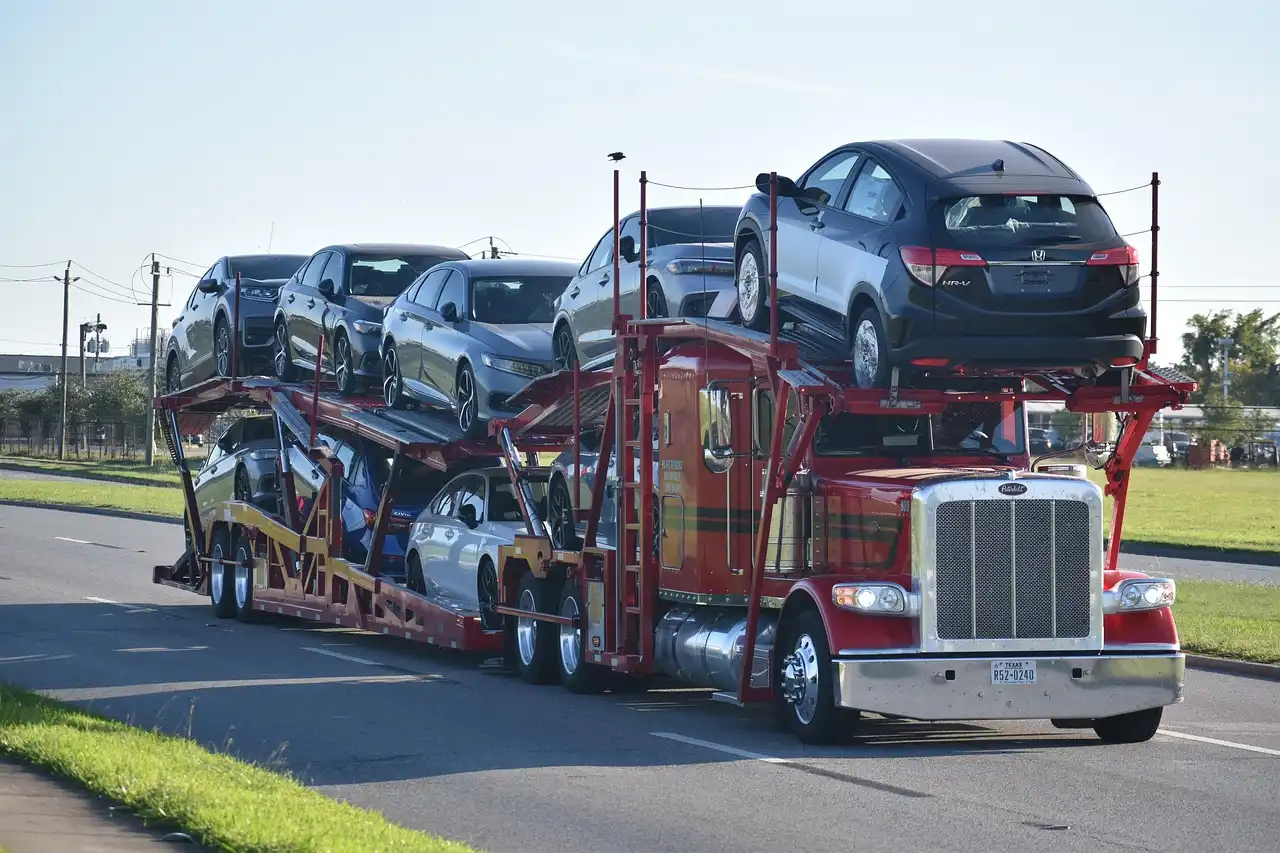
Open transport is the standard choice for many running cars. Enclosed transport fits vehicles that need extra protection or buyers moving a higher-value unit. Non-running vehicles can still ship, but they need equipment that can load them safely, usually a winch.
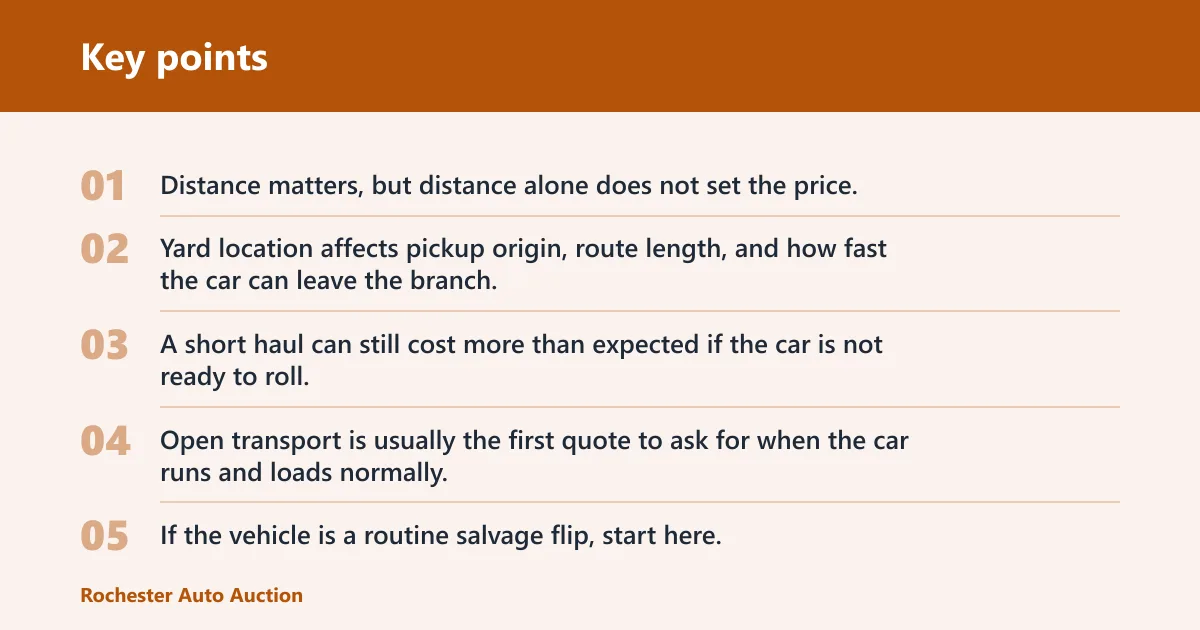
Distance matters, but distance alone does not set the price. Yard location affects pickup origin, route length, and how fast the car can leave the branch. A short haul can still cost more than expected if the car is not ready to roll.
Open transport for running vehicles
Open transport is usually the first quote to ask for when the car runs and loads normally. It fits many auction purchases because it is the standard option for daily transport and keeps cost lower than enclosed service. If the vehicle is a routine salvage flip, start here.
Enclosed transport for higher-value units
Enclosed transport adds protection from weather and road debris. It is usually the better fit when the vehicle has higher resale value, specialty paint, or a condition that justifies extra handling. The price is higher, so the buyer should include it only when the market supports the added cost.
Winch-equipped carrier for non-running lots
Non-running vehicles may still ship, but they need the right carrier. A winch-equipped carrier can load a dead battery, damage-limited, or no-start vehicle that cannot drive onto an open hauler. If the unit will not move under its own power, do not budget it like a normal runner.
Storage fees and release timing
Storage fees can begin within days of sale, and the typical daily range listed is $25–$75 per day. That is the fastest way a small spread disappears. If the car sits through payment clearance, gate-pass correction, or missed pickup windows, the yard bill can change the deal before the truck arrives.
Copart will not release a vehicle until payment clears. That is the control point that determines when the car can leave the yard, not when you want it gone. When release depends on paperwork, a one-day delay can become multiple days of storage.
How gate pass errors create extra days
Release or gate pass details must be correct for the carrier to collect the vehicle. If the buyer number, lot number, or account details do not match, the truck may be turned away and the car stays on the yard. That often means another storage day and another reschedule.
Basic rule: if the paperwork does not match the auction account, assume extra cost until it is fixed. Do not count on the yard to hold the vehicle at no charge while details get corrected.
Pre-bid shipping worksheet
Use this worksheet before you place a bid. The goal is to turn a quote into a maximum landed-cost adjustment, then subtract that from the amount you can actually pay for the car and still meet your margin target.
| Lot number | Yard | ZIP-to-ZIP distance band | Running/non-running | Open vs enclosed estimate | Expected storage days | Daily storage fee range | Max bid adjustment |
|---|---|---|---|---|---|---|---|
| 48722138 | Dallas, TX | 0–100 miles | Running | Open: $175–$275 | 1 | $25–$75 | -$250 to -$350 |
| 51290477 | Atlanta, GA | 101–300 miles | Running | Open: $325–$500 | 2 | $25–$75 | -$375 to -$650 |
| 60311852 | Chicago, IL | 301–500 miles | Non-running | Open with winch: $475–$750 | 3 | $25–$75 | -$550 to -$975 |
| 77104519 | Miami, FL | 500+ miles | Running | Enclosed: $850–$1,250 | 2 | $25–$75 | -$900 to -$1,400 |
The adjustment column is the amount to subtract from your gross margin target before bidding. If the car needs enclosed transport, or if storage risk is high, move the adjustment toward the top of the range. If the unit is non-running, lean toward the higher end because loading risk and delay risk are both higher.
How to set your all-in max bid
Start with the resale target, subtract your repair budget, then subtract transport and expected storage. What remains is your maximum all-in bid. If the number is too low to win, the answer is to pass, not to hope the yard bill will stay small.
A common first-timer mistake is bidding on a pickup truck without first checking whether a long-distance carrier will add enough to wipe out the savings. Suppose the vehicle needs an approximately $400 transport quote and may sit for about three days while payment clears. At a $25 to $75 storage range, that adds another $75 to $225 before the car leaves the yard. The bid ceiling must absorb both numbers.
-
Set your margin target. Decide the profit or cushion you need after repair and resale. Do this before the auction starts so the transport math has a clear limit.
-
Subtract transport first. Use the open, enclosed, or winch quote tied to the lot number, buyer number, and yard. If the car is non-running, do not use a running-car quote.
-
Add storage risk. Estimate how many days the vehicle may sit after the sale and multiply by the daily yard range. The article’s cited range is $25–$75 per day, so even a short delay can matter.
-
Build a delay buffer. Add one extra day if payment, gate pass, or carrier timing looks tight. That buffer is cheap insurance against pickup slippage.
-
Arrive at the cap. The final number is your maximum all-in bid. If bidding pushes past that cap, let the lot go.
What can go wrong at pickup?
Pickup problems usually fall into three buckets: paperwork mismatch, loading failure, and missed timing. If the buyer number does not match the account, if the release is wrong, or if the carrier arrives with the wrong equipment, the vehicle may stay in the yard. Every extra day can mean more storage.
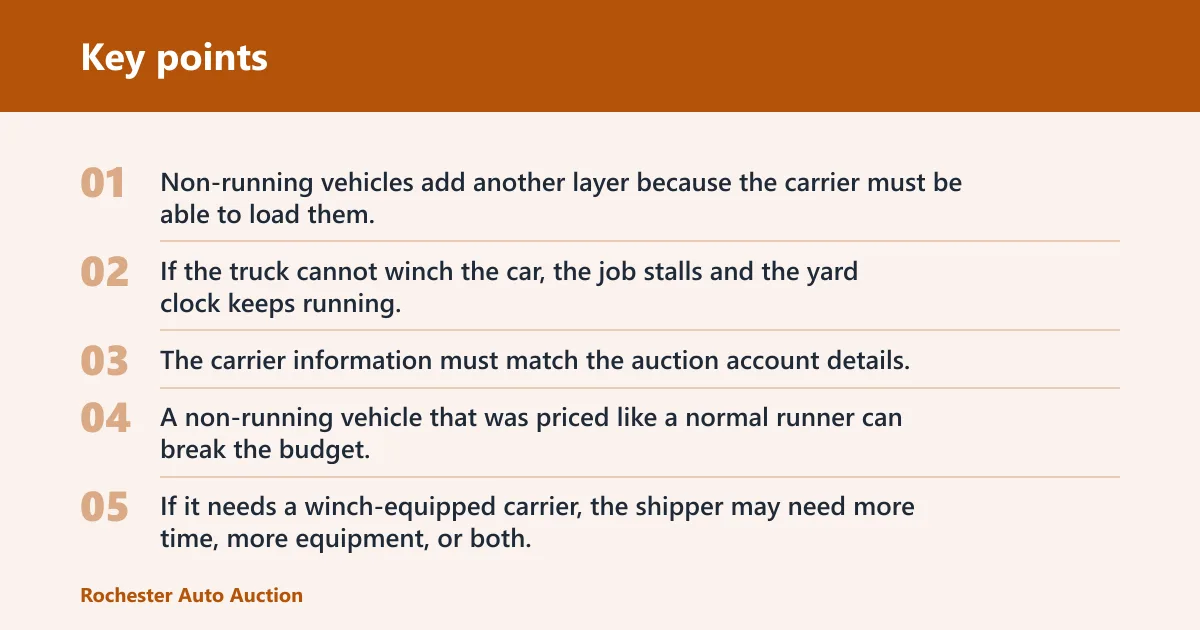
Release and gate-pass errors are especially costly because they waste the pickup window after payment has already cleared. Non-running vehicles add another layer because the carrier must be able to load them. If the truck cannot winch the car, the job stalls and the yard clock keeps running.
Wrong paperwork or mismatched buyer details
The carrier information must match the auction account details. If it does not, the yard may refuse release. This is one of the fastest ways to turn a good buy into a bad one, because the delay adds cost without changing the vehicle.
Carrier unable to load the vehicle
A non-running vehicle that was priced like a normal runner can break the budget. If it needs a winch-equipped carrier, the shipper may need more time, more equipment, or both. That is why condition and key status must be part of the quote request.
Storage charges from missed pickup windows
When pickup slips, storage fees begin to compound. The yard does not care whether the delay came from paperwork, payment timing, or dispatch problems. The meter keeps moving until the unit leaves.
Frequently asked questions
How do I estimate shipping before I bid on Copart?
Get a transport quote using the lot number, buyer number, and yard location, then add expected storage days at the yard’s daily fee range. Subtract both from your target margin before you bid. If the car is non-running, price a winch-equipped carrier instead of a standard open hauler.
What fees or storage costs can make a Copart deal bad?
Daily storage is the main risk, especially when pickup slips after payment. The cited daily range is $25–$75, and those charges can start within days of sale. Add in any extra day caused by a wrong gate pass or delayed release, and a thin spread can disappear quickly.
How do I get a Copart transport quote before the auction ends?
Send the shipper the lot number, buyer number, yard location, and vehicle condition before the auction closes. Say whether it runs, rolls, and steers, and whether you want open or enclosed service. That gives the carrier enough detail to price dispatch and loading correctly.
What information does a shipper need for a Copart quote?
The shipper needs the lot number, buyer number, and yard, plus condition details such as running status and key availability. Those inputs let the carrier match the vehicle to the correct yard and equipment. If any of them are missing, the quote can come in low and then change later.
How quickly do Copart storage fees start after I win?
Storage fees are described as starting within days of sale. That is why payment clearance and pickup timing matter so much. If the car waits for release, gate-pass correction, or carrier rebooking, the yard may charge for each extra day until the vehicle leaves.
How do I know if a non-running Copart car will cost more to ship?
If the car does not run, plan on a winch-equipped carrier and a higher shipping quote than a standard running unit. The loading requirement alone changes the job. Add the chance of extra yard days if release or loading is delayed, and the total landed cost can rise fast.
Should I include shipping in my max bid on Copart?
Yes. Shipping belongs in the max bid calculation because it changes the true cost of the car. Subtract transport, expected storage, and a delay buffer from your profit target, then bid only up to that ceiling. That keeps a low hammer price from becoming an unprofitable buy.