What Does Minimum Bid Mean on Copart Listings?
On Copart, minimum bid means the seller has set a floor price. Bids below it may not win, even if they are the highest offer. Miss that detail, and you can waste bidding effort or overpay chasing a car that is not ready to move. This guide explains what minimum bid means, what it does not mean, and when you should stop bidding.
How minimum bid works with current bid and reserve
Minimum bid is a listing-level floor that appears on some Copart lots. It is a seller-protection signal, not your bid limit and not your total cost. On a lot with a minimum bid, the current bid can sit below that floor for part of the auction, yet the listing may still end as no sale, reserve not met, or pending depending on the sale setup.
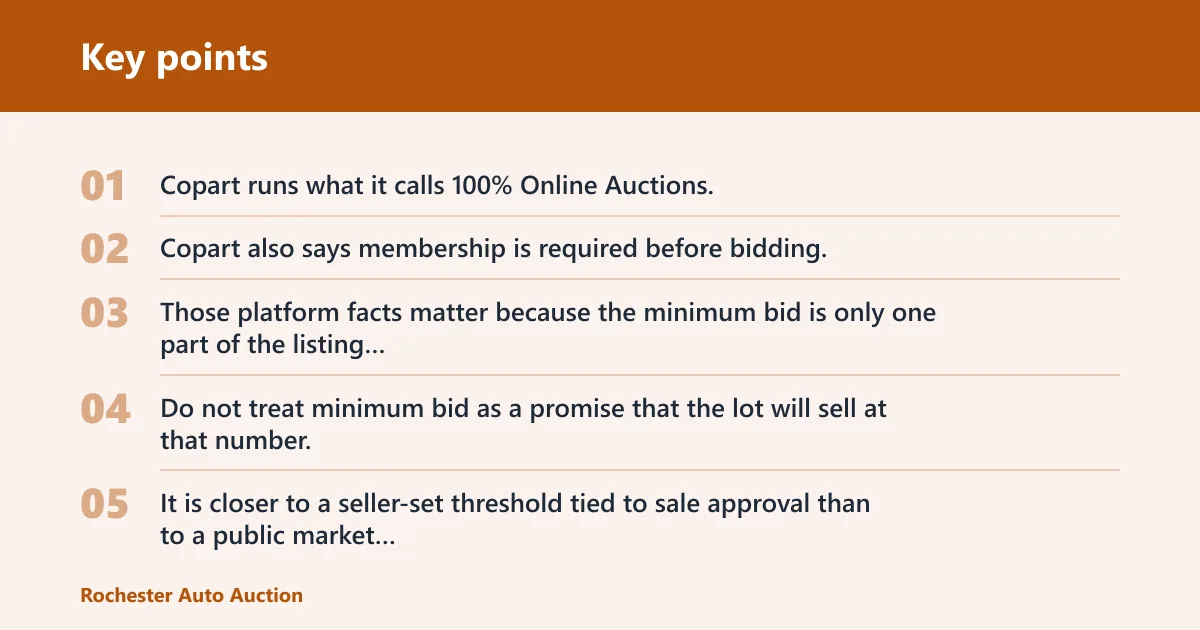
Copart runs what it calls 100% Online Auctions, and buyers can Bid on daily auctions Monday–Friday. Copart also says membership is required before bidding, and it sells Over 500,000 Used and Salvage Cars, Vans, Motorcycles and HGVs yearly. Those platform facts matter because the minimum bid is only one part of the listing workflow.
Do not treat minimum bid as a promise that the lot will sell at that number. It is closer to a seller-set threshold tied to sale approval than to a public market price. The number can sit under market value and still fail to produce a sale if the seller does not approve the outcome.
How current bid and reserve fit together
Current bid is the highest active offer during the auction. It updates as bidding moves. It may remain below a seller’s reserve price, which is the seller’s minimum acceptable sale price. Reserve is often not shown exactly, so a lot can look cheap while still being out of reach.
Final bid price is the amount the winning bidder entered at auction close. If the lot is sold, that number may become the sale price. If the lot is subject to reserve or approval and the seller does not accept, the final bid price may still end in no sale or pending status instead of sold.
Say your screen shows a current bid of $4,200 on a lot with a visible minimum bid label. That does not mean $4,200 is enough to win the vehicle. It may simply mean the listing is still moving toward a seller decision.
How Copart sale status changes the outcome
Copart listing status tells you what happened after bidding. Sold means the lot closed to a buyer. No sale means it did not sell. Pending means the outcome still needs action or approval. Reserve not met means the highest bid did not reach the seller’s acceptable level.
Those labels matter more than the presence of a minimum bid alone. A lot can show a floor and still end unsold. Another can show a floor, draw strong bidding, and still need seller approval before it becomes sold.
Minimum bid decision table
Use the listing signal, not just the visible number, to decide whether to keep bidding. This table separates the common signals buyers confuse most often.
| Listing signal | What it usually means | What you should do | What mistake to avoid |
|---|---|---|---|
| Minimum bid shown | The seller has set a floor-related threshold on the lot. | Check the sale status, current bid, and fee stack before you bid again. | Assuming the number is the same as your max bid. |
| Reserve not met | The highest bid is still short of the seller’s acceptable sale price. | Decide whether another bid fits your total cost after fees. | Treating the lot as won just because you are the top bidder. |
| Current bid below floor | The auction is still open, but the bid has not reached the seller’s target. | Watch whether the bidding pace justifies another step. | Chasing the lot without a walk-away number. |
| Bidding near your max after fees | Your room is almost gone once buyer fees and other charges are added. | Stop and compare the all-in amount to your cap. | Using hammer price alone to judge affordability. |
Can you buy a car if the minimum bid is not met?
Sometimes, but not by assuming the floor is automatic. A bid that does not reach the listed minimum may still keep the auction active, yet the seller can still reject the outcome, counter, or leave the lot in no sale or reserve not met status. The result depends on the listing’s sale setup, not on the visible floor alone.
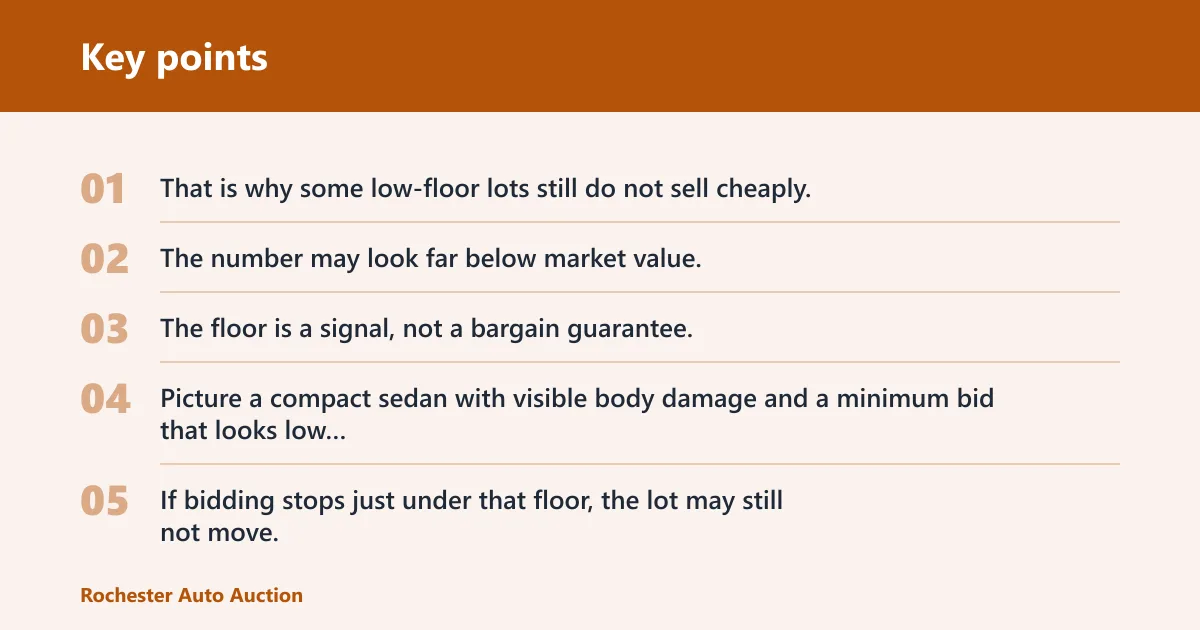
That is why some low-floor lots still do not sell cheaply. The number may look far below market value, but the seller may be protecting against a low close, especially on a lot with stronger demand or a clearer title path. The floor is a signal, not a bargain guarantee.
Picture a compact sedan with visible body damage and a minimum bid that looks low compared with similar cars. If bidding stops just under that floor, the lot may still not move. The seller can let it ride, counter, or reject the result based on the sale terms.
Why some listings show no bids even with a minimum listed
A listing can show no bids for several reasons. The lot may be early in the auction, the minimum may be set above the interest level, or bidders may be waiting to see damage detail, title status, or fee impact before moving. Copart photos can miss underbody and engine-bay details, so some buyers stay out until they can judge the risk better.
Clea describes Copart as a high-stakes salvage auction built for American licensed dealers. It also lists damage types such as front-end, rear-end, side, undercarriage, hail, vandalism, water/flood, burn, and mechanical. Those details matter because a low visible floor does not erase repair risk.
How fees change your max bid
Fees change the answer fast. AuctionCalc defines buyer fees as a separate cost from the winning bid, and it lists multiple fee types that can apply after bidding. That means your real ceiling is not the hammer price alone. It is the hammer price plus the full fee stack and any transport or storage cost you must absorb.
AuctionCalc says total fees on a $10,000 winning bid often add $1,200–$1,800+. It also says max-bid math should subtract fees, transport, holding costs, and target profit. That is the right order of thinking on Copart as well.
Fee types to check before you bid
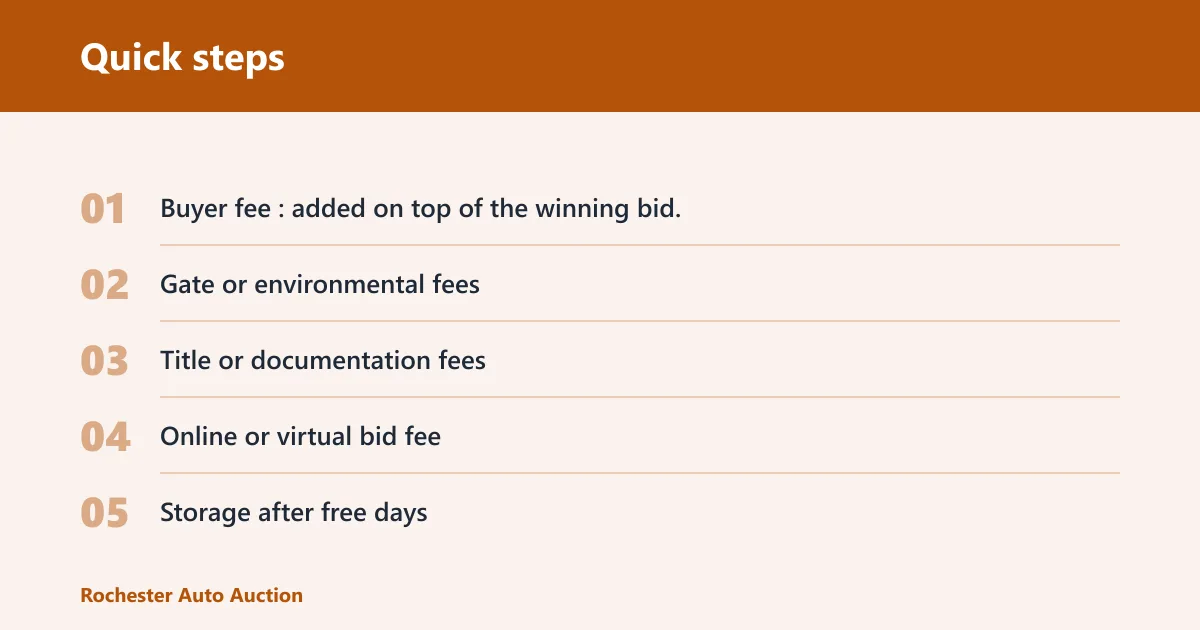
- Buyer fee: added on top of the winning bid.
- Gate or environmental fees: can apply after the auction.
- Title or documentation fees: part of the closing cost.
- Online or virtual bid fee: may apply for digital bidding.
- Storage after free days: adds cost if pickup is delayed.
- Transport: separate from the auction total.
Suppose a lot closes at a final bid price of about $8,000 and buyer fees, title charges, and auction fees add about $1,400. Your all-in auction cost is $9,400 before transport. If your walk-away price is $9,000 total, the bid is already too high even though the hammer price looks acceptable.
Set your walk-away price
- Start with total cost, not hammer price.
- Add buyer fees and all listed auction fees.
- Include transport and any storage risk if pickup may be delayed.
- Subtract your repair allowance only if you have a real estimate, not a guess.
- Compare the result to your budget or target profit.
- Check the listing’s bid limit message before placing a number.
Bid limit is separate from minimum bid. It is the platform’s maximum allowed bid or cap message, and it is usually a system limit, not a seller floor. If you hit a bid limit, that does not mean the minimum bid was reached. It only means the platform will not accept a higher entry from you at that moment.
A common first-timer mistake is to confuse the floor shown on a listing with the cap shown by the platform. Those are opposite directions. One protects the seller. The other limits your entry.
How should I set my max bid around a minimum bid listing?
Set your max bid from the total cost you can live with after fees, not from the visible minimum bid alone. If the listing has a low floor but the fee stack pushes the all-in total near your ceiling, stop early. A low minimum bid can still lead to an expensive purchase once the auction closes.
One clean rule helps: if the next bid would leave you unable to pay the fees, do not bid it. That keeps you from chasing a lot past your walk-away price just because the auction screen still looks active.
How to bid on Copart in practical terms
Start with a verified account, since Copart says membership is required before bidding. Review the lot, status, photos, and fees. Then choose a maximum all-in amount. Place bids only if the next step keeps you under that ceiling. This applies whether you bid in a live auction, through the auto auction interface, or through the standard online flow.
How to bid on Copart without license depends on your local access rules and account type. The key point for this article is simpler: eligibility to bid is not the same thing as eligibility to buy cheaply. Minimum bid, reserve status, and fee math still control the final outcome.
Frequently asked questions
What does minimum bid mean on Copart listings?
It means the seller has attached a floor-related threshold to the lot. It is not the same as your max bid or the final amount you will pay. A lot can still end as no sale or reserve not met if bidding does not satisfy the seller’s side of the deal.
Is minimum bid the same as reserve on Copart?
No. Reserve is the seller’s minimum acceptable sale price, and it is often not shown exactly. Minimum bid is a listing signal tied to that sale setup, but the two labels are not identical. The reserve can remain hidden even while the current bid updates on screen.
Why does a Copart listing show no bids even when a minimum is listed?
Because the floor is not the same as buyer interest. The auction may be early, the threshold may be above current demand, or buyers may be waiting for better damage clarity. Copart photos can miss underbody and engine-bay details, which can slow bidding on risky lots.
How is minimum bid different from final bid price on Copart?
Minimum bid is a seller-side threshold shown on the listing. Final bid price is the amount entered by the winning bidder when the auction closes. The final bid can still fail to produce a sold outcome if the lot is subject to reserve or approval.
How do Copart fees affect what you should bid?
Fees shrink your real ceiling. Buyer fees, gate or environmental fees, title or documentation fees, online or virtual bid fees, storage after free days, and transport all sit on top of the winning bid. If you ignore them, a cheap hammer price can turn into an unaffordable total.
What happens if bidding stops below the minimum bid?
The lot may remain unsold, move to no sale, or wait on seller action depending on the listing setup. A low visible floor does not guarantee a bargain. If the seller does not approve the number, the auction can end without a normal sale.