How Does ACV Transportation Work After You Win a Car?
After a win on ACV, transportation typically starts only after payment clears and the vehicle is released. Then you schedule pickup, give the carrier the right contact details, and track delivery until drop-off. Miss a step, and you can lose time, trigger storage fees, or create a pickup dispute. This guide explains the post-win workflow from payment clearance through pickup, delivery, and delay resolution.
What ACV transportation covers
ACV transportation covers the move from the seller location to the dropoff point after the auction win is finalized. It usually begins only after the winning dealer completes payment and the vehicle release is approved. It usually covers the vehicle move itself, while title delivery follows a separate process.
That difference matters. The carrier can haul the car, truck, or SUV once the release is in place, but a title hold, missing seller authorization, or paperwork issue can stop pickup before the vehicle leaves the lot.
What the move includes
In practice, the service centers on pickup, transit, and dropoff at the dealer or receiving site. Depending on the lane, distance, and vehicle condition, the carrier may need special loading equipment or extra scheduling time. Non-running units, damaged units, and vehicles with flat tires can change the transport plan.
What it does not include
ACV transport does not remove release rules, storage rules, or title timing. If the seller has not authorized release, or if paperwork is incomplete, the vehicle may stay on site until the hold is cleared. That is why shipping and release must be checked as separate steps.
Who handles shipping after you win?
The winning dealer usually has two choices: use ACV-arranged transport or use a dealer’s own carrier. Either way, the dealer remains responsible for confirming pickup timing, delivery details, and any site-specific instructions the carrier needs before dispatch.
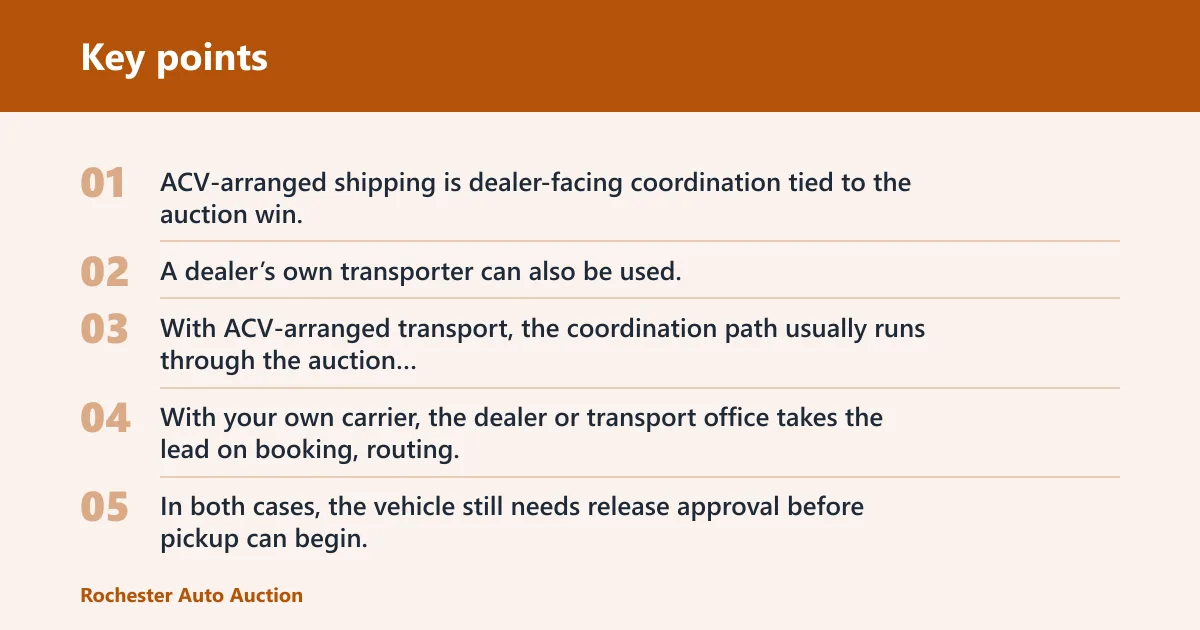
ACV-arranged shipping is dealer-facing coordination tied to the auction win. A dealer’s own transporter can also be used, but the dealer must still confirm release status, pickup window, and any lane or condition limits before the truck shows up.
ACV-arranged transport versus your own carrier
With ACV-arranged transport, the coordination path usually runs through the auction workflow and the assigned carrier. With your own carrier, the dealer or transport office takes the lead on booking, routing, and timing. In both cases, the vehicle still needs release approval before pickup can begin.
A common first-timer mistake is assuming a booked carrier means the car can leave right away. If the release note is not ready, the driver may arrive, wait, and leave without the vehicle. That can create a missed pickup and possibly a new storage charge.
Who confirms pickup and delivery details
The buyer or dealer should confirm the pickup window, gate access details, contact names, and dropoff instructions. The carrier should confirm the route, load status, and any special handling needs. The seller site may also require a bill of lading, release note, or gate pass at handoff.
Payment, release, and pickup approval
Payment confirmation and seller authorization are the gatekeepers for transport. Until the auction marks payment complete and the seller releases the unit, the carrier cannot start the move. Title problems, missing documents, or unresolved seller holds can delay release even when the vehicle has already been won.
Why release timing matters
Pickup timing depends on when the vehicle is released. If the seller has a paperwork hold, or if the title is still being processed, the carrier may have to reschedule. That is why release should be checked before you send a truck to the lot.
What to verify before dispatch
Before dispatch, verify the release note or gate pass, confirm payment status, and make sure the carrier has the correct VIN. If the site requires a specific pickup number, make sure the driver has it. If the vehicle is not marked released, pickup should not start.
| Checkpoint | What to confirm | Why it matters |
|---|---|---|
| Payment status | Marked complete before dispatch | Release usually cannot start until payment clears |
| Seller authorization | Vehicle is approved for release | Prevents wasted pickup attempts |
| Paperwork hold | No title or document block remains | A hold can stop the move at the gate |
| Pickup identifier | Release note, gate pass, or pickup number | Driver may need it to load the unit |
How carrier pickup and delivery work
Carrier pickup follows a fixed order: confirm the window, verify the VIN, inspect the condition record, load the vehicle, and document handoff on the bill of lading. Delivery follows the same logic in reverse, with a contact at dropoff and a signature at arrival.
Pickup window confirmation
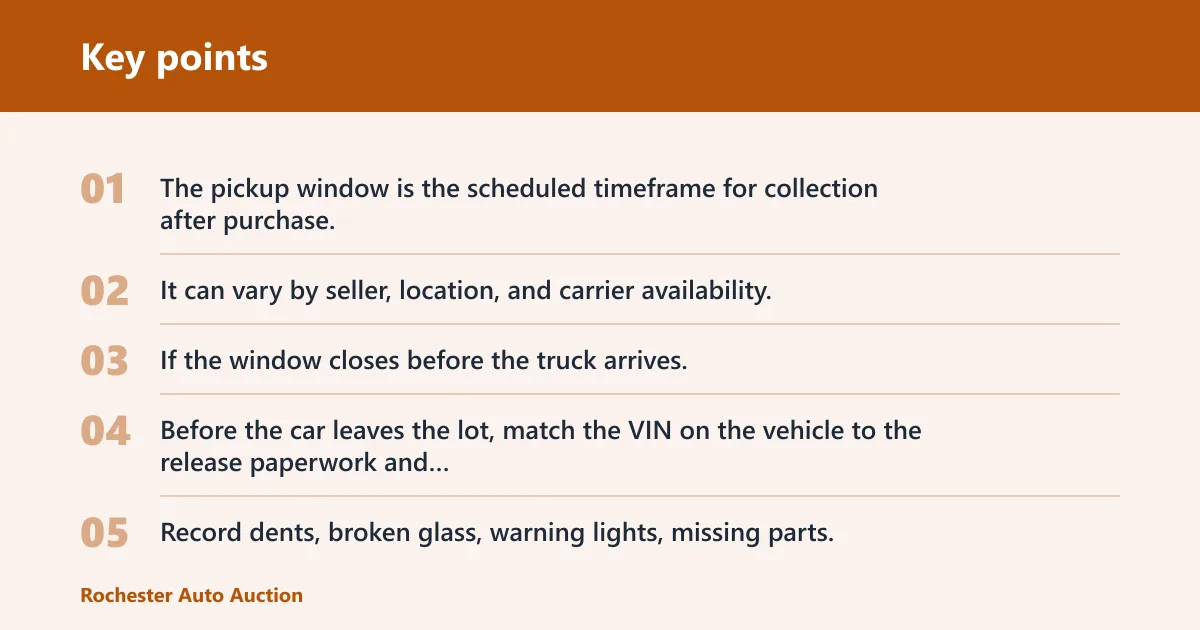
The pickup window is the scheduled timeframe for collection after purchase. It can vary by seller, location, and carrier availability. If the window closes before the truck arrives, the pickup may be pushed back and storage may begin to accrue.
VIN match and condition review
Before the car leaves the lot, match the VIN on the vehicle to the release paperwork and review condition photos or notes. Record dents, broken glass, warning lights, missing parts, or other damage that was already present. That pre-transport record becomes the comparison point at delivery.
Bill of lading at handoff
The bill of lading is the pickup and delivery record. It should show the vehicle identity, pickup condition, and handoff details. The carrier may ask for a signature at pickup and again at delivery. If the condition changes in transit, the bill of lading helps support the claim.
Delivery contact and dropoff setup
Set the delivery contact before the truck departs. Confirm the phone number, receiving address, and any site rules at dropoff. If the vehicle needs a forklift, winch, or special unloading space, the carrier should know that before arrival.
Say your dealer wins a non-running SUV with a dead battery and two flat tires. The carrier should know that before arrival so the load plan can include winch service or alternate equipment. If that detail is missed, the truck may reach the seller lot but still fail to load the unit.
How acv transportation work checklist
Use this checklist in the first 24 hours after the win. It keeps the release, carrier, and condition steps in the right order. That is where most delays start.
- Confirm payment status with the auction account.
- Check that the vehicle is released by the seller.
- Contact the carrier or booking desk.
- Verify the pickup window and any closing time.
- Match the VIN on the vehicle to the release record.
- Review condition photos and damage notes.
- Confirm the gate pass, release note, or pickup number.
- Flag the unit as inoperable if it will not drive.
- Check whether storage fees apply or may start soon.
- Set the delivery contact and dropoff phone number.
- Review the bill of lading at pickup and delivery.
- Escalate any claim for damage, paperwork loss, or failed handoff.
What delays ACV transport
Delays usually come from three places: the release is not ready, the pickup window is missed, or the vehicle needs handling that was not disclosed. Storage fees can begin after the free hold period, depending on the seller and location.
Missed pickups and expired windows
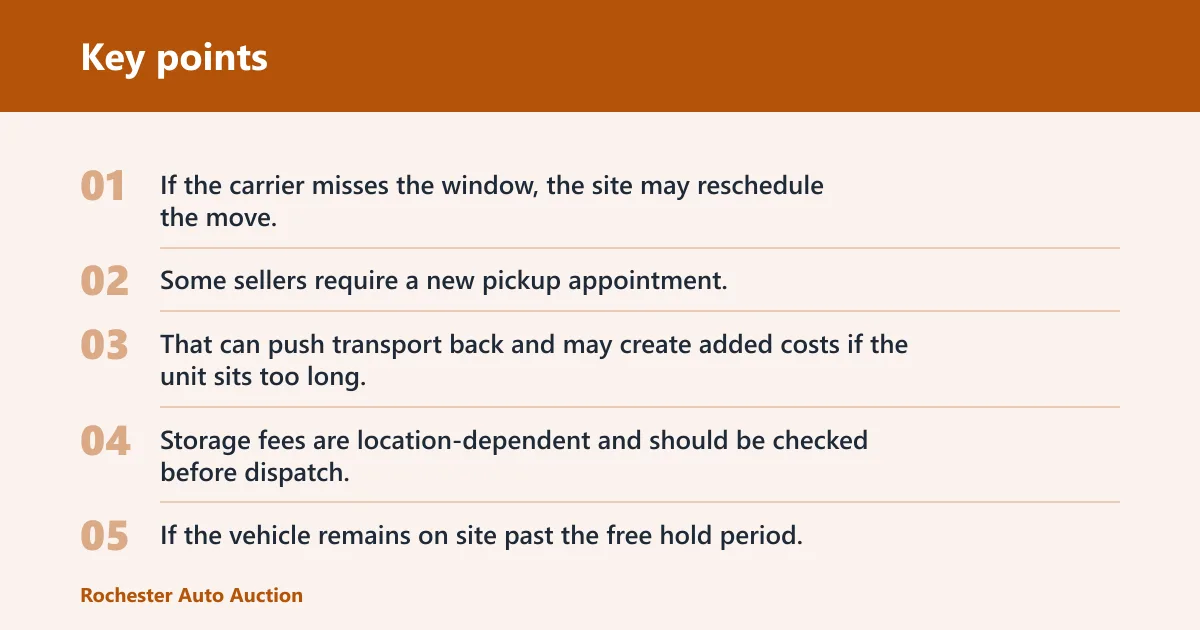
If the carrier misses the window, the site may reschedule the move. Some sellers require a new pickup appointment. That can push transport back and may create added costs if the unit sits too long.
Storage fees after the free hold period
Storage fees are location-dependent and should be checked before dispatch. If the vehicle remains on site past the free hold period, the auction or seller may charge storage until pickup happens. That makes timing part of the cost, not just the route.
Inoperable or damaged vehicles
Inoperable or damaged units often need special loading. They may require a winch, a rollback, or extra labor. If the carrier was booked as if the vehicle were drivable, pickup can stall at the lot and the schedule may need to be rebuilt.
Missing paperwork or release problems
Paperwork holds are a common stop point. A missing release note, title issue, or seller authorization problem can keep the vehicle from leaving even after the carrier is assigned. If that happens, the buyer should get the release issue fixed before trying again.
Suppose a sedan is released on paper, but the gate staff cannot find the correct pickup number when the carrier arrives. The truck may wait, then leave without loading. The next step is not guessing; it is confirming the release record and rescheduling with the same exact VIN and contact details.
How to track the move and resolve issues
Tracking usually starts after carrier assignment or pickup confirmation, then continues through transit and delivery. Status updates may come from the auction, the carrier, or the transport contact. If the move stalls, first verify the release, then confirm the pickup window, then check whether the carrier still has the right contact information.
If there is a damage issue, compare the delivery condition to the pre-transport photos, notes, and bill of lading. If paperwork is missing, ask for the handoff record and the carrier’s dispatch details. If the unit never loaded, the pickup failure should be escalated through the same channel that approved the release.
Claim escalation path
Start with the carrier, then the auction transport contact, then the seller location if the issue involves release or handoff. Keep the VIN, pickup date, condition photos, and bill of lading ready. Those items make the claim easier to review and faster to sort out.
Frequently asked questions
How does ACV transportation work after I win a car?
After the win, the vehicle must clear payment and release before pickup can begin. Then the carrier is scheduled, the pickup window is confirmed, and the car moves to delivery. If release paperwork is missing or delayed, transport waits until the hold is cleared.
Who arranges shipping after I win on ACV Auctions?
The winning dealer usually arranges shipping or approves an ACV-arranged carrier. Either path still depends on release approval, pickup timing, and correct contact information. The dealer should confirm who is booking the truck and who is responsible for updates before the unit moves.
When do I need to choose a carrier after winning an ACV vehicle?
Choose a carrier as soon as payment and release are on track, and do not wait until the pickup window is nearly closed. Early booking gives time to confirm lane limits, vehicle condition, and any special loading needs. That matters most for inoperable or damaged units.
How much does ACV transportation cost?
Cost depends on route, distance, carrier availability, vehicle condition, and whether special loading is needed. A drivable unit on a common lane is usually simpler than a non-running vehicle on a longer route. Check for storage, access, or delay-related charges before dispatch.
Can I use my own transporter for an ACV purchase?
Yes, dealers can often use their own transporter. The key is still the same: payment must clear, the seller must release the vehicle, and the carrier needs the correct pickup details. Own-carrier moves can work well when the dealer wants direct control of timing.
What happens if transport is delayed after I win a car?
If transport is delayed, first check whether the vehicle is released, whether the pickup window is still open, and whether storage fees have started. Then confirm the carrier still has the right VIN and contact details. If needed, reschedule and document the reason for the delay.
Does ACV transportation include title delivery or just the vehicle?
It usually covers the vehicle move, while title delivery follows a separate process. That means the car can ship before the title arrives, depending on seller timing and paperwork status. Always confirm whether any title hold remains before you count on a same-day release.
How do I track an ACV vehicle after pickup?
Track it through the carrier contact, the transport booking record, or any status updates provided after pickup. Keep the VIN, pickup date, and dropoff contact handy. If the status stops updating, start by confirming that the truck actually loaded the vehicle and left the site.
What is my cars acv?
Your car’s actual cash value is the amount a buyer or insurer may assign based on age, mileage, condition, and comparable sales. It does not tell you whether transport is ready. For a won auction vehicle, the practical question is whether the car is released and schedulable.
What is a vehicle acv?
A vehicle’s actual cash value is a valuation figure, not a shipping status. It is used in claims and pricing discussions, while transport depends on release, pickup timing, and carrier coordination. If you are arranging delivery, the valuation number does not replace release paperwork.
What is acv on an auto policy?
On an auto policy, ACV usually means actual cash value, the amount used to settle a covered loss based on market value and condition. That is separate from auction transport. After a win, the key steps are payment clearance, release approval, and carrier scheduling.