How to Sell a Car at an Online Auto Auction
To sell a car at an online auto auction, choose a reserve only if you know your lowest acceptable net, gather title and lien paperwork before listing, and disclose condition issues upfront. Bad reserve pricing or missing documents can leave the sale stuck, reduce bids, or delay payout and pickup. This guide covers the seller workflow, paperwork, reserve strategy, disclosure, and handoff risks.
How does an online car auction work for sellers?
An online car auction usually starts with a seller profile or listing form, then vehicle details, photos, and a bidding window for dealers or approved buyers. The seller watches the offers, accepts the result if the reserve is met, and then completes handoff, title transfer, and payment release.
Seller setup and listing basics
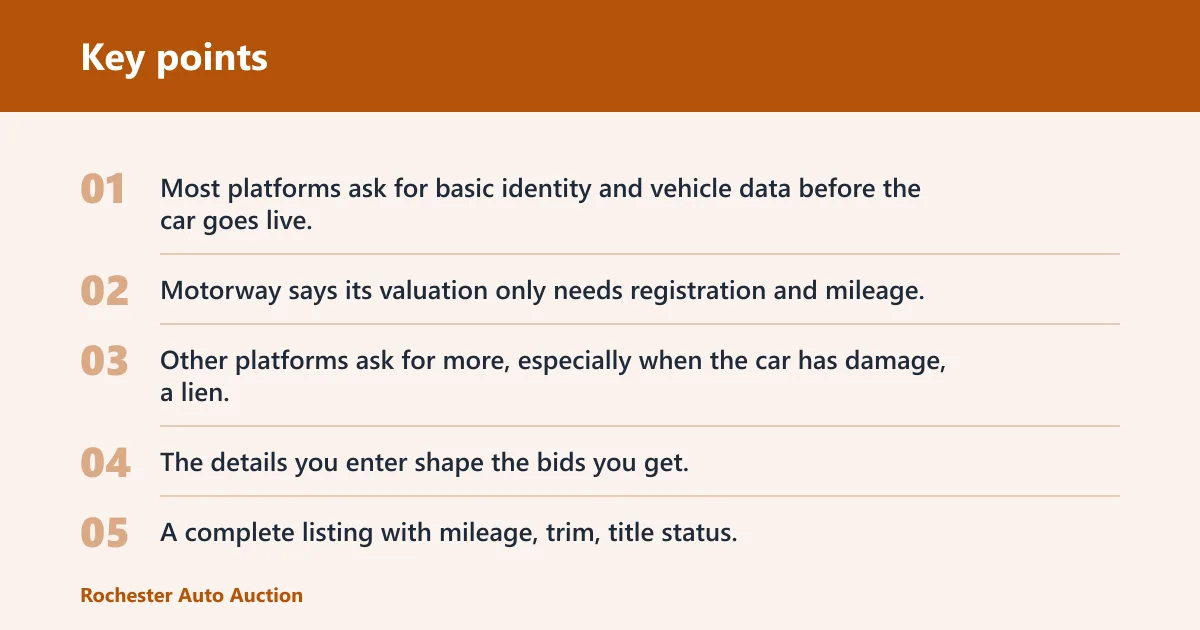
Most platforms ask for basic identity and vehicle data before the car goes live. Motorway says its valuation only needs registration and mileage, and it says the car profile step takes minutes. Other platforms ask for more, especially when the car has damage, a lien, or an unusual title status.
The details you enter shape the bids you get. A complete listing with mileage, trim, title status, and clear defect notes helps dealers price the car faster. A vague one invites lower offers or later disputes if the inspection finds something the photos did not show.
Dealer bidding and reserve handling
Many online auction platforms use dealer bidding, which means dealers compete on the same car at the same time. The same source says thousands of dealers compete for the same car. The reserve price is the seller’s minimum acceptable price, and it directly controls whether the car can sell.
If the reserve is too high, the car may draw interest without a sale. If it is too low, the car may sell quickly but leave money on the table. The right setting depends on how desirable the car is, how much repair work it needs, and how easy it will be for a dealer to resell.
Winning bid, acceptance, and next steps
After bidding ends, the platform usually shows the top offer and whether it clears reserve. If it does, the sale moves to inspection, payment, and collection. If it does not, the seller may accept the best offer, relist, or wait for another auction cycle.
That last step matters because the deal is not finished when the top bid appears. Title status, payment method, and pickup logistics still have to line up. Missing one of those pieces can slow the handoff or void the sale.
Is an online car auction the same as a traditional auction?
No. An online car auction shifts most of the seller work to a listing platform and remote bidding, while a traditional auction house usually requires travel, an entry or listing fee, and in-person drop-off. Online selling usually means less travel and more control over timing, while auction-house selling follows a fixed physical schedule.
Travel, entry, and listing requirements
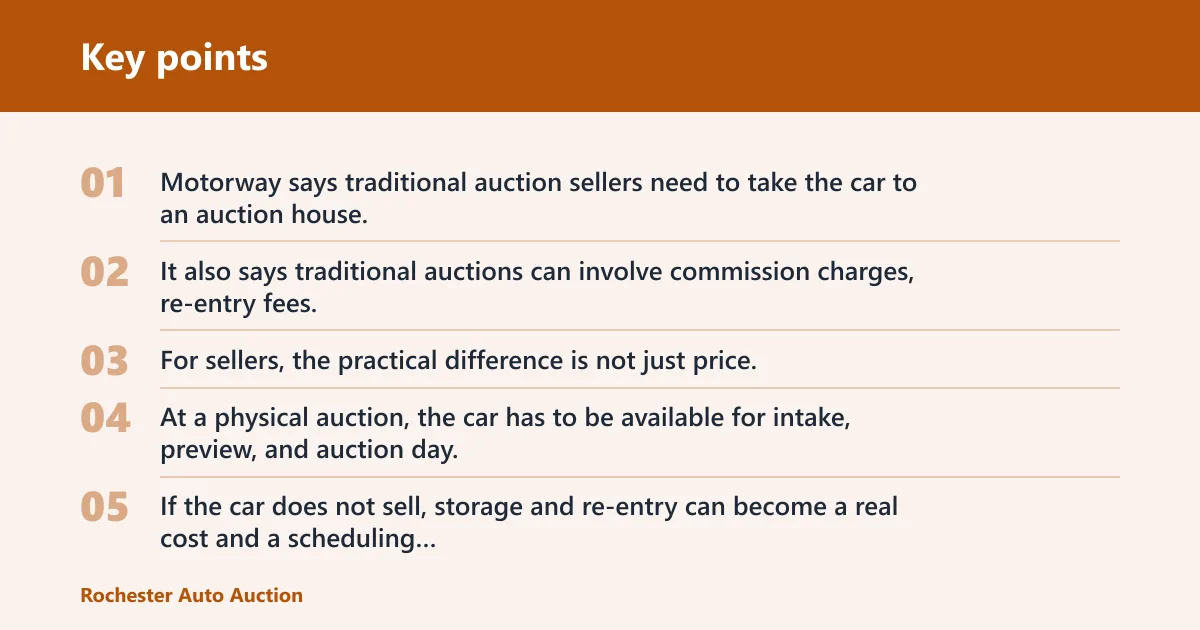
The same source says traditional auction sellers need to take the car to an auction house, and it says an auction house may charge an entry fee ranging from £15 to more. It also says traditional auctions can involve commission charges, re-entry fees, and storage fees.
For sellers, the practical difference is not just price. At a physical auction, the car has to be available for intake, preview, and auction day. If the car does not sell, storage and re-entry can become a real cost and a scheduling problem.
Preview windows, storage, and re-entry risk
Traditional auction houses usually give buyers a preview window before bidding starts. That can help buyers inspect the car in person, but it also exposes the car to more handling and timing risk for the seller. If the car misses the sale or gets pulled, re-entry can create another round of fees or delay.
Online platforms reduce the need for a physical lane, but they still rely on truthful disclosure and a final inspection. If the car’s condition changes after listing, the platform may adjust the offer or cancel the deal.
When each option fits better
Online auction usually fits sellers who want a wider dealer pool and less travel. Traditional auction can suit sellers who already have the car near the auction house and want a fast in-lane sale. The better choice depends on whether your car is clean, damaged, modified, or hard to price.
Picture a 140,000-mile sedan with a clean title and a full service file. That car may do better online because dealers can price it from photos and records. A rough project car with missing trim may do better in a lane where buyers can inspect it directly before bidding.
What do you need before listing?
Before you list, gather ownership paperwork, service records, and a clear account of the car’s condition. Buyers expect the listing to match the car they receive, and platforms may pause or revise the sale if the title, lien status, or disclosed condition does not line up with the final inspection.
Title, lien, and ownership paperwork
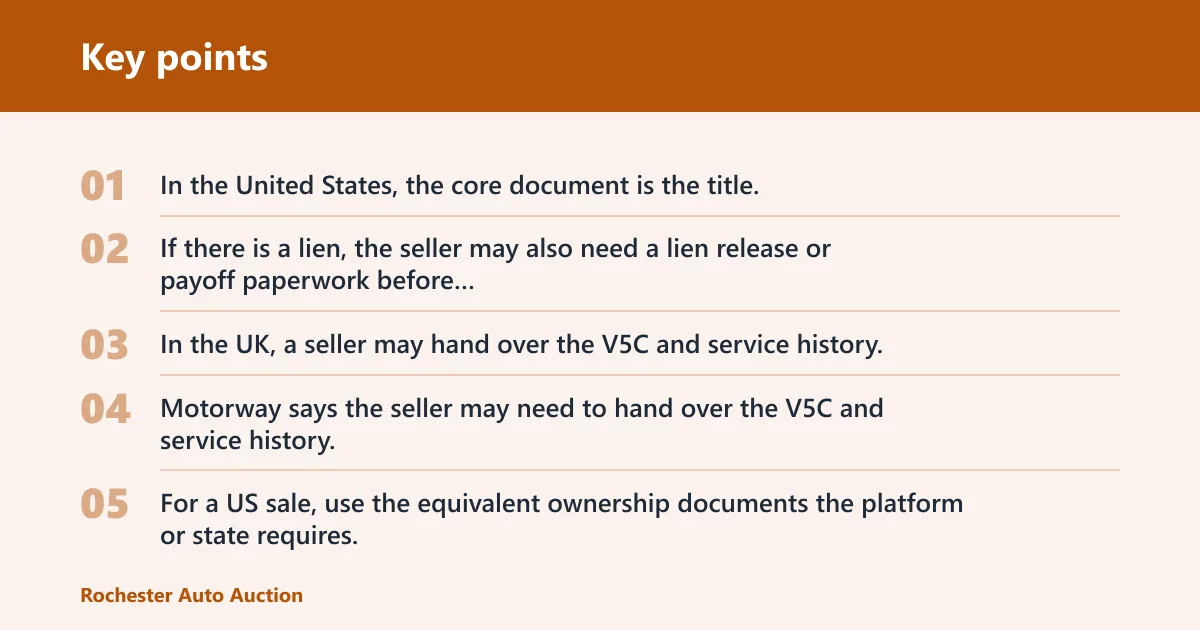
In the United States, the core document is the title. If there is a lien, the seller may also need a lien release or payoff paperwork before transfer can finish. In the UK, a seller may hand over the V5C and service history; that is useful as a regional example, not a universal rule.
The same source says the seller may need to hand over the V5C and service history. For a US sale, use the equivalent ownership documents the platform or state requires, and clear any lien before collection unless the auction process specifically handles payoff at closing.
Service records and key vehicle details
Service history helps buyers judge maintenance and future repair risk. It does not erase wear, but it can support a stronger bid when the record shows regular oil changes, major services, or recent replacement parts. Be ready to list mileage, trim, engine size, title brand, and any known warning lights.
Common first-timer mistake: listing “runs well” without naming a dead air conditioner, a check-engine light, or a rebuilt transmission. That kind of gap tends to surface during inspection, and it can lead to a reduced bid or a post-sale dispute.
Photos and disclosure notes
Photos should show the full car, not just the clean side. Buyers want the front, rear, both sides, dash with mileage, tires, wheels, seats, roof, and any damage. If the car has paint fade, rust, interior tears, warning lights, or aftermarket parts, say so in the listing text.
Disclosure is not an optional add-on. It shapes the dealer pool, the reserve strategy, and the odds of a smooth final inspection. A car that is accurately described usually gets fewer surprises and fewer failed handoffs.
Can I set a reserve price when selling a car at auction?
Yes. A reserve price is the minimum acceptable price you are willing to take, and it gives you control over the lowest sale outcome. The same source says sellers can set a reserve price as the minimum they are willing to accept. The key is to set it where the car can still clear the market.
How reserve price changes sale outcome
Reserve protects against an undersell, but it can also reduce the chance of a completed sale. If buyers sense the reserve is far above market, bidding may stall early. If the reserve is too close to the opening bid, the auction may clear but leave little room for negotiation.
| Vehicle type | Reserve approach | Sale risk if reserve is high |
|---|---|---|
| Higher-mileage daily driver | Moderate reserve tied to recent comparable bids | May attract interest but fail to clear |
| Salvage or branded-title car | Lower reserve or no reserve if demand is broad | High reserve can scare off dealer bidding |
| Modified car | Reserve based on documented parts and market demand | Too much optimism can leave it unsold |
| Finance-encumbered car | Reserve must cover payoff and seller net target | Low reserve can create a shortfall at closing |
When to set a lower or no reserve
Lower or no reserve can help when the car is easy for dealers to price and resell, especially if the market is active for that model. It can also help a damaged or unusual car reach a deal when buyers want certainty more than perfect condition.
For a finance-encumbered car, set the reserve only after you know the loan payoff and any platform fees. If the reserve does not cover payoff, the seller can end up with no sale or a closing gap that has to be filled before transfer.
Seller checklist for online auction
Use this checklist before you list and again before pickup. It separates the paperwork, the disclosure work, and the handoff items that most often decide whether a sale closes cleanly or stalls at the end.
| Section | Item | Pass/fail |
|---|---|---|
| Pre-listing documents | Title or ownership paperwork is available and readable | Pass / Fail |
| Pre-listing documents | Lien release or payoff contact is ready if the car is financed | Pass / Fail |
| Pre-listing documents | Service history, receipts, or maintenance notes are gathered | Pass / Fail |
| Pre-listing documents | Mileage, trim, and VIN or registration details are confirmed | Pass / Fail |
| Photo and condition disclosure items | Exterior photos cover all sides, wheels, roof, and damage | Pass / Fail |
| Photo and condition disclosure items | Interior photos show seats, dash, warning lights, and cargo area | Pass / Fail |
| Photo and condition disclosure items | Known defects are listed clearly, including lights, leaks, and body damage | Pass / Fail |
| Photo and condition disclosure items | Aftermarket parts, modifications, or prior repairs are disclosed | Pass / Fail |
| Day-of-sale handoff steps | Car is accessible for collection or pickup at the agreed location | Pass / Fail |
| Day-of-sale handoff steps | Spare key, title packet, and signed transfer forms are ready | Pass / Fail |
| Day-of-sale handoff steps | Seller has confirmed how and when payment will be released | Pass / Fail |
| Day-of-sale handoff steps | Plate removal, insurance cancellation, and pickup instructions are complete | Pass / Fail |
What happens after my car sells at an online auction?
After the sale, the platform usually moves to inspection, payment, and collection. The buyer or dealer will confirm the car matches the listing, the seller will hand over title or ownership paperwork, and the platform will release funds by its stated method once the transfer is complete.
Payment timing and method
Payment timing and method vary by platform and auction house, so sellers should confirm the exact release rule before listing. The same source says payment is made by secure bank transfer at collection. eCarsTrade says its platform asks for a security deposit that is fully refundable, which shows that payment structure can differ by site.
Do not assume every auction pays the same way. Some platforms pay after collection, some after documents clear, and some hold funds until a final check is complete. If the payment rule is unclear, ask before you set a reserve.
Collection or pickup logistics
The same source says dealers can collect the vehicle directly from your home, usually within 24 hours. That is a platform-specific example, not a universal promise. On other sites, the seller may need to drive the car to a drop-off point, meet a carrier, or wait for a pickup slot.
Home collection sounds simple, but restrictions still apply. A non-running, severely damaged, or incomplete car may need special transport and can trigger extra review before pickup. Always check whether the platform allows collection from your address and whether the car has to roll, steer, and brake.
Title transfer and final release
At handoff, the seller should transfer the title or ownership document, remove plates where required, and keep a copy of the signed paperwork. The buyer should leave with a clean transfer path and the seller should leave with proof of sale or payout confirmation.
Suppose a sedan passes auction but the title packet is missing the lien release. The pickup may still happen, but the funds can stay on hold until the missing paper arrives. That delay is avoidable if the seller checks the packet before collection day.
What can go wrong?
The most common problems are no-sale outcomes, failed inspections, missing title paperwork, and disputes after collection. These are not rare edge cases; they are the main reasons a sale that looked done on the screen still fails at the finish line.
Reserve not met
If the top bid stays below reserve, the car does not have to sell. The seller can relist, lower the reserve, or accept a lower offer if the platform allows it. A high reserve on a common car often leads to exactly this outcome.
A common first-timer mistake is setting a reserve based on wishful retail pricing instead of dealer wholesale demand. Dealer bidding reflects the cost to recondition, transport, and resell the car, so the market may land lower than the seller expects.
Failed inspection or disclosure mismatch
A final inspection can stop the sale if the car does not match the listing. That includes undisclosed warning lights, accident damage, missing parts, or paperwork that is not ready. The buyer may lower the offer, reject the car, or ask the platform to void the deal.
This is where accurate photos matter most. If the listing showed a clean bumper but the inspection finds cracked mounting tabs and a hidden scrape, the gap can hurt the bid or cancel the handoff. Better disclosure gives the buyer less reason to walk.
Missing title, lien, or post-sale dispute
Missing title papers can delay transfer even after the auction ends. A lien that is not cleared can block payout or keep the buyer from getting full ownership. Post-sale disputes usually start when the condition at pickup does not match the listing or the signed documents do not line up.
For sellers, the safest move is to confirm ownership status before the car is listed. That means title in hand, payoff path known, and every disclosed defect captured in the listing. If any of those pieces are uncertain, fix them before the auction starts.
Frequently asked questions
How much does it cost to sell a car at auction online?
Costs vary by platform. The same source says there are no seller fees for selling through its platform, while traditional auction houses may charge an entry fee, commission charges, re-entry fees, and storage fees. The seller should always confirm the exact fee schedule before listing and before agreeing to collection.
How long does it take to sell a car at an online auto auction?
Timing depends on listing quality, reserve level, and buyer demand. The same source says the car profile step takes minutes, and it says dealers can collect the vehicle directly from your home, usually within 24 hours. Even then, payment and title checks can add time if paperwork is incomplete.
Do I need to drive my car to the auction house?
Not for every online platform. Some offer home collection, while traditional auction houses usually require you to take the car there yourself. The same source says traditional auction sellers need to take the car to an auction house, which is one of the clearest differences between online and in-person selling.
What documents do I need to hand over when my car sells?
At minimum, expect to hand over the title or ownership paperwork and any lien release needed to complete transfer. The same source says the seller may need to hand over the V5C and service history. In the US, the equivalent is the title, payoff or lien release documents, and any state-specific transfer forms.