How Much Will My Car Sell at Auction?
Your auction payout is the hammer price minus seller fees and any reconditioning or payoff, so a private seller often nets roughly 70% to 90% of retail trade-in value, depending on condition and demand. Skip those deductions and you can overstate proceeds by hundreds or even thousands of dollars. This guide breaks down the net formula and shows example payouts for clean, average, and rough cars.
How auction payout is calculated

The right way to estimate payout is to start with the expected gross bid, then subtract every seller-side cost that applies before and after sale. Auction valuation is only a non-binding estimate, so use it as a planning figure, not a promise. If the car misses reserve, the result can be no sale and some fees anyway.
Gross bid vs net proceeds
The hammer price gets the attention, but net proceeds are what reach the seller after deductions. That gap matters because listing fees, commission, transport, reconditioning, and no-sale exposure all cut into the final check. Two cars can draw similar bids and still produce very different payouts once the fee stack is applied.
The fee stack that reduces payout
Listing fees can range from $10 to $100+ depending on the platform and vehicle type. Seller commissions are typically between 5% and 15% of the final sale price, and final value fees may also apply on some platforms. Reconditioning costs can add $200–$800 if the car needs detailing, repairs, or maintenance.
Transportation and logistics fees may apply if the seller ships the car to the auction site. Reserve price and no-sale fees can create extra costs if the car misses the minimum bid. That is why a reserve should be set from net proceeds, not from the highest hopeful bid.
A simple seller-side formula
A workable estimate is: expected gross bid minus listing or entry fee, seller commission, final value fee, transport, reconditioning, and any no-sale or re-entry exposure equals estimated seller net. If the car still has a loan payoff, subtract that as well. Keep the payout estimate separate from the market value estimate.
Say your sedan is expected to bring $12,000 at auction. If the platform charges a $50 listing fee, a 10% commission, $300 in transport, and $400 in prep, the net falls to about $10,050 before any payoff. That is a meaningful gap from the headline bid.
What affects auction value
Auction value shifts with condition, mileage, title status, vehicle type, and sale timing. A non-binding valuation is usually built from those inputs, plus current demand in the lane or on the platform. The same model can clear differently in the same week if one car looks ready to retail and the other needs work.
Condition and cosmetic wear
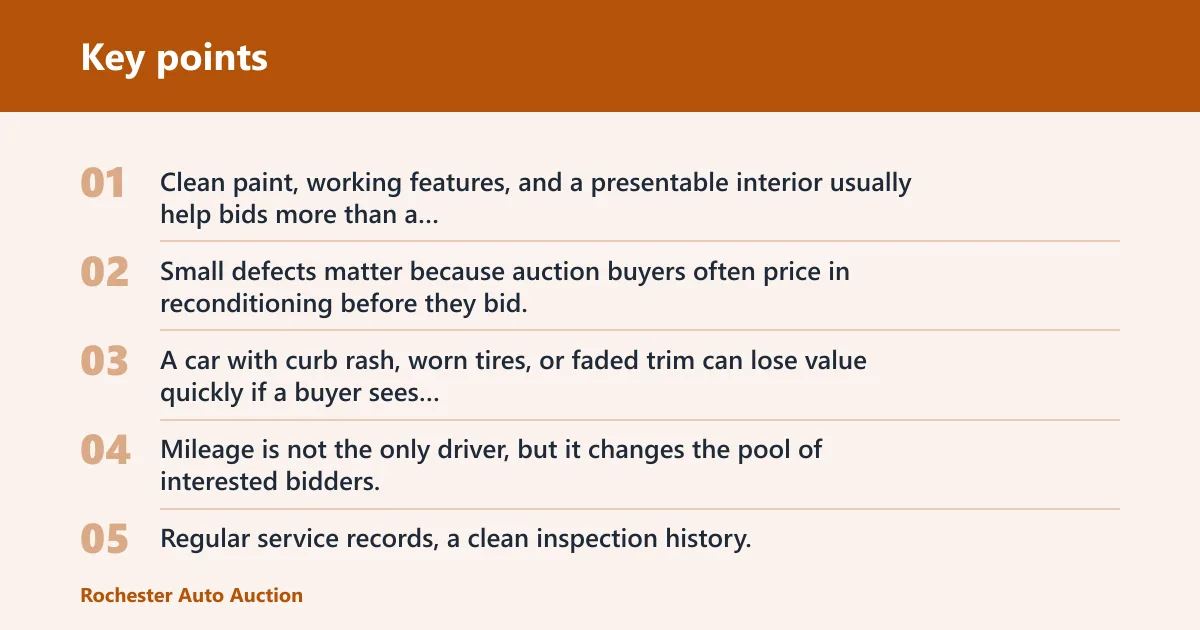
Clean paint, working features, and a presentable interior usually help bids more than a seller expects. Small defects matter because auction buyers often price in reconditioning before they bid. A car with curb rash, worn tires, or faded trim can lose value quickly if a buyer sees immediate shop work ahead.
Mileage and maintenance history
Mileage is not the only driver, but it changes the pool of interested bidders. Regular service records, a clean inspection history, and complete keys can support better bidding because they reduce uncertainty. A missing service file or patchy maintenance history can push buyers lower, especially on older used cars.
Title status and vehicle type
Clean-title cars usually attract a wider buyer base than salvage, rebuilt, or otherwise branded-title vehicles. Specialty cars may do well when demand is strong, but the buyer pool is smaller and more price-sensitive. Cars that are easy to inspect and easy to resell tend to fare better than odd-spec or hard-to-finance vehicles.
Local demand and sale timing
Demand changes by region, season, and inventory levels. A 4×4 truck may draw stronger bids ahead of winter, while convertibles may do better when weather is warmer. Auction timing matters because buyers adjust bids based on what they can move quickly and what they already have in stock.
Picture two similar compact SUVs listed the same week. One has full service history, fresh tires, and a clean title; the other has 98,000 miles, a warning light, and needs bumper work. The first can attract broader bidding because buyers see less risk and lower prep cost.
Auction fees to expect
How much does it cost to sell a car at auction? The answer depends on the house, the platform, and whether the car sells on the first attempt. The main charges are listing or entry fees, commission or final value fees, and logistics costs. Some platforms also charge for relisting, storage, or return transport.
Listing and entry fees
Listing fee is the upfront cost to place the car into auction. It may be flat or tiered based on the vehicle and the amount of exposure it gets. Some platforms charge a low entry fee, then add optional visibility upgrades. That means the cheapest listing is not always the best fit if the car needs more buyer attention.
Seller commission and final value fees
Seller commission is usually a percentage of the final sale price and varies by auction house. Final value fee is a separate platform charge taken after the sale, often percentage-based or price-band based. Both reduce net proceeds directly, so you need the full fee schedule before you set expectations.
Transport, storage, and return costs
Transport and logistics fee covers moving the car to the auction site, including collection, shipping, storage, or return transport. If the car does not sell, return fees can become part of the outcome. Those costs are easy to miss when comparing auction offers with trade-in quotes.
Reserve price and no-sale risk
Reserve price is the minimum acceptable amount the seller will accept. If bids do not reach it, the car is not sold, and fees may still apply. That is the key risk many sellers miss when they focus only on the auction estimate instead of the net result.
What reserve means
A reserve protects the seller from a low bid, but it can also suppress sale probability if the reserve is set too high. An auction house valuation is non-binding, so the estimate helps with expectations and reserve planning, not guaranteed payout. Reserve pricing should leave room for fees and likely buyer deductions.
What happens if bidding falls short
If bidding does not reach reserve, the car will not be sold. Some platforms may still charge listing, inspection, transport, or no-sale fees, and the seller may need to relist the car. That can shrink the final net even if the first auction produced strong interest.
Why relisting can cost more
No-sale or re-entry fee is charged if the vehicle does not sell and must be relisted. A second listing can mean another entry fee, additional transport handling, and another wait for the next bidder pool. The longer the process runs, the more the seller’s net can drift downward.
Car auction net proceeds table
This table shows the kind of net calculation sellers should use before listing. The figures are simple planning examples, not guarantees, and they assume no loan payoff. The point is to show how similar gross bids can lead to very different seller checks once fees and risk costs are included.
| Scenario | Expected gross bid | Listing/entry fee | Commission | Transport | Reconditioning | No-sale risk | Estimated seller net |
|---|---|---|---|---|---|---|---|
| Clean car | $14,500 | $50 | $1,450 | $150 | $200 | $0 | $12,650 |
| Average used car | $9,000 | $75 | $1,080 | $200 | $500 | $150 | $6,995 |
| Problem car | $4,500 | $100 | $675 | $250 | $800 | $300 | $2,375 |
The clean car keeps a higher net because the prep bill stays light and the auction risk is smaller. The average used car loses more ground because the fee stack is heavier and the reconditioning line grows. The problem car shows why a low gross bid can still leave the seller with a very thin payout.
Will my car sell below market value?
Will my car sell below market value at auction? Often, yes, if you compare it with retail asking prices rather than wholesale or trade-in numbers. Auctions price speed, risk, and convenience into the bid, so the result can sit below private-sale retail but still make sense once time, effort, and fees are counted.
Why auction pricing can differ from retail pricing
Retail listings assume a dealer margin, a longer selling window, and often more cosmetic presentation. Auctions compress that process. Buyers bid with reconditioning, transport, and resale risk in mind, so they frequently discount visible defects and uncertain history more heavily than a retail shopper would.
When an auction may still make sense
An auction can be the better choice if the car has decent demand, you want a faster sale, and the fee schedule is reasonable. It can also work when the vehicle is older, slightly worn, or not worth the time and cost of a private listing. The best fit is usually a car with enough appeal to draw multiple bidders.
Which cars tend to do better at auction?
Cars that tend to do better are usually clean-title, easy to inspect, and in steady demand. Mainstream trims, service records, and visible care help. Late-model vehicles with no major damage usually attract more interest than niche cars, high-mileage problem cars, or vehicles that need immediate mechanical work.
How to estimate your payout before listing
How do I estimate my net payout after auction fees? Start with comparable sales, then subtract the full fee schedule and any likely prep costs. A seller who plans around net proceeds will make a better choice on reserve, platform, and timing than one who only chases the highest headline bid.
Gather comparable sales
Look at cars with similar mileage, trim, title status, and condition. Small differences matter. A 20,000-mile gap or a branded title can move bids enough to change the decision. Use auction valuation as a guide, then adjust for your car’s real condition rather than the best-case version of it.
Ask for the full fee schedule
Before you list, ask about entry fees, seller commission, final value fees, transport, storage, no-sale fees, and return transport. Sellers should also confirm whether the platform charges for relisting. That fee sheet is the only way to turn a gross bid into a reliable payout estimate.
Set a reserve from net proceeds, not wishful pricing
Work backward from the amount you need to net, then add the expected fees until you reach a reserve price that still makes sense. If the reserve is too high, the car may not sell. If it is too low, you may clear the sale but miss your actual payout target.
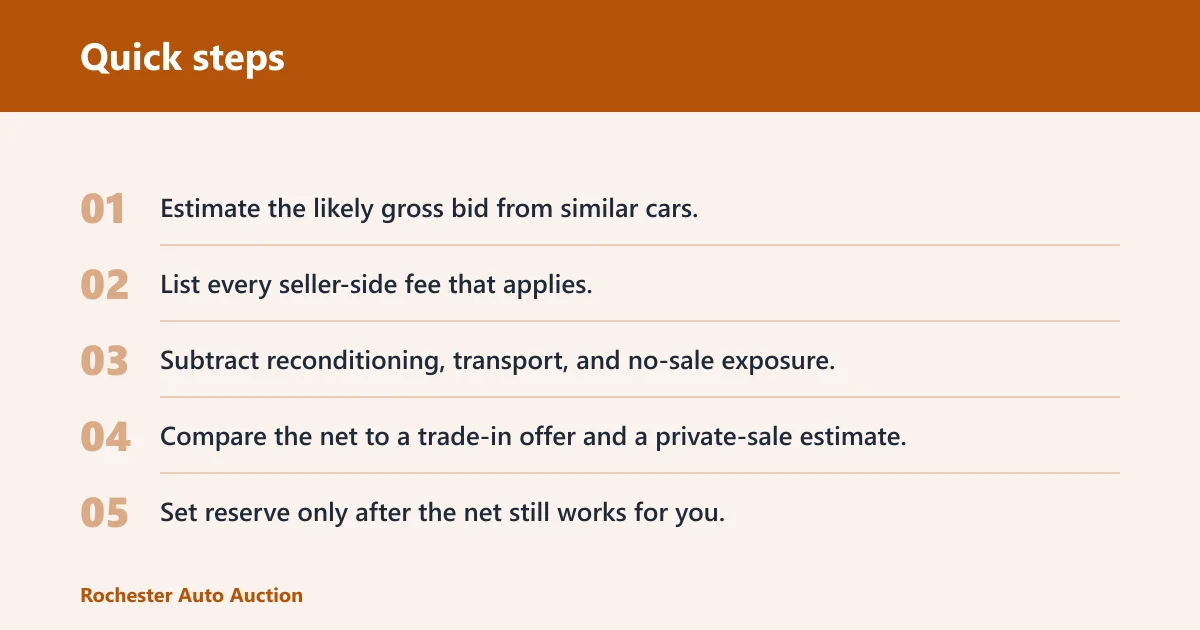
- Estimate the likely gross bid from similar cars.
- List every seller-side fee that applies.
- Subtract reconditioning, transport, and no-sale exposure.
- Compare the net to a trade-in offer and a private-sale estimate.
- Set reserve only after the net still works for you.
A common first-timer mistake is to compare an auction estimate with a private-sale asking price and assume the gap is profit. That skips fees and prep. A better comparison is auction net versus what a dealer or private buyer is likely to pay after time, risk, and effort are considered.
Frequently asked questions
How much will my car sell at auction?
Your car’s auction value is the expected gross bid, not your payout. Condition, mileage, title status, vehicle type, and demand all shape the number, and the auction house valuation is non-binding. To estimate what you keep, subtract listing, commission, transport, prep, and any no-sale fees.
How much will my car sell for at auction?
The sale price can vary from week to week even for the same model because buyers respond to condition and current inventory. A clean car with service history usually bids better than a rough one with needed repairs. The seller should treat the auction estimate as a range, not a guarantee.
How much did my car sell for at auction?
If your car already sold, the final gross price is the hammer amount or winning bid before seller fees. Your net is lower after commission, listing charges, and logistics costs. If bidding never reached reserve, the car may not have sold at all, even if interest looked strong.
How much does it cost to sell a car at auction?
Costs vary by platform, but the main items are listing or entry fees, commission, final value fees, transport, reconditioning, and possible no-sale charges. Listing fees can range from $10 to $100+, and seller commissions are typically between 5% and 15% of the final sale price.
What fees will come out of my auction sale?
The most common deductions are seller commission, final value fees, and any logistics costs tied to moving or returning the car. Reconditioning can also come out of the seller’s side if the car needs detail or repair work before it is presented. Ask for the full fee schedule in writing.
What happens if my car doesn’t meet reserve?
If bidding does not reach reserve, the car will not be sold. You may still owe listing, inspection, storage, transport, or no-sale fees, and you may need to relist the vehicle later. That is why reserve should be set with fee exposure in mind, not just hoped-for market value.