How Do Dealer Auctions Work for Car Buyers?
Dealer auctions are usually open only to licensed dealers, with some lanes allowing approved guests or brokers; bids happen against live competition, the buyer pays the hammer price plus buyer fees and other charges, and the buyer takes title, transport, and condition risk. Bid without the fee sheet or inspection limits, and a low winning price can turn into a poor landed cost fast. This guide explains access rules, the bidding flow, and the full cost before you bid.
What a dealer auction
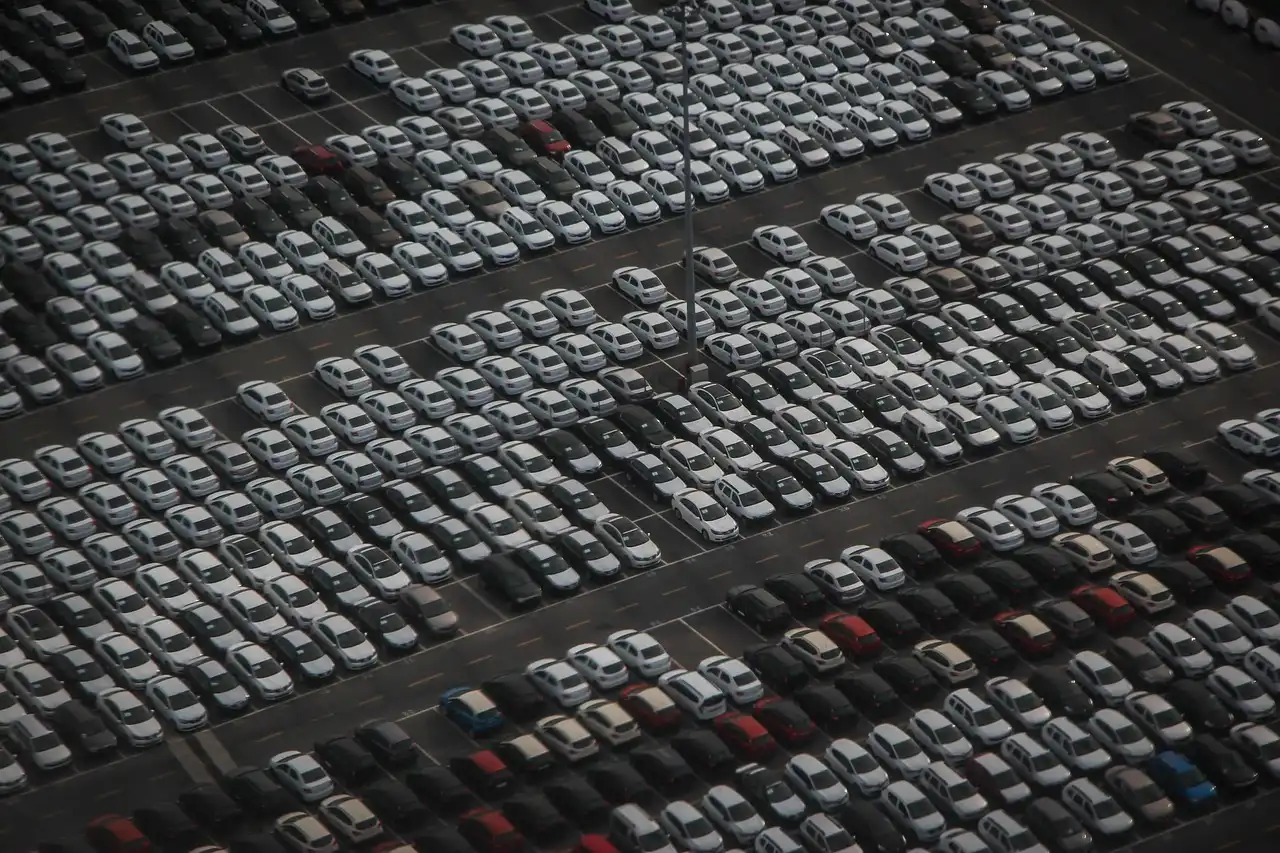
A dealer auction is a wholesale sale site where inventory moves between licensed buyers, sellers, and auction companies. Most vehicles come from dealer trade-ins, lease returns, fleet exits, repo units, rentals, or other wholesale channels. Prices often move faster and lower than retail listings because the buyer pool is smaller and the vehicles are sold with limited inspection rights.
In-person lanes versus online sale formats
Many dealer auctions run both live lanes and online listings. In person, bidding happens in sequence as cars roll through the lane. Online, bidding may be live, timed, or proxy-based, but the vehicle is still usually sold under wholesale rules and subject to the auction’s terms. A dealer auction can be open only to approved accounts even when the listing itself is visible online.
Why prices move differently than retail lots
Wholesale pricing reflects speed, not reconditioning, advertising, and lot time. A car that looks cheap at the block can still cost more than a retail alternative once fees, transport, tax, title work, and repairs are added. That is why the hammer price is only the first number that matters.
Who can legally buy there?
Most dealer auctions require a dealer license or another approved buying path, such as a registered broker, a partner account, or a host dealer account. The exact rule depends on the auction and the state. If you do not have dealer credentials, you usually need an authorized intermediary or a public-access venue instead.
Dealer license holders and when it is required
A dealer license is required when the auction restricts access to licensed motor vehicle dealers, a common rule at wholesale-only sales. The license is not a casual pass. Buyers may be checked against state records, and the auction may also require a resale certificate, business documents, insurance, and a signed buyer agreement.
Approved brokers, registered guests, and partner programs
Some auctions allow approved brokers or guest buyers under a licensed dealer’s account. Others accept fleet managers, banks, lenders, or charity buyers with special authorization. These paths are legal only when the auction has approved them in writing and the buyer follows the account holder’s rules, deposit terms, and payment deadlines.
Alternatives for buyers without a dealer license
Can you buy from dealer auctions without a dealer license? Sometimes, but not directly in the standard lane. Your options are limited to public auctions, brokered access, partner programs, or a licensed dealer buying on your behalf where state law and auction policy allow it. If the venue is wholesale-only, casual walk-in access is not a legal substitute.
Dealer auction buyer process

The buyer path is usually the same: register, verify identity or dealer status, review the run list, inspect as allowed, bid, win, then pay and remove the car by the deadline. Each step can carry different rules for deposits, gate release, title release, and online bidding fees. Missing one deadline can void the sale or add storage charges.
- Register with the auction and submit ID, dealer credentials, or approved-account paperwork.
- Review the run list for year, trim, VIN, mileage, announcements, lane order, and online status.
- Inspect the car during the allowed window, usually without a test drive.
- Place bids in the live lane or online system, following the posted increments.
- Pay the winning amount plus all fees by the deadline.
- Collect release documents and arrange pickup or transport.
Registration, ID checks, and deposits
Registration usually requires a government ID, dealer credentials, business documents, and a buyer agreement. Some auctions also require a refundable or nonrefundable deposit before bidding online or on-site. The deposit protects the seller if a buyer fails to pay.
Run lists, lane order, and online listings
The run list tells you what is scheduled to sell, in what lane, and with what disclosures. It often includes year, make, model, trim, mileage, VIN, title status, and announced defects. Online listings may add photos, condition grades, and arbitration notes, but those details still do not replace a physical inspection.
Bidding, bid increments, and winning the sale
Bids usually move in set increments that depend on the auction and the price range. When you win, the block or online system records the sale, and the buyer becomes responsible under the auction terms. If the reserve is not met, the auction may counter, hold, or pass the car.
Payment deadlines and release paperwork
Payment is often due quickly, commonly by the next business day or within a short posted window. Accepted methods may include wire transfer, cashier’s check, ACH, or dealer draft, depending on the venue. Release paperwork usually follows payment, not before it.
Why dealers use auctions
Dealers use auctions to source inventory fast, fill gaps in make, model, color, or equipment, and move trade-ins that do not fit their retail plan. Wholesale pricing can be efficient, but it is not guaranteed to be cheaper after fees and repair costs. The benefit is access to a large, fast-moving pool of vehicles.
Inventory sources and trade-ins that enter wholesale
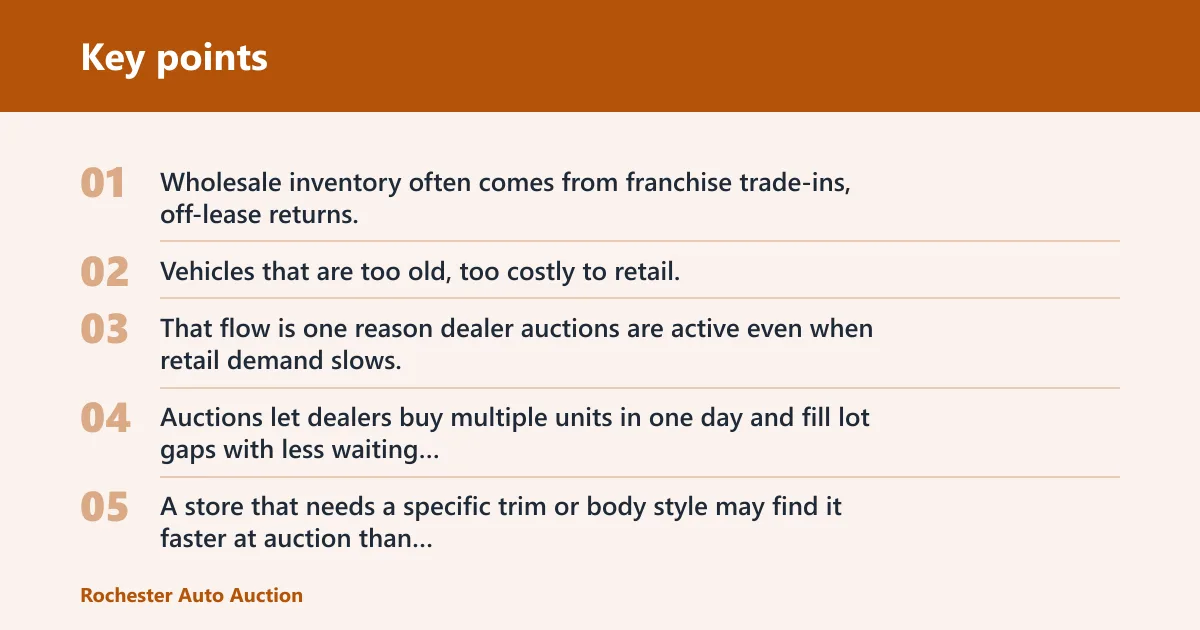
Wholesale inventory often comes from franchise trade-ins, off-lease returns, rental and fleet disposals, repossessions, and dealer overstock. Vehicles that are too old, too costly to retail, or outside a store’s brand focus often move to auction. That flow is one reason dealer auctions are active even when retail demand slows.
Fast turnover, volume buying, and sourcing gaps
Auctions let dealers buy multiple units in one day and fill lot gaps with less waiting than retail sourcing. A store that needs a specific trim or body style may find it faster at auction than through local trade. The tradeoff is narrower inspection time and more post-sale risk.
Dealer auction buyer cost stack
The real cost of an auction car is the hammer price plus every required fee and likely fix. A buyer fee, gate fee, condition report, transport, title or doc charges, tax, and reconditioning can add thousands to a low bid. First-time buyers should judge the landed cost, not the block win alone.
| Line item | Example amount |
|---|---|
| Hammer price | $8,500 |
| Buyer fee | $450 |
| Gate fee | $125 |
| Condition-report cost | $40 |
| Transport | $600 |
| Tax/title/doc | $380 |
| Estimated reconditioning | $1,200 |
| Total landed cost | $11,295 |
| First-time buyer check | Fail unless your resale margin comfortably exceeds fees and repair risk |
That example is not a worst case. It is a common pattern: the sale price looks manageable, then fees and transport arrive before any repair work. If the car needs a battery, tires, brakes, or a title correction, the gap grows quickly.
What to check before you bid
Condition reports help, but they are not a full mechanical inspection. Many auctions do not allow a test drive, and some allow only a start-up, a brief run, or a walkaround. The safer move is to treat photos, announcements, and grade notes as clues, not guarantees.
Condition reports and their limits
A condition report may list visible damage, tire wear, warning lights, odor, missing parts, and obvious body or interior issues. It may also include a grade, but grades vary by auction and inspection standard. What it usually does not tell you is whether a transmission, cooling system, or electrical module will fail after purchase.
Pre-bid inspection windows and no-test-drive rules
Many auctions offer a preview window before the sale. That is the time to check panel gaps, fluid leaks, glass, lights, dashboard warnings, tires, and starter behavior if the auction allows the engine to run. Test drives are often prohibited, so you need to make decisions with limited access.
Say your target is a 2017 midsize sedan with 92,000 miles and a clean-looking photoset. If the run list notes “engine light on” and “left front suspension noise,” the issue is not cosmetic. Those two notes can point to a repair bill that wipes out the low hammer price.
Red flags in photos, disclosures, and announced defects
Watch for mismatched paint, fresh overspray, bent wheels, water staining, missing airbags, seat-belt pretensioner warnings, and title brands that change the car’s value. A missing key, dead battery, or “starts with jump” note can also turn into a real cost. Announced defects matter because they may limit later arbitration claims.
What happens after you win
After you win, payment, pickup, and paperwork start moving on the auction’s schedule. Some vehicles can be released quickly; others wait on title verification, lien resolution, or seller approval. Arbitration rights are limited, and the buyer usually has only a short window to report eligible problems.
Payment, pickup, and transport timing
Once the auction confirms payment, the buyer or transport carrier can usually collect the unit with the release paperwork. Storage charges may apply if pickup slips past the deadline. Online buyers should confirm whether the auction requires a same-day release request, a carrier appointment, or a paid transport order.
Title, doc, and release delays
Title delays happen when the seller has not sent clean paperwork, a lien release is pending, or the auction is waiting on internal processing. Buyers should not assume a paid car is immediately road-ready. If the title is late, the risk shifts to time, storage, and cash tied up in the purchase.
Arbitration policy and eligible defects
Arbitration rules vary by auction, but they often cover specific undisclosed defects within a short reporting window. The defect must be material, eligible under the policy, and reported on time. Normal wear, minor cosmetic issues, or problems already announced on the run list are often excluded.
A common first-timer mistake is assuming a dealer auction’s arbitration period guarantees free repairs after you buy the car. It is not. If the car is sold as-is and the issue falls outside the policy window, the buyer usually owns the repair.
How does dealer auction work?
Dealer auctions work by selling wholesale inventory to approved buyers through a live lane or online platform. The buyer registers, reviews the run list, inspects what is allowed, bids in posted increments, and pays the winning amount plus fees. The sale closes fast, and the buyer carries inspection and transport risk.
How to get into dealer auctions? Start with the legal access route that matches your status. Licensed dealers can register directly. Non-dealers should ask about brokered access, partner programs, or public auctions that do not require a dealer account. Do not assume a website listing means open public access.
Frequently asked questions
How do car auctions work?
Car auctions work by putting vehicles up for sale in a timed or live bidding format. The highest accepted bid wins, but the buyer still pays fees, handles transport, and accepts the auction’s inspection and arbitration limits. Wholesale auctions often restrict access to licensed or approved buyers.
Can you buy from dealer auctions without a dealer license?
Sometimes, but usually not directly. Many dealer auctions require a dealer license, while some allow approved brokers, partner accounts, or special guest access. If you are not licensed, public auctions or a legal intermediary are the usual alternatives. Always check the auction’s access rules before planning a bid.
Why are some car auctions dealer only?
Dealer-only auctions are wholesale venues designed for licensed buyers and controlled resale inventory. Restricting access helps manage liability, paperwork, payment risk, and seller expectations. It also keeps the sale aligned with dealer-to-dealer sourcing instead of open public retail-style shopping.
Why do dealerships send cars to auction?
Dealerships send cars to auction when a unit does not fit their retail plan, needs too much reconditioning, is an overage trade-in, or should move quickly. Auctioning it can free floor space and convert slow inventory into cash faster than retail waiting.
Sell car at auction vs dealer: which is better?
Selling through a dealer can be simpler if you want speed and less process, while auction may reach more wholesale buyers but brings fees, transport, and condition scrutiny. The better choice depends on your vehicle’s condition, title status, and how much net proceeds matter after costs.