What Is Auction Consignment for Cars?
Auction consignment for cars is a contract where the auction acts as your selling agent, sets sale rules, collects fees, and pays you only after the vehicle sells and title paperwork clears. If you ignore the terms, you can lose control over reserve pricing, face storage or re-listing charges, and wait longer for payout than expected. This guide explains fees, title flow, reserve terms, seller control, and what happens if your car does not sell.
What auction consignment means

At an auction, consignment means you keep ownership until the buyer pays and the title transfers. The auction house markets the car for you, handles inquiries, and usually manages bidding paperwork and sale-day processing. That differs from a plain listing service because the contract sets price rules, timing, and the outcome if the car does not sell.
The key document is the auction consignment agreement. It should state the commission or seller premium, the sale window, who can sign title paperwork, reserve terms, and the no-sale process. Read those lines before you sign. They control the deal more than the listing photos do.
Who owns the car during consignment
You do. Ownership stays with the seller until the sale closes and the title is transferred after buyer payment. The auction house may hold the title, copy it, or require it at intake, but that does not mean it owns the vehicle. If a house speaks loosely about “turning in” the car, check the written terms.
What the auction house is authorized to do
The agreement usually authorizes the auction house to advertise the vehicle, present it for bid, communicate sale terms, and complete sale paperwork on your behalf. It may also allow the house to set the auction date, move the car on the lot, or place it in an online catalog. That authority should be written, not assumed.
How this differs from a private sale
A private sale puts the work on you. You field calls, screen buyers, handle test drives, negotiate price, and manage the title transfer. Auction consignment replaces that with house rules and a buyer pool, but you give up direct control over how offers are handled, when the car runs, and whether a reserve blocks the sale.
How a consignment auction works
The process starts with submission, then intake, then listing and sale day. Most houses want the vehicle details first, then a title check, then photos and condition notes. If the car clears intake, it is assigned a lot number or online listing and moved into the sale queue. After the hammer falls, the house collects payment, completes paperwork, and releases funds according to its payout schedule.
Vehicle submission and intake
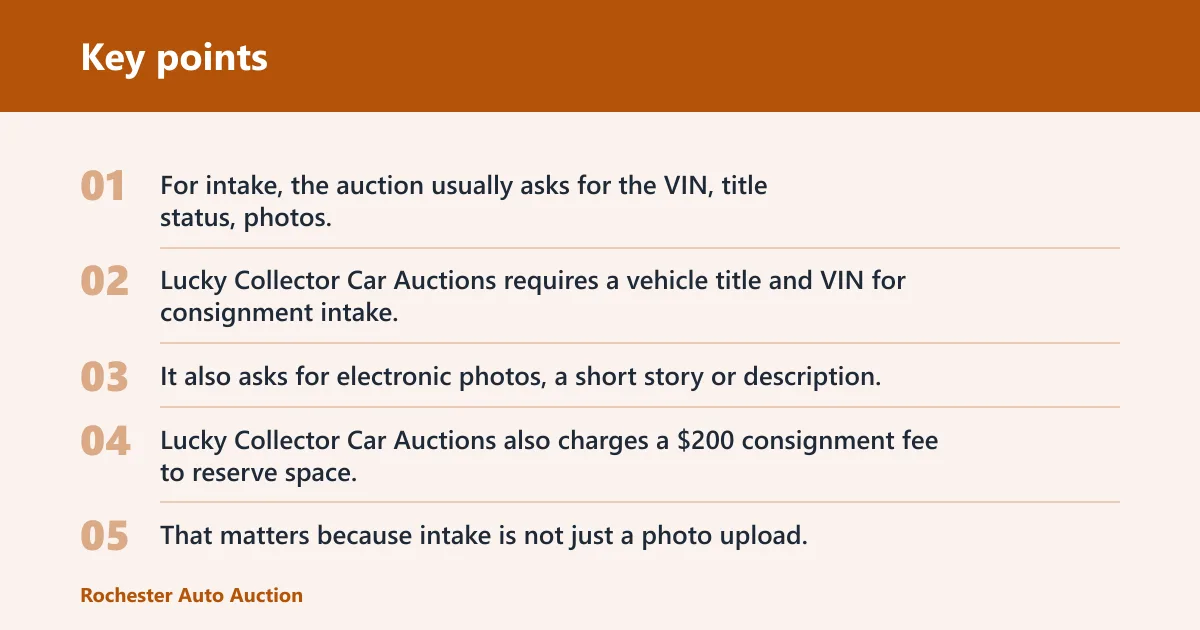
For intake, the auction usually asks for the VIN, title status, photos, and a condition summary. Lucky Collector Car Auctions requires a vehicle title and VIN for consignment intake. It also asks for electronic photos, a short story or description, and says a representative will contact the seller after form submission. Lucky Collector Car Auctions also charges a $200 consignment fee to reserve space, and auction lot numbers are first come, first serve.
That matters because intake is not just a photo upload. It is a rules screen. If the title is missing, the lot may be delayed or refused. If the car needs reconditioning, the auction may require that work before listing, or note it clearly so bidders know what they are seeing.
Listing, inspection, and sale day flow
Once accepted, the vehicle is described for bidders. Some houses inspect it in person, while others rely on seller disclosures and photos. AuctionZip lets users search auctions by categories including Automobiles, and it supports both online and in-person auctions. That means the same consignment idea can run through different sale formats, but the contract still controls the rules.
Classic Car Auctions says its showroom is full of privately owned vehicles, and that consignor vehicles may or may not be in the next auction. In other words, intake does not guarantee immediate placement. The car may be held for a later sale date if the catalog is full or the house is waiting on title or condition details.
Paperwork and title transfer after payment
After a buyer pays, the auction house uses the signed paperwork and title to complete the transfer. That is the point where ownership moves and payout can be released, subject to the house’s settlement timeline. If the title is delayed, payment may be delayed too. Sellers should ask who holds the title during the listing period and what triggers release of funds.
Auction consignment checklist
Use this before you sign. It is a simple yes-or-no screen for the control points that usually cause trouble later. If several answers are “no,” the car may need different terms or a different sales channel.
| Checklist item | Yes | No |
|---|---|---|
| Is the title ready for intake, or is the house willing to accept a documented delay? | ||
| Do you know whether a reserve price is allowed? | ||
| Is the reserve amount written in the agreement? | ||
| Do you understand the seller commission or seller premium and how it is deducted? | ||
| Do you know whether there is a buyer premium that may affect demand? | ||
| Are entry, listing, or photo fees listed in writing? | ||
| Do you know when payout is issued after the sale closes? | ||
| Do you know what happens if the car does not meet reserve? | ||
| Are no-sale pickup, storage, or re-listing fees explained? | ||
| Are insurance responsibility and lot risk written down while the car is on site? | ||
| Do you have the photos, VIN, service records, keys, remotes, and flaw disclosures ready? | ||
| Is this car a better fit for auction consignment than retail consignment or a private sale? |
What fees do sellers pay?

Fees are usually commission-based, but the line items are not the same. A seller commission or seller premium is the amount deducted from your sale proceeds. A buyer premium is charged to the buyer, not you, but it can still affect bidding behavior and the final realized price. Ask for every fee in writing before entry.
Seller commission and seller premium
Seller commission is often a percentage-based fee. Some houses call it a seller premium instead. Lucky Collector Car Auctions lists a 10% seller’s premium, while Classic Car Auctions says a 6% auction house commission is added to purchases. Those examples show why you should not rely on a generic “commission applies” statement. You need the exact rate and which side pays it.
The rate may also differ by sale format. A showroom sale, live auction, or online sale can carry different pricing rules. Do not assume one house uses one fee for every channel.
Entry or listing fees
Some auctions charge an intake fee before the car is listed. That can cover catalog work, lot assignment, or administrative processing. Lucky Collector Car Auctions charges a $200 consignment fee to reserve space. If a house also charges for photos, transport, or detail work, those amounts should be listed separately.
No-sale costs and re-listing charges
No-sale terms matter because a reserve can stop a sale even when bidding is active. If the car passes, the agreement may allow re-listing, a later run, or pickup after the sale window ends. Fees can apply if the car stays on site, needs reconditioning, or is rolled into a later auction. Ask who pays for that time and where the car sits in the meantime.
Why buyer premium matters to your net result
Buyer premium is added to the buyer’s price at some auction houses. That can affect how aggressively bidders participate. If the premium is high, some buyers lower their bids to protect their total spend. That can pull down the hammer price, even though the premium itself is paid by the buyer. Sellers should ask whether the house discloses that premium up front.
Can you set a reserve?
Often, yes, but not always. A reserve is the minimum acceptable sale price, and house rules control whether it is allowed, how it is disclosed, and when it can be changed. The reserve can determine whether the car sells on auction day. If bids stop short of the reserve, the car may pass, even if interest is strong.
How reserve pricing affects bidding
A reserve can protect you from selling too low, but it can also thin the field if bidders think the target is out of reach. A lower reserve may encourage more action. A higher reserve can keep the car from moving. The right level depends on condition, rarity, and whether the house’s buyer pool matches the vehicle.
Suppose a 1969 coupe is listed with a reserve only slightly above the opening bid range. Bidders may stay active because the finish line looks reachable. If the reserve is set far above market interest, the same crowd may drop out early, and the car may leave the block unsold.
When a car sells or passes
If bidding reaches the reserve, the car typically sells subject to final paperwork and payment. If it does not, the auction house may announce “no sale” or “pass.” Some agreements allow post-block negotiation, but that should not be assumed. The contract should say whether the reserve can be lowered during the sale and who has that authority.
What happens if it does not sell?
If the car does not sell, the agreement should explain where it goes next, who pays for storage, and whether it can be rerun. Common outcomes include pickup by the owner, a later auction date, or a negotiated post-sale offer if the house allows it. The no-sale section is one of the most important parts of the contract.
Return or pickup rules
Some houses require the seller to remove the car within a fixed window after the auction. Others allow short-term storage with added fees. If the title has already been submitted, ask how it is returned or held. The car should not sit in limbo while the agreement is still active.
Re-run options
Some contracts allow a car to be rolled into the next sale if it misses reserve. Others treat that as a new consignment with fresh fees or a new listing period. The same source notes that consignor vehicles may or may not be in the next auction, which is a reminder that sale timing is not guaranteed. Read the relisting language before you commit.
Fees and deadlines after a no-sale
If the car passes, ask about pickup deadlines, storage charges, and any reconditioning required before a second run. A common first-timer mistake is to focus on the expected sale price and ignore the cost of a no-sale outcome. That is where surprise charges often appear.
Picture a car that needs a dead battery, a flat tire fixed, and a fresh photo set before it can reappear in the next catalog. The auction may help coordinate that work, but the agreement should say who pays and whether the car can stay on site while repairs happen.
How to know a consignment company is legitimate
Start with the written terms. A legitimate auction consignment company should disclose fees, reserve rules, title handling, payout timing, and no-sale policy before you sign. It should also answer basic questions about who controls the reserve, what happens if the title is delayed, and whether the car can be returned without penalties.
Then check consistency. The intake form, the agreement, and the sale catalog should tell the same story. If one page says the car can run next week and another says it may wait for a later auction, ask for clarification. AuctionZip’s category search and in-person or online options show how widely sale formats vary, so the contract has to be specific.
Frequently asked questions
What is auction consignment for cars?
Auction consignment for cars is a sale arrangement where you keep ownership until the vehicle sells, while the auction house markets the car and handles the sale process. The agreement sets the fee, the sale window, title authority, reserve terms, and what happens if the car does not sell.
How does a consignment auction work?
You submit the vehicle details, the auction checks the title and condition information, and the car is listed for sale. On auction day, bidders compete under the house rules. If it sells, the auction completes the paperwork and pays you according to its settlement schedule after the title clears.
Who owns the car during auction consignment?
You do, until the buyer pays and the title transfers. The auction house may hold the title or manage the paperwork, but that is not the same as ownership. If the title is delayed, the transfer and payout can be delayed too.
What fees do car auction consignment companies charge?
Fees can include a seller commission or seller premium, entry or listing fees, photo or catalog charges, and no-sale or storage costs. Some houses also have a buyer premium, which the buyer pays, but it can still affect bidding and your final net result.
When do you get paid after a consignment auction sale?
Payment usually follows buyer payment and title processing, not the moment the hammer falls. The timing varies by house, so you should confirm payout rules before entry. If the title is incomplete or the paperwork needs correction, payout can take longer.
Can you set a reserve price on a consigned car?
Often yes, but not always. House rules may allow, restrict, or limit reserve use, and the reserve amount should be written in the agreement. If bidding does not reach that amount, the car may pass and remain unsold that day.
How do I know an auction consignment company is legitimate?
Look for clear written fees, a plain reserve policy, a defined title process, and a no-sale policy that explains pickup or relisting. A legitimate company should answer questions before you sign. If the terms are vague or shift from one document to another, pause.