How Do IAA Proxy Bids Work Before the Live Auction Starts?
IAA proxy bids let the system bid on your behalf before the live auction starts. You set the top amount, the software increases only by the auction’s preset increment, and it stops if another bidder outbids it or the seller’s reserve is not met. A bad max, a missed cutoff, or a forgotten setting can cost you the unit or push you past budget. This guide explains how the software bids, what you control, and when you can still change course.
What a proxy bid does on IAA
A proxy bid on IAA is automatic bidding. You enter a maximum bid before the auction begins, and the system raises your bid only by the auction’s preset increment until it reaches that cap. It can save time, but it is not a promise of winning, and it stops once someone outbids your limit.
Set your maximum before the sale starts
The key choice is your max bid. That number is the ceiling the software will defend for you while the lot is still in pre-bid status and before live bidding reaches that unit. If the current high bid sits below your cap, the system can keep you in the race without constant manual input.
Keep one rule in mind: the max bid is usually not visible to other bidders. They may only see the current high bid as it changes. That privacy is part of why proxy bidding works well when you want a position in the sale without watching every click.
How automatic bidding follows the bid increment
Bid increments are fixed by the auction. They set the smallest step the system can use when it raises a proxy bid, and they also set the minimum next bid for anyone trying to pass you. In a simple example, an auction starting at about $12.99 can move up by fixed increments; a $20 proxy can keep bidding from about $12.99 upward until the cap is reached.
Suppose the current high bid is $12.99 and you set a max of $20. If another bidder enters $14, your proxy can immediately answer with the next allowed step, which in the example rules becomes $15.00. That is automatic bidding in action, not a separate live bid from you.
Why the current high bid matters
The current high bid is the starting point for auto-bids. It tells the system where the next increase begins and whether your max still has room to work. A current high bid can be matched, but matching does not always win the lot. The first bidder still holds the lead unless a higher bid arrives.
Do you need an IAA buyer account to bid?
Yes. An IAA buyer account is required to bid, because the account is what enables bidding inside the platform. Guest accounts are free on IAA, but free access does not mean every guest can bid everywhere. Public versus licensed access can vary by state and branch, so account type alone does not settle eligibility.
Guest accounts, public access, and licensed access
IAA access is not identical across every branch. Some locations or states may allow public access, while others limit bidding to licensed buyers or specific account types. That means two users can see the same lot yet have different bidding permissions. Check the branch rules before relying on pre-bid timing or live access.
Why branch and state rules can change who can bid
Access rules matter because a bidder can lose time, not just a sale. If your account is not eligible for that branch or state, you may be able to browse but not place the bid you planned. That is a setup issue, not a bidding mistake, and it should be resolved before the auction starts.
Where proxy bidding fits in i-bid LIVE
IAA i-bid LIVE is the live internet bidding tool. It supports mobile access, watchlist management, live bidding, and pre-bid support. Proxy bidding fits into that workflow before the live lane opens, so you can place a bid in advance and let the system manage the motion until the lot reaches the live stage.
Pre-bid in the auction workflow
Pre-bid is the early stage where you submit interest before the live auction starts. It is separate from live bidding, which happens when the lot is active in the live lane. The distinction matters because a pre-bid can be changed by competition before the live portion ever reaches that car.
Mobile app access and watchlist use
The mobile app supports pre-bids and live bidding, so you are not locked to a desk. It also helps with watchlist management, which is useful when you are tracking several units at once. Lost pre-bids are available in the app, so you can review which proxy bids did not hold up.
A common mistake is assuming a proxy bid guarantees the vehicle will be yours before the live auction even begins. It is only a tracking tool. If you set a max bid on three cars and all three move differently, the app may show one lot holding, one lot passing your limit, and one lot sitting untouched until later in the sale.
How live bidding differs from pre-bidding
Pre-bidding happens before the lot reaches live status. Live bidding happens when the auction is active and the lane is open. A proxy bid can carry you into that moment, but it does not turn pre-bid into a live bid. The system still follows the bid increment and current high bid rules.
How IAA bid increments shape the outcome
Bid increments are the auction’s built-in steps for moving a price forward. They set the minimum next bid and determine how far the system can move your proxy at a time. When the current high bid changes, the increment controls the next automatic move, not your emotions or how long you have watched the lot.
Who sets the increment
The auction sets the increment. That is why the minimum next bid is not something you choose on the spot. Your proxy bid works inside that rule set, and the system cannot jump in random amounts. The current high bid plus the preset increment becomes the next reachable step.
How the system uses the minimum next bid
Using the earlier example, if the lot opens at $12.99 and the increment rules push the next step to $15.00 after a lower challenge, the system can move there automatically if your max allows it. If your max is too low, the system stops short, and the lot can move on without you.
What changes when another bidder enters
Another bidder can change the whole path with one move. If that bidder stays below your max, your proxy can keep answering. If that bidder reaches your limit, the system may stop at the match point or move you out of the lead, depending on the exact bid and timing. If the new bid exceeds your max, you are no longer protected.
What happens if another bidder matches or beats you?
If another bidder stays below your max, your proxy can keep you in front by stepping through the preset increments. If they match your max, matching does not automatically beat the first bidder. If they go higher than your max, they take the lead and your proxy stops at its cap.
When a lower bid does not beat your max
A lower bid is only a challenge, not a win. If your maximum is higher than the other bidder’s amount, the software can continue to raise your side by the increment rule. This is the part of proxy bidding that lets a buyer stay active without manually entering each step.
When a matching bid reaches your limit
Matching a max bid does not beat the first bidder. That matters because the first bidder may still be the current high bid until a higher amount arrives. In practice, a matching bid can leave both sides close to the line, but it does not guarantee that the second bidder takes control.
When a higher bid takes the lead
Once another bidder exceeds your max, the current high bid moves away from you. Your proxy cannot keep climbing past the number you set. At that point, the lot may still be open, but your pre-bid has lost its protection unless you raise the ceiling before the sale moves on.
Proxy bid decision table
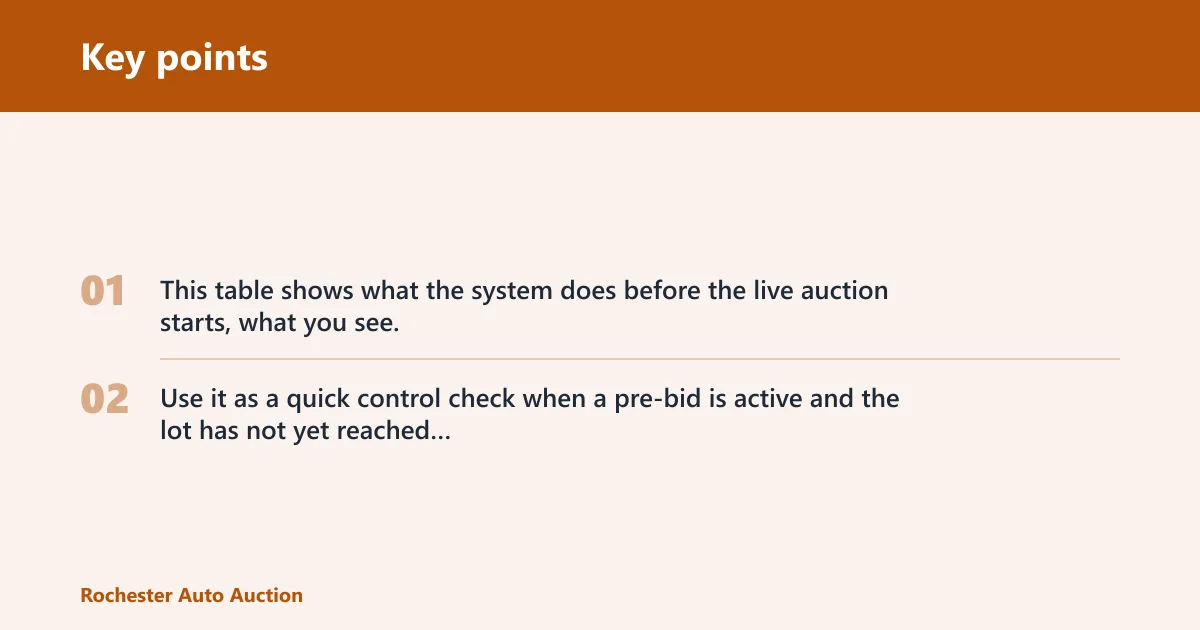
This table shows what the system does before the live auction starts, what you see, and what to do next. Use it as a quick control check when a pre-bid is active and the lot has not yet reached the live lane.
| Situation | System action | What the buyer sees | Recommended next move |
|---|---|---|---|
| Your max bid | Places your proxy bid at the chosen ceiling and waits for competition. | Your bid is entered; the current high bid may remain lower until another bidder responds. | Confirm the lot, the max, and the branch rules before the sale starts. |
| Current high bid | Uses the current high bid as the starting point for auto-bids. | You see the present lead amount, not every hidden maximum behind it. | Compare the current high bid with your ceiling and decide whether to raise it. |
| Another bidder matches you | Holds the lead at the matching point; matching does not beat the first bidder. | The bid may look tied or unchanged, but the lead has not automatically switched. | Raise your max if you still want the unit and the margin allows it. |
| Another bidder exceeds you | Stops auto-bidding at your max and lets the other bidder take the lead. | Your proxy no longer moves; the lot shows a higher current high bid. | Decide whether to re-enter with a higher max before the lot advances. |
| Auction starts but your lot has not come up yet | Keeps the proxy active in pre-bid status until the lot reaches its turn. | The lot stays queued; your pre-bid remains in play while the auction runs. | Watch for timing changes in i-bid LIVE and keep the app open if needed. |
| You lose | Ends the proxy at your limit or after a higher bid takes the lead. | The app can show a lost pre-bid in the results. | Review the loss, check whether the max was too low, and reset for the next lot. |
When should you use proxy bidding instead of waiting?
Use proxy bidding when you want a position on a lot before live bidding starts, especially if you are tracking more than one unit. Proxy bidding can help you bid on multiple items simultaneously. If you need to wait for the room to settle or want to react in person, live bidding may fit better.
Using proxy bids for multiple lots
Proxy bidding is useful when several cars matter at once. You can place a ceiling on each one and let the system manage the steps. That matters in busy sales, where one buyer may watch a truck, a sedan, and a parts unit in the same session without entering every bid by hand.
Say your max is set on two cars in the same run list. One lot stalls below your ceiling, while the other gets pushed past it before the live lane reaches it. The system can keep one active and drop the other into lost pre-bids without requiring you to sit through every move.
When to hold back for live bidding
Hold back when you need to see live behavior before you commit, or when your target lot has uncertain competition. Proxy bidding is not a guarantee of a win, and it can lose before the live auction reaches the unit. Waiting may make sense if your budget is tight or the market is moving quickly.
A simple decision rule before the sale starts
Place a proxy bid when you already know your ceiling and want the system to work inside it. Wait for live bidding when you need more information or want a last-minute decision. If you are using i-bid LIVE on mobile, check the watchlist, confirm the lot status, and verify access before the lot rolls up.
Frequently asked questions
How do IAA proxy bids work before the live auction starts?
IAA proxy bids let you set a maximum before the sale begins, then the system bids for you by the auction’s fixed increment. It starts from the current high bid, stays active in pre-bid status, and stops when another bidder exceeds your max or the lot moves past your limit.
What happens if I set a max bid on IAA and someone else bids lower?
If the other bid stays below your max, your proxy can answer with the next allowed step and remain in the lead. The system does not jump randomly; it follows the bid increment. If the competing bid only matches the current level, that still does not automatically beat the first bidder.
Can IAA proxy bids be used on the mobile app?
Yes. IAA’s mobile app supports pre-bids and live bidding, and it also supports watchlist management. That makes it easier to track several units, review lost pre-bids, and stay ready when a lot reaches the live lane. Your account still needs the right access to place bids.
What is the difference between a pre-bid and a live bid on IAA?
A pre-bid happens before the live auction reaches the lot. A live bid happens once the lot is active in the live lane. Proxy bidding works in the pre-bid phase and can carry into the sale, but it is still separate from a manual live bid entered during the auction.
Do IAA proxy bids stay private until the auction starts?
The maximum bid is typically not visible to other bidders. They usually see the current high bid, not your ceiling. That privacy lets the system move on your behalf without exposing how high you are willing to go, though the current lead can still change as others bid against it.
What happens if my proxy bid loses on IAA?
If your proxy loses, the app can show it as a lost pre-bid. That usually means your max was overtaken or the lot moved on before your bid could hold. Review the current high bid, the increment, and your ceiling, then decide whether to reset for the next unit.