Reserve Price vs Starting Bid: What Is the Difference?
A starting bid is the first price that opens bidding. A reserve price is typically the lowest amount the seller will accept; the car can draw bids below reserve, but it will not sell until the reserve is met. If you confuse the two, you can set a lot too high to launch or too low to protect your floor, and both errors can reduce turnout or the final price. This guide compares the terms in auction order, explains what each one does for buyers and sellers, and shows how they affect a car sale.
| Factor | Reserve price | starting bid | Winner |
|---|---|---|---|
| What it controls | Selling threshold. The item cannot close below this level. | Opening bid. It starts the auction and invites the first bid. | Reserve price |
| Who sets it | The seller or the seller’s auction representative. | The seller or auction platform, based on listing strategy. | Tie |
| Buyer visibility | May be hidden from buyers in English-style auctions. | Usually visible because it appears as the opening amount. | starting bid |
| Effect on sale outcome | Can produce reserve not met and a no-sale result. | Can start bidding even when reserve is higher. | Reserve price |
| How it affects bidding | Protects the seller at the point of sale. | Can help attract early participation and momentum. | starting bid |
How these two auction terms differ
Opening bid starts the auction
The starting bid is the first posted amount that lets bidding begin. It is the opening price, not the seller’s minimum acceptable price. In a car auction, a low starting bid can pull bidders in early because the first step feels small and clear.
Reserve price protects the seller
The reserve price is the seller’s minimum threshold for a sale. In an English-style auction, it may be hidden from buyers, and the car can receive bids without being eligible to sell until that threshold is reached. Auction reserve is another term used in the same context: the minimum amount of money bid required for a sale.
Why the two terms get confused
They both sit near the beginning of the auction, so buyers often treat them as the same number. They are not. A starting bid begins the action; a reserve price controls whether the item can close. A no-reserve auction, also called an absolute auction, has no stated minimum price, so the car sells regardless of price.
How the auction sequence works
Listing and bidding open
When a car is listed, the auction platform or seller sets the starting bid and, if used, the reserve price. The starting bid is the opening bid amount. The reserve is the minimum price threshold tied to the eventual sale. Buyers may see one, both, or only a limited signal depending on the auction rules.
Current bid moves as bids come in
The current bid changes each time a bidder places a higher offer. It is the live price during the auction, and it can move well below reserve until the reserve is met. That is why current bid and reserve price must stay separate in your head: one shows the latest offer, the other sets the seller’s floor.
Sold, reserve not met, or no sale
If bidding reaches or passes the reserve, the item can sell. If bidding stops short, the listing may end with reserve not met, which means the auction did not reach the seller’s minimum acceptable sale threshold. In that case, the car may remain unsold, and the seller can decide the next step.
Auction term map
| Term | Who sets it | What it controls |
|---|---|---|
| Reserve price | The seller | The minimum amount needed for sale |
| starting bid | The seller or auction platform | The opening bid amount that begins bidding |
| current bid | Bidders, one offer at a time | The latest active price in the auction |
| reserve not met | The auction result, based on bidding | Shows that the bids did not reach reserve |
| sold / no-sale | Outcome determined by the final bid versus reserve | Whether ownership transfers or the item stays unsold |
This map is the practical difference most buyers need. Reserve price is a threshold concept. Starting bid is a launch point. Current bid is the live number people chase. Reserve not met is the result when the floor is missed, and sold/no-sale tells you whether the auction closed or stopped short.
Does the starting bid have to match the reserve?
No. The starting bid does not have to match the reserve price. A seller can set a low opening bid to encourage early participation and still protect a higher minimum with reserve. That gap is common in English-style auctions because it can create movement without giving away the car too cheaply.
When a low start can help bidding momentum
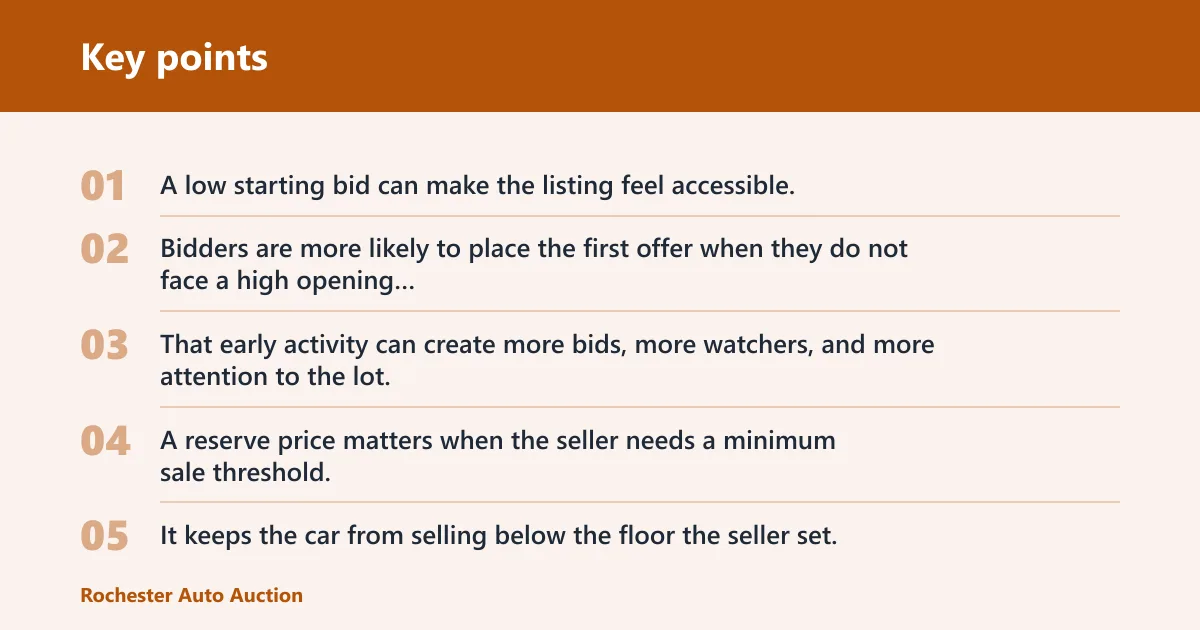
A low starting bid can make the listing feel accessible. Bidders are more likely to place the first offer when they do not face a high opening number. That early activity can create more bids, more watchers, and more attention to the lot.
When a reserve gives seller protection
A reserve price matters when the seller needs a minimum sale threshold. It keeps the car from selling below the floor the seller set. The trade-off is that buyers may bid actively and still learn only at the end that the reserve was not met.
What buyers infer from each setup
A low starting bid can signal room for competition, but it does not tell buyers the seller will accept that amount. A visible high starting bid can signal a firmer opening position, yet it still may not equal reserve. The two numbers can point in different directions, and buyers should not read one as a promise about the other.
Say your sedan starts at $500 and the reserve is $8,000. Bidders may jump in because the opening number is low, but the car still will not sell at $6,700 if the reserve is hidden and remains unmet. The current bid moved; the sale threshold did not.
What happens if reserve is not met?
If reserve is not met, the item may remain unsold. The auction can end with a no-sale result even though bidders participated. The seller then decides whether to relist, lower the reserve, negotiate with the high bidder, or hold the vehicle for a later sale channel.
The item may remain unsold
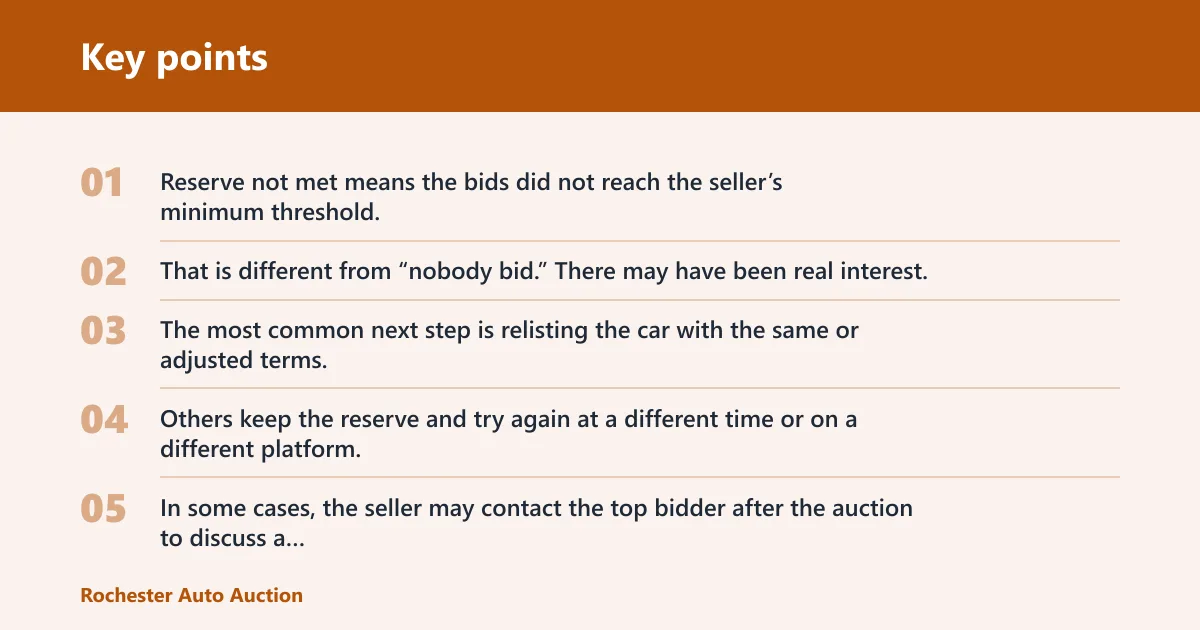
Reserve not met means the bids did not reach the seller’s minimum threshold. That is different from “nobody bid.” There may have been real interest, but the final price still fell short of the required floor, so the auction does not close as a completed sale.
Seller next steps after a no-sale
The most common next step is relisting the car with the same or adjusted terms. Some sellers lower the reserve. Others keep the reserve and try again at a different time or on a different platform. In some cases, the seller may contact the top bidder after the auction to discuss a direct deal.
Possible relist, negotiation, or reserve adjustment
What happens next depends on auction rules and seller strategy. A no-sale does not end the conversation. It often becomes a pricing decision: keep the floor, reduce the floor, or move the car to a setting where the bidding audience better matches the seller’s minimum.
Suppose an SUV closes at $14,200 with a $15,000 reserve. The listing can end as reserve not met, and the seller may decide to relist at a lower reserve the next week. The car did attract a real top bid; it just did not clear the threshold needed for sale.
Choose Reserve price if… / Choose starting bid if…
Choose Reserve price if you need a minimum sale threshold, want protection against a weak opening auction, or expect the car to draw bids but not necessarily a sale at any price. Choose starting bid if your main goal is to get bidding moving early and you are comfortable letting market interest build from a low opening number.
- Reserve price: choose it when you cannot accept a sale below a specific floor.
- Reserve price: choose it when the car is unusual, seasonal, or hard to price with confidence.
- starting bid: choose it when early participation matters more than a protected opening number.
- starting bid: choose it when you want bidders to enter without a large first jump.
- Set your minimum acceptable amount before the listing goes live.
- Decide whether you want the auction to attract attention with a low start.
- Check whether the platform allows reserve changes during the listing.
- Confirm whether buyers will see the reserve or only the bidding activity.
- Choose the structure that fits your sale goal, not the one that sounds simpler.
A common first-timer mistake is placing a high starting bid and a high reserve on the same listing. That can slow early bidding and still leave the car unsold if the reserve is not met. A cleaner approach is to use the starting bid to begin the auction and the reserve to protect the minimum, but only if the platform rules allow that setup.
Frequently asked questions
What is the difference between a reserve price and a starting bid?
The starting bid is the opening amount that begins bidding. The reserve price is the seller’s minimum acceptable sale threshold. A car can receive bids below reserve, but it cannot sell until the reserve is met. They are related, but they control different parts of the auction sequence.
Can a car sell if the bidding never reaches reserve?
Usually, no. If the auction uses a reserve and the final bid stays below it, the result is reserve not met and the car remains unsold unless the seller takes a separate action afterward. The seller may relist, negotiate, or change the reserve for a later round.
Is a reserve price the same as a minimum bid?
In auction use, reserve price is the closer term for the seller’s minimum threshold. Some people say minimum bid, but that can blur the difference between the opening bid and the sale floor. To avoid confusion, reserve price or auction reserve is the better term for the seller’s protected minimum.
Why do auctions use reserve prices?
Auctions use reserve prices to protect sellers from selling below a chosen floor. They are useful when the seller wants bidding to start without committing to a sale at the opening amount. The reserve can also shape buyer behavior by encouraging more bids while still guarding the final outcome.
Can buyers see the reserve price before the auction ends?
Sometimes, but not always. In many English-style auctions, the reserve price may be hidden from buyers, so they see the bidding but not the seller’s exact minimum. Auction rules matter here. Do not assume the reserve is public unless the listing or platform says so.
Can a seller lower the reserve during an auction?
Sometimes, yes, but only if the auction platform and the listing rules allow it. Some sellers adjust the reserve to respond to bidding activity; others cannot change it once the auction is live. If reserve changes are allowed, the updated threshold can affect whether the item ends as sold or reserve not met.